





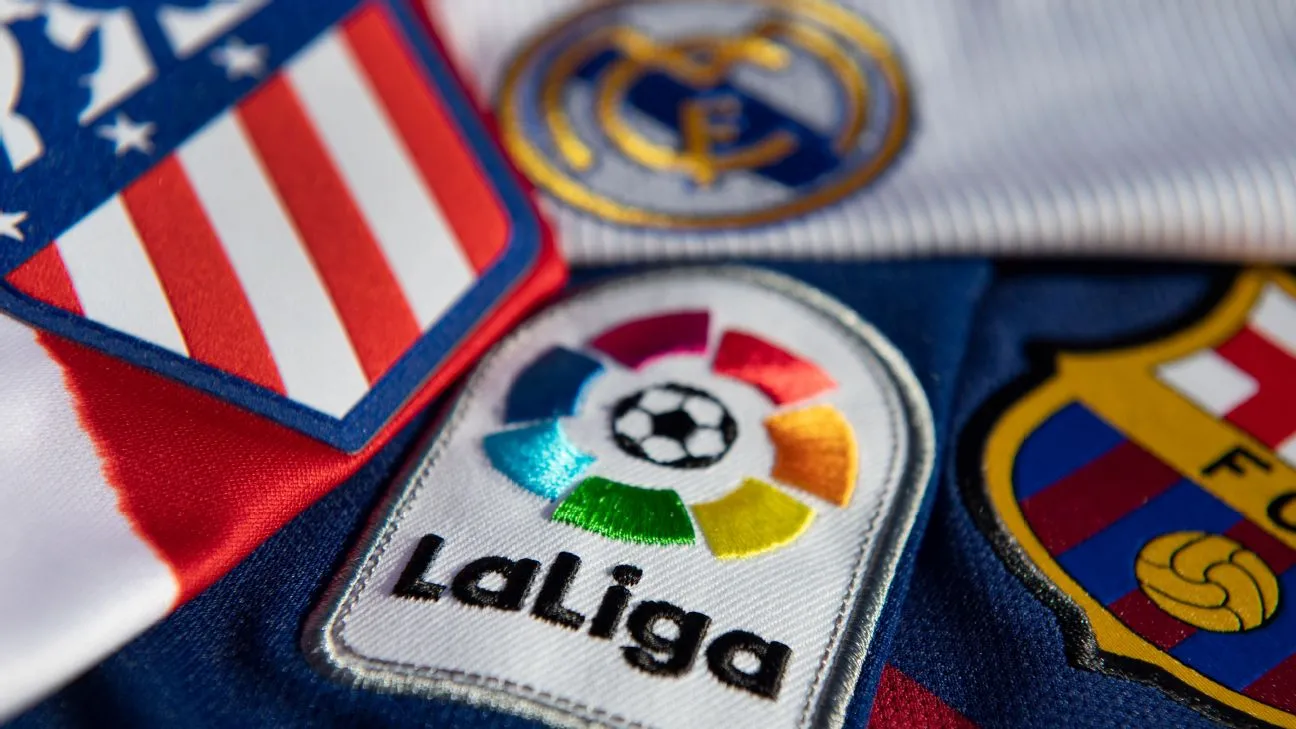
There are football leagues defining a country and leagues defining an entire era of world football. The Spanish LaLiga has been both at the same time during different moments of its history. From the fifties, when Di Stéfano’s Real Madrid dominated Europe and filled the Bernabéu with a brand of football nobody had seen before, to the Messi-Ronaldo era between 2009 and 2018, in which two of the greatest players of all time faced each other every season in the same championship, LaLiga has concentrated, on more than one occasion, the greatest individual talent in world football in a single competition.
The Spanish League was born in 1929 with ten clubs and an experimental format that took several years to stabilize. In that time it has survived a civil war, four decades of dictatorship, several economic crises, and the transformation of football into a global entertainment industry. What has remained constant is the intensity: in Spain, football is not just a sport, it is part of the cultural identity of entire regions, and that passion is expressed every weekend on pitches throughout Spanish geography.
In this article, we review the complete history of LaLiga: from its origins in 1929 to the most recent titles, passing through the records defining it and the moments nobody has forgotten.
📋 Table of Contents
- Origin and History of LaLiga
- Historic Milestones that Defined LaLiga
- Historic Records
- Trivia
- Present and Future
- Conclusion
Origin and History of LaLiga
The Spanish Football League was born in 1929 as a result of an initiative by several clubs seeking to create a stable national competition complementing the Copa del Rey, which had existed since 1903. The first edition featured ten teams and ended with FC Barcelona as the first champion, ahead of Real Madrid and Athletic Club Bilbao, which in those years was the dominant power of Spanish football.
The early years of the competition were marked by instability: the number of participating teams varied in different editions, and the tournament was interrupted between 1936 and 1939 by the Spanish Civil War, which paralyzed professional football along with all institutional life in the country. When the competition resumed, it did so in a completely different political context, under the Franco dictatorship, which used sport—and especially football—as a tool for national cohesion.
1940-1980: Consolidation. In the decades following the war, the league stabilized around a 16-team format with a double round-robin and a two-points-per-victory system. This period saw the rise of Real Madrid as the dominant power of European football: between 1956 and 1966, the white team won six European Cups and was league champion on multiple occasions, with players like Alfredo Di Stéfano, Ferenc Puskás, and Ramón Grosso redefining what a football team could do on the pitch.
1980-1995: New Protagonists. This era saw dominance become relatively decentralized: Athletic Club Bilbao won two consecutive leagues in 1983 and 1984 with the young Txiki Begiristain and Sarabia as stars. Real Sociedad also added titles. And above all, manager Johan Cruyff’s FC Barcelona—the “Dream Team”—dominated the first part of the nineties with four consecutive leagues and a playing style influencing world football for decades.
1995-2023: The Modern Era and the Duopoly. Starting in the mid-nineties, LaLiga adopted the definitive format of 20 teams, with three points per victory, and consolidated itself as one of the two best leagues in the world alongside the Premier League. The duopoly between Real Madrid and FC Barcelona became more pronounced in the Galácticos era and reached its zenith during the years Messi and Cristiano Ronaldo shared the championship.
2023-present: LaLiga EA Sports. In 2023, the competition adopted the commercial name LaLiga EA Sports due to a sponsorship agreement with the video game company, while maintaining its sporting format and structure unchanged.
Historic Milestones that Defined LaLiga
1929 — The First Champion: FC Barcelona
The first edition of LaLiga was played in a round-robin format with ten teams. FC Barcelona was crowned champion on the final matchday, in a tournament where Real Madrid was runner-up and Athletic Club Bilbao finished third. The first goal in the history of the competition was scored by Espanyol’s José Prat in the tournament’s debut, and that historic fact is still remembered today.
1953-1964 — Di Stéfano’s Invincible Madrid
Alfredo Di Stéfano’s Real Madrid was the most dominant team LaLiga had seen up to that point. With Di Stéfano—who scored over 200 goals in the Spanish league—and Puskás as an attacking duo, Madrid won multiple league titles in that decade and combined that domestic dominance with the consecutive conquest of the first five European Cups. It was the era when Madrid became the most internationally renowned club in the world.
1983-1984 — Athletic Club Breaks the Duopoly
In two consecutive seasons, Athletic Club Bilbao won LaLiga with a team made up exclusively of Basque players, following their famous youth academy policy. It was an achievement that in the context of Spanish football in the eighties—when large budgets were already beginning to make a difference—was extraordinary. The two consecutive leagues remain Athletic Club’s latest titles in the national championship.
1991-1994 — Cruyff’s Dream Team
Johan Cruyff’s FC Barcelona won four consecutive leagues between 1991 and 1994 with a team—Stoichkov, Romário, Guardiola, Laudrup, Koeman—playing a possession and pressing football nobody had seen before in Spain at that level. Those four leagues and the 1992 European Cup at Wembley established the philosophical foundation upon which the club has built its identity over the following decades.
2009-2012 — The Messi-Ronaldo Era and Tiki-Taka
The period between 2009 and 2012 was the moment of greatest concentration of individual talent in LaLiga’s history. Guardiola’s Barcelona, with Messi playing as a false nine and Xavi and Iniesta controlling the midfield, dominated Spanish and European football in a way taking analysts years to decipher. At the same time, Mourinho’s Real Madrid—with Cristiano Ronaldo at his individual best—did everything possible to stop that dominance. The rivalry between the two teams in those years was the most followed sporting duel in the world.
2014 — Simeone’s Atlético Conquers Spain
In the 2013-14 season, Atlético Madrid under the management of Diego Simeone won LaLiga on the final matchday, snatching the title from FC Barcelona and Real Madrid in a duel decided with minutes left in the season. It was Atlético’s first title in 18 years and the demonstration that Simeone’s tactical system—based on defensive solidity and fast transitions—was capable of competing on equal terms with the highest budgets in the world.
2024-25 — Barcelona and Flick Rewrite the Record
Hansi Flick’s FC Barcelona conquered the 2024-25 season with a dominant performance placing them as the most consistent team in the championship. With Lamine Yamal as the great emerging star, Barcelona added their 28th LaLiga title in what was one of the club’s most complete seasons in recent years.
Historic Records
Clubs with the Most Titles
| Club | Titles |
|---|---|
| 🏆 Real Madrid | 36 |
| 🔵🔴 FC Barcelona | 28 |
| 🔴⚪ Atlético de Madrid | 11 |
| ⚪🔴 Athletic Club | 8 |
| 🦇 Valencia CF | 6 |
Real Madrid leads the honors list with 36 titles, twelve more than Barcelona and twenty-five more than Atlético Madrid. The difference between Madrid and the second-placed team is the widest among any of Europe’s top five leagues, reflecting the decades in which the white club not only dominated in Spain but was the best team in the world.
All-Time Top Goalscorers
| Player | Club(s) | Goals | Era |
|---|---|---|---|
| 🐐 Lionel Messi | FC Barcelona | 474 | 2004-2021 |
| ⚡ Cristiano Ronaldo | Real Madrid | 311 | 2009-2018 |
| 🏹 Telmo Zarra | Athletic Club | 251 | 1940-1955 |
Lionel Messi is LaLiga’s top scorer with 474 goals in 520 matches, a record surpassing the second-placed player—Cristiano Ronaldo with 311—by a 163-goal difference. It is the most unreachable record in the history of any of Europe’s top five leagues.
Telmo Zarra, an Athletic Club forward between 1940 and 1955, was LaLiga’s all-time top scorer for decades before Messi surpassed his mark in 2014. His record stood for over 60 years, speaking to the extraordinary goalscoring efficiency he had in an era when the league had fewer teams and fewer matches per season.
Players with the Most Matches
| Player | Club(s) | Matches |
|---|---|---|
| Andoni Zubizarreta | Athletic, Barcelona, Valencia | 622 |
| Joaquín Sánchez | Betis, Valencia, Málaga | 622 |
| Raúl González | Real Madrid, Schalke | 550 |
Andoni Zubizarreta and Joaquín Sánchez share the absolute record for matches played in LaLiga with 622. Zubizarreta did it as a goalkeeper for two decades at three major clubs; Joaquín as a winger maintaining notable performance well past his 40s, being one of the most striking cases of longevity in Spanish football history.
Trivia
-
The first goal in LaLiga history was scored by Espanyol’s José Prat on the first matchday of the 1928-29 season. It is a fact Espanyol proudly claims as part of their historical legacy in the competition.
-
Lionel Messi is the only player in world football history to have won 10 league titles with the same club. His ten LaLigas with FC Barcelona between 2005 and 2021 are an unprecedented record in any of Europe’s top five leagues.
-
Real Madrid and FC Barcelona have faced each other over 180 times in LaLiga throughout the competition’s history. The historical balance is very even, with Madrid holding a slight advantage in victories, reflecting almost a century of sporting equality between Spain’s two biggest clubs.
-
The season with the most goals in modern LaLiga history was 2015-16, when more than 1,100 goals were scored in the competition’s 380 matches, reflecting the extremely high technical level of that edition.
-
Joaquín Sánchez played his last official match in LaLiga at 42 years old, making him one of the oldest outfield players in the competition’s history. His career, extending over more than two decades, is one of the most admirable examples of professionalism and physical care in Spanish football.
-
LaLiga was the first European league to develop a rigorous economic control system for its clubs, establishing spending limits based on each team’s revenue. This model, although controversial in its application, was adopted as a reference by other European leagues.
Present and Future
LaLiga is going through a reinvention process in the 2020s seeking to maintain its position as one of the two best leagues in the world in an increasingly competitive environment. The English Premier League has increased its economic advantage thanks to television rights in the British market, and money from Persian Gulf football has begun diverting top-tier players to the Saudi Pro League.
LaLiga’s response has been to emphasize its sporting model and its youth academies: while other leagues buy stars in the market, Spanish clubs—especially Barcelona—have opted for the internal development of players like Lamine Yamal, Pedri, and Gavi, representing a new generation of homegrown talent the league can showcase as a quality argument against the money of other championships.
The name change to LaLiga EA Sports in 2023 is part of an internationalization strategy seeking to connect with virtual football and new digital audiences, especially in markets like Asia and North America where Spanish football has an enormous fan base. The competition has also explored—although without actually implementing—the possibility of playing an official match outside of Spain, an idea generating internal debate but reflecting the ambition of turning LaLiga into a global brand beyond its natural geographic borders.
Conclusion
The Spanish Football League has been the stage where the most extraordinary individual talent in the world has measured itself week after week for almost a hundred years. From Zarra and Di Stéfano to Messi and Ronaldo, passing through Cruyff the manager and Simeone the strategist, LaLiga has been the testing ground where modern football has found some of its most brilliant expressions.
Its 36 titles for Real Madrid, Messi’s 474 goals, Cruyff’s Dream Team, Simeone’s Atlético breaking the duopoly: each chapter of this history is one more reason to understand why LaLiga remains one of the most followed championships on the planet. The competition born with ten teams in 1929 is today a global product broadcast in over 180 countries, but it remains fundamentally the same as it always was: the place where Spain’s best teams measure themselves against each other and where eternal rivalries generate the best matches in European football week after week.
LaLiga’s future depends on maintaining that level of quality in an economic environment putting more and more pressure on clubs unable to match the budgets of the Premier League. The talent from the academies and the identity of a brand of football remaining different from the rest of Europe are the two assets with which the Spanish league has to compete in the coming years.