





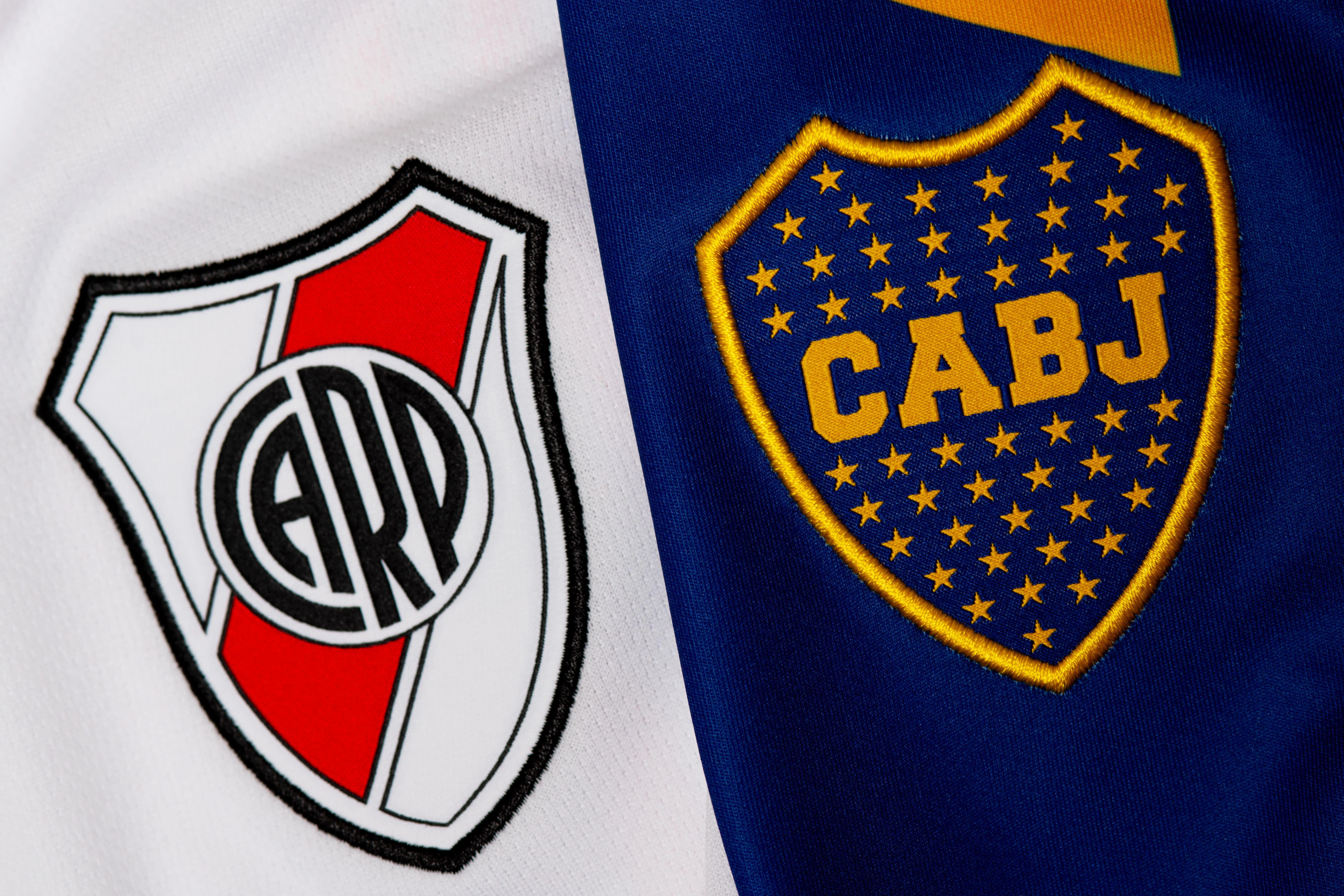
There are football matches, and then there is the Superclásico. The duel between Boca Juniors and River Plate is not simply a clash between two clubs from Buenos Aires: it is a cultural fracture that has divided families, neighborhoods, and entire generations for over a century. In Argentina, the question “Which team do you support?” isn’t a mere sports curiosity; it’s practically a declaration of identity.
Media outlets like The Guardian, BBC Sport, and FIFA itself have classified this derby as one of the most passionate and intense matches in the world. And it’s no exaggeration: every time Boca and River face off, the country comes to a standstill. The streets of Buenos Aires empty out, restaurants pull down their shutters before the opening whistle, and millions of people in over 100 countries follow the match live. There is no other club rivalry in the world with the capacity to absorb an entire nation quite like this one.
In this article, we review everything you need to know about the Argentine Superclásico: its historical origins, the statistics defining over a century of clashes, the idols who starred in it, the most memorable moments, and the current state of the rivalry in 2025.
📋 Table of Contents
- Origin and Historical Context
- General Statistics (up to 2025)
- Head-to-Head by Competition
- Historical Figures of the Superclásico
- Superclásico All-Time Top Scorers
- Players with the Most Appearances
- Unforgettable Superclásico Moments
- Players Who Wore Both Shirts
- Superclásico Trivia
- Stadiums and Current State (2025)
- Global Impact
- Conclusion
Origin and Historical Context
To understand the Superclásico, you have to go back to the early years of the 20th century in the Buenos Aires neighborhood of La Boca, a working-class port area largely inhabited by Italian and Spanish immigrants who had arrived at the Río de la Plata seeking a better life. It was within this context of popular roots that Argentina’s two biggest clubs were born.
Boca Juniors was founded in 1905 by Genovese immigrants, and from its origins, it was inextricably linked to the identity of the people, the worker, and the humble neighborhood. River Plate, founded a year earlier in 1901, started out in the same area but eventually relocated to the elegant neighborhood of Núñez in northern Buenos Aires, where they built the largest stadium on the continent.
That geographical move was also a symbolic one. River began to be called “Los Millonarios” (The Millionaires), a nod to both their relocation and the reputation of their signings and facilities. Boca was dubbed “Los Xeneizes”—the demonym for Genoa in the Ligurian dialect—and remained the club of the everyday people, representing the working class and the neighborhood that never moved.
The first official clash between the two teams took place in 1913, and since then, the derby has amassed over a hundred years of history featuring matches suspended due to riots, finals played on another continent, idols who crossed the divide, and moments forever seared into the Argentine collective memory. It’s not just a football match: it is the reflection of two ways of understanding Buenos Aires, Argentina, and life itself.
General Statistics (up to 2025)
Over a century of encounters yields a record that perfectly reflects the tightness and intensity of this rivalry:
| Result | Count |
|---|---|
| Total Official Matches | 264 |
| Boca Juniors Wins | 92 |
| River Plate Wins | 88 |
| Draws | 84 |
Boca leads River by a mere four victories in the all-time historical record, a gap that could be reversed at any moment. That parity is, in itself, part of the greatness of the derby: neither has ever overwhelmingly dominated the other. Each generation has had its own “era,” and the overall scoreboard remains more of an invitation to keep playing than a definitive verdict.
Head-to-Head by Competition
International Tournaments
On the continental stage, Boca and River have met on 32 official occasions, broken down as follows:
- 28 matches in the Copa Libertadores de América
- 2 matches in the Copa Sudamericana (2014)
- 2 matches in the Supercopa Sudamericana (1994)
Boca maintains a slight edge in the international head-to-head, but the moment that eclipses all else was the 2018 Copa Libertadores Final, the only time the two teams faced each other for the title of the continent’s most important tournament. That match, which was supposed to be played at the Monumental but had to be moved to the Santiago Bernabéu Stadium in Madrid due to serious incidents surrounding the second leg, ended in a 3-1 victory for River after extra time. For many, it was the definitive Superclásico of the 21st century.
Domestic Tournaments
Domestically, their head-to-head record comprises 222 matches, of which:
- In the professional era: Boca has won 76, River 70, with 66 draws.
- In the amateur era: River won 4, Boca 3, with 3 draws.
Boca leads the domestic head-to-head by 5 victories, although the difference has fluctuated over the decades depending on which team was enjoying its peak moments.
Domestic Cups
In national cup competitions, River dominates with 3 more victories across 10 direct encounters. Some of those meetings are part of the derby’s folklore:
- Copa Británica (1946)
- Copa Centenario (1993)
- Supercopa Argentina (2017)
- Copa Maradona and Copa Argentina (2020-21 season)
Historical Figures of the Superclásico
Boca Juniors Idols
Juan Román Riquelme is, for the Xeneize fanbase, much more than a footballer: he is the symbol of the football Boca wants to play. Wearing the number 10 on his back, Riquelme dictated the tempo of the match at will, turning pauses and precision into lethal weapons in the Superclásico.
Martín Palermo, Boca’s all-time top scorer, netted 9 goals in the derby with a naturalness that felt cruel to his rivals. His header in the 2000 Libertadores final against Real Madrid was enough to secure his legend status, but he also left behind unforgettable performances in the Superclásico.
Carlos Tevez embodied another facet of the Xeneize spirit: grit, sacrifice, and a working-class heart. His stints at Boca across different eras were always charged with intensity, especially in clashes against River.
Diego Maradona only played one season for Boca in his youth and another at the end of his career, but it was enough to make him a legend. Any image of him in the blue and gold jersey carries the weight of a symbol.
Hugo Gatti was for years the most charismatic goalkeeper in Argentine football, and his performances in the derby—often decisive with impossible saves—made him one of the most fondly remembered guardians in Superclásico history.
River Plate Idols
Enzo Francescoli, nicknamed “El Príncipe” (The Prince), was the archetype of the elegant player River has always sought to embody. His technical skill and leadership made him one of the greatest icons in the club’s history, and his image remains an obligatory reference point when discussing the Millonario style.
Ariel Ortega was perhaps the most unpredictable and electrifying player River had in the nineties. His dribbling, speed, and ability to resolve impossible situations made him the delight of the Millonario faithful in every Superclásico he played.
Marcelo Gallardo is, today, the most important name in River Plate’s recent history. As a player, he was an idol; as a manager, he built the club’s golden era with 14 titles between 2014 and 2023, including four Copa Libertadores. His return to the dugout in 2024 was welcomed as if a king were returning.
Norberto Alonso dominated the Millonario midfield during the seventies and eighties with a talent that sometimes bordered on the incomprehensible, and Ángel Labruna remains the all-time top scorer in Superclásico history, with 16 goals in 36 matches—a record reflecting a career devoted to serving South American football’s most important derby.
Superclásico All-Time Top Scorers
| Player | Club | Goals |
|---|---|---|
| Ángel Labruna | River Plate | 16 |
| Oscar Más | River Plate | 12 |
| Paulo Valentim | Boca Juniors | 10 |
| Carlos Morete | River Plate | 9 |
| Martín Palermo | Boca Juniors | 9 |
| Roberto Cherro | Boca Juniors | 8 |
| Bernabé Ferreyra | River Plate | 8 |
| Norberto Menéndez | River & Boca | 7 |
| Luis Rongo | River Plate | 7 |
Ángel Labruna tops the list by a considerable margin, and his record of 16 goals in the derby has withstood decades of attempts to be broken. It’s one of those stats that speaks not only to a great player but to an entire era of Argentine football.
Players with the Most Appearances
| Player | Club(s) | Matches |
|---|---|---|
| Reinaldo Merlo | River | 42 |
| Hugo Gatti | River & Boca | 38 |
| Silvio Marzolini | Boca | 37 |
| Ángel Labruna | River | 36 |
| Juan José López | River & Boca | 36 |
| Roberto Mouzo | Boca | 35 |
| Amadeo Carrizo | River | 34 |
| Vicente Pernía | Boca | 32 |
| Ubaldo Fillol | River | 32 |
| Oscar Más | River | 31 |
Reinaldo Merlo leads this ranking with 42 Superclásico appearances, a figure that speaks of an entire career dedicated to River and the frequency with which this duel was played during the amateur era and early years of professionalism.
Unforgettable Superclásico Moments
2018 Copa Libertadores Final — The Madrid Superclásico
It is likely the most famous Superclásico in modern history. The 2018 Copa Libertadores final between Boca and River was scheduled for the Estadio Monumental, but serious attacks against the Boca team bus prior to the second leg forced CONMEBOL to relocate the match to the Santiago Bernabéu Stadium in Madrid. It was the first Libertadores final played outside South America. River won 3-1 after extra time and was crowned continental champion, while thousands of Argentines filled the streets of Madrid with an intensity the Spanish had never seen before.
2004 Libertadores Semifinal — The Monumental Penalties
In one of the tensest derbies the Copa Libertadores can recall, Boca and River met in the semifinals with a spot in the grand final on the line. After a draw on aggregate, the tie went to a penalty shootout at the Estadio Monumental. Boca converted all their kicks and advanced to the final, eliminating the Millonario on their home turf in front of their own fans. A night of tension and drama that still induces shivers today.
Apertura 2004 — Palermo and Battaglia Before a Frenzied Bombonera
In a domestic league match, Boca defeated River 2-0 with goals from Martín Palermo and Sebastián Battaglia on a night when La Bombonera was pushed to its emotional limits. It’s one of those matches that Xeneize fans recount from generation to generation.
Clausura 1994 — River and Ortega Dismantle La Bombonera
With a young Ariel Ortega shining in midfield, River thrashed Boca 3-0 at La Bombonera, a result that always carries special weight in that stadium due to how difficult it is to win there. It was one of Ortega’s first great derby matches and foreshadowed everything that was to come.
Players Who Wore Both Shirts
In the Superclásico, there is a special category of players who, under different circumstances, played for both clubs: the so-called “traitors” by the fanbase receiving them, and nostalgic heroes to the one losing them.
- Hugo Gatti started his career at River before becoming a legend between the posts for Boca.
- Jonatan Maidana was a champion with Boca in 2007 and later became a key piece of Gallardo’s River.
- Juan José López is another case of a Millonario legend who also defended the blue and gold jersey.
- Claudio Caniggia was a champion with River and also wore the Boca shirt, marking one of the most striking cases in recent history.
- Lucas Pratto arrived at Boca without leaving a mark, but at River, he became a hero of the 2018 Libertadores with decisive goals.
- José Manuel Moreno, the star of the Millonario’s “La Máquina” in the forties, ended his career at Boca.
Superclásico Trivia
- Norberto Menéndez is the only player in the entire history of the derby to score official goals defending both shirts, a feat so improbable that it will take a long time to be repeated.
- Hugo Gatti holds the record for the most matches played in the history of Argentine football with 757 appearances, and a large part of those that marked him most were precisely the Superclásicos.
- Jonatan Maidana is the most successful player in the history of River Plate, with 17 titles won during the Gallardo era, including four Copa Libertadores.
- FIFA officially cataloged the Superclásico as the most passionate match in the world following a study on the intensity, rivalry, and emotional impact of major global derbies.
- In 2018, the Superclásico was played in Europe for the first and only time when Madrid’s Santiago Bernabéu hosted the Copa Libertadores final. The image of 60,000 divided Argentines in the heart of Madrid went around the world.
Stadiums and Current State (2025)
The Estadio Monumental Antonio Vespucio Liberti, home to River Plate in the Núñez neighborhood, is the largest capacity stadium in all of South America. Following its recent remodeling, it can accommodate over 84,000 spectators, and occupancy data for River matches show values near 99% capacity. It is a modern venue combining history with world-class infrastructure.
La Bombonera, the Boca Juniors stadium in La Boca, has a much smaller capacity—54,000 people—but more than compensates with the atmosphere it generates. It is one of the most acoustically dense stadiums in the world, and those who have been there during a high-tension match describe a physical, not just visual, experience: the stands literally vibrate.
Regarding current sporting affairs, the start of 2025 found Boca Juniors going through a significant institutional crisis, with a streak of 11 matches without a win and the dissolution of the Football Council that had been led by Juan Román Riquelme since 2020. The club is looking to redefine its sporting management structure at a delicate time. River Plate, on the other hand, is experiencing a period of renewed hope following the return of Marcelo Gallardo to the dugout in 2024, aiming to repeat or surpass the achievements of his first stint.
Global Impact
The Superclásico is not just a match for Argentina: it’s a global product generating interest in dozens of countries and one that has managed to build an international audience that few club derbies can match.
- Every Superclásico gathers over 60,000 spectators in the stadium and creates an atmosphere rarely found in any other club match in the world.
- Event revenues, factoring in broadcasting rights, advertising, and attendance, exceed $10 million, a figure reflecting the heavy economic weight of the derby.
- The match is broadcast live in over 100 countries, reaching audiences across Europe, Asia, North America, and Africa.
- Major global sports media—ESPN, TyC Sports, BBC Sport, Marca, and L’Équipe, among others—cover the Superclásico with special correspondents and real-time tracking.
Conclusion
The Superclásico between Boca Juniors and River Plate is one of those football realities that is almost impossible to fully explain to someone who hasn’t experienced it from the inside. It’s not just the most important sporting rivalry in Argentina: it is a cultural, social, and historical phenomenon that has spent over a century defining itself match by match, generation by generation.
With over 264 official encounters that yield an almost perfect balance in terms of victories, with idols who have become reference points of identity for millions of people, and with moments—like the 2018 Madrid final—that transcend sport, the Superclásico remains just as relevant today as it was in 1913.
What makes this rivalry unique is not just its history or statistics, but the intensity with which each new generation of fans adopts it as their own. It’s not inherited out of obligation: it’s chosen with passion. And in that act of choosing, of donning the colors of one side or the other, lies all the greatness and humanity of the most intense match on the planet.