





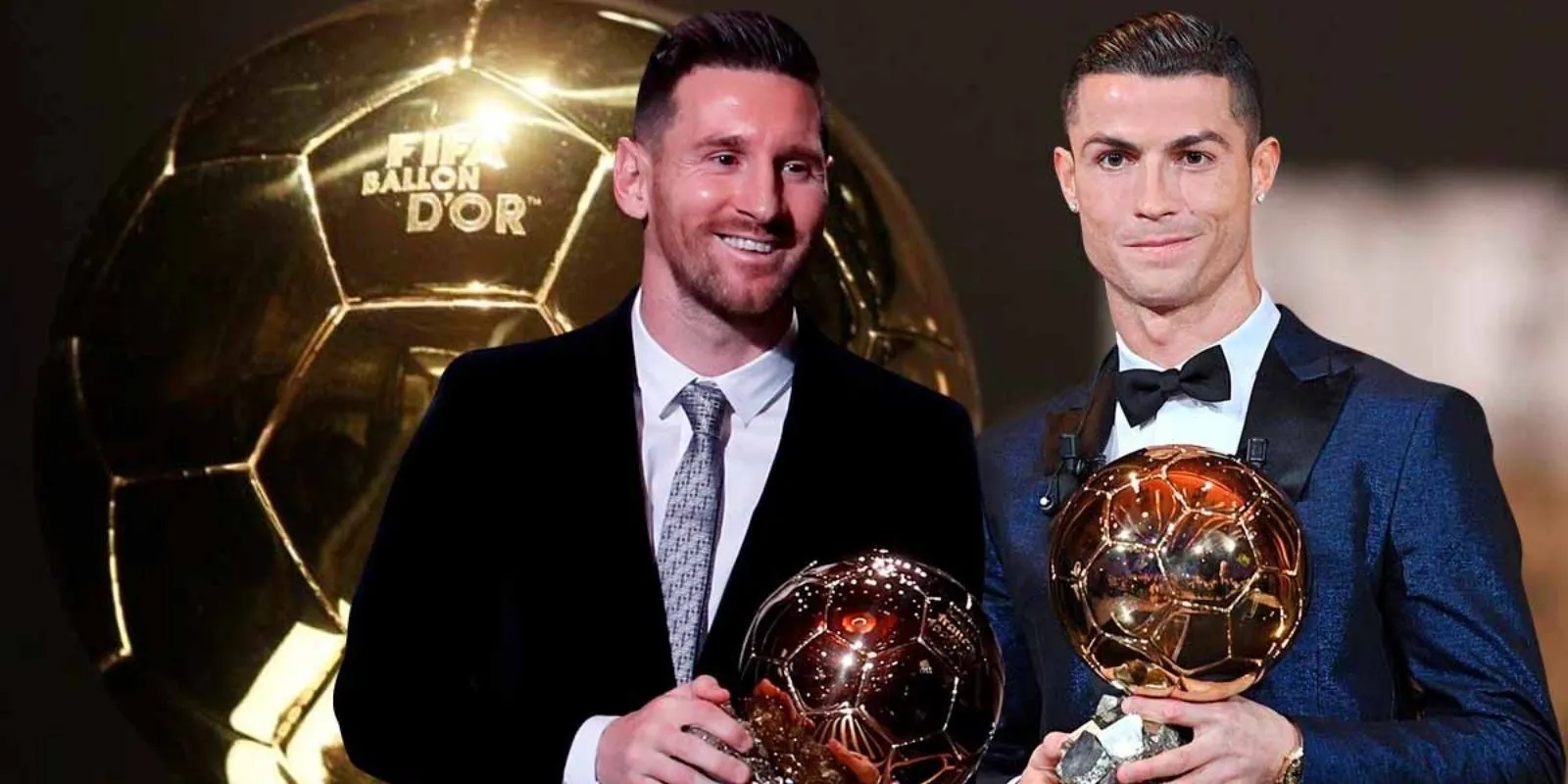
There are awards that arrive and are forgotten within weeks. And then there is one that, for nearly seven decades, has brought the footballing world to a standstill every single October. The Ballon d’Or is, without any room for debate, the most coveted individual prize in the most popular sport on the planet. It is not merely a golden crystal trophy: it is the ultimate recognition that, for that specific year, that player was the absolute best among the eight billion people who inhabit the Earth. That carries weight.
Ever since journalist Gabriel Hanot first conceived it in 1956 for the French magazine France Football, the Ballon d’Or has survived cold wars between nations, mergers with FIFA, controversies that split continents, and a two-decade duel between the two greatest footballers in modern history. In this article, we look back at it all: the origin of the award, how the winner is chosen, the complete table of champions, the most resounding controversies, and the current state of this absolute icon of world football.
📋 Table of Contents
- Origin and History of the Ballon d’Or
- How the Winner is Chosen
- All-Time Winners Table
- The Messi vs. Cristiano Era: An Unrepeatable Rivalry
- The Great Controversies of the Award
- Spin-off Awards and New Categories
- The Ballon d’Or Today and the Future of the Award
- Conclusion
Origin and History of the Ballon d’Or
The story begins as an editorial concept. In 1956, journalist Gabriel Hanot, an editor at France Football magazine, proposed creating an award to answer a question that fans had been intensely debating in cafes all across Europe for years: who exactly is the best footballer on the continent? The proposal was highly ambitious, the format was beautifully simple, and the result was historic.
The inaugural winner was the Englishman Stanley Matthews of Blackpool FC, a right winger who, at 41 years of age, remained the most devastatingly unbalancing player of his generation. His inaugural victory set the true spirit of the award right from the start: it doesn’t merely reward the most spectacular players, but those who genuinely make the biggest difference.
During its first four decades, the award existed under one massive restriction. Up until 1995, only footballers of European nationality were eligible to win the Ballon d’Or. That meant absolute legends like Pelé, Maradona, or Eusébio—despite playing their club football in Europe—could never even be considered candidates on equal footing. It is a limitation that seems completely unthinkable today, but one that perfectly reflected the fiercely Eurocentric vision of football during that era.
The evolution of the award was progressive but highly significant:
- 1995: It was opened to non-European players playing in Europe. The very first beneficiary was the Liberian George Weah, of AC Milan, who became the only African to ever win the Ballon d’Or to date.
- 2007: It was definitively expanded to any player in the world, regardless of nationality or the league they played in.
- 2010-2015: France Football reached an agreement with FIFA to merge the Ballon d’Or with the FIFA World Player award, creating the FIFA Ballon d’Or. The experiment proved highly controversial: many purists argued that FIFA’s institutional intervention heavily politicized the voting process.
- 2016: France Football reclaimed the complete independence of the award, reverting to its original format and name, and launched a brand-new gala ceremony of its own.
How the Winner is Chosen
The voting system for the Ballon d’Or has evolved heavily over the decades, but its core philosophy has remained completely intact: the final judgment must come from those who truly understand football. Today, the jury is composed of specialized journalists from the most important media outlets in every country affiliated with FIFA—one per nation, ensuring a genuinely global representation.
Each journalist casts a vote for a list of players ordered by preference, and points are distributed based entirely on that ranking order. The criteria that France Football establishes as guidelines for the voters include:
- Individual performance throughout the season and across international tournaments.
- Collective titles won: Champions League, World Cups, and domestic leagues.
- Demonstrated talent, sheer consistency, and real influence within their team.
- Fair play and professional conduct both on and off the pitch.
A fundamental nuance that many debates conveniently ignore: the Ballon d’Or rewards the complete calendar year, not just the club season. This means that a brilliant performance at a World Cup or a European Championship held during the summer can be absolutely decisive, as Fabio Cannavaro emphatically proved in 2006.
All-Time Winners Table
The complete list of Ballon d’Or champions reads like a living history of world football:
| Year | Winner | Country | Club |
|---|---|---|---|
| 1956 | Stanley Matthews | 🏴 England | Blackpool |
| 1957 | Alfredo Di Stéfano | 🇪🇸 Spain | Real Madrid |
| 1958 | Raymond Kopa | 🇫🇷 France | Real Madrid |
| 1959 | Alfredo Di Stéfano | 🇪🇸 Spain | Real Madrid |
| 1960 | Luis Suárez | 🇪🇸 Spain | Barcelona |
| 1961 | Omar Sívori | 🇮🇹 Italy | Juventus |
| 1962 | Josef Masopust | 🇨🇿 Czechoslovakia | Dukla Prague |
| 1963 | Lev Yashin | 🇷🇺 USSR | Dynamo Moscow |
| 1964 | Denis Law | 🏴 Scotland | Manchester United |
| 1965 | Eusébio | 🇵🇹 Portugal | Benfica |
| 1966 | Bobby Charlton | 🏴 England | Manchester United |
| 1967 | Flórián Albert | 🇭🇺 Hungary | Ferencváros |
| 1968 | George Best | 🇬🇧 Northern Ireland | Manchester United |
| 1969 | Gianni Rivera | 🇮🇹 Italy | AC Milan |
| 1970 | Gerd Müller | 🇩🇪 Germany | Bayern Munich |
| 1971 | Johan Cruyff | 🇳🇱 Netherlands | Ajax |
| 1972 | Franz Beckenbauer | 🇩🇪 Germany | Bayern Munich |
| 1973 | Johan Cruyff | 🇳🇱 Netherlands | Ajax |
| 1974 | Johan Cruyff | 🇳🇱 Netherlands | Ajax |
| 1975 | Oleg Blokhin | 🇷🇺 USSR | Dynamo Kyiv |
| 1976 | Franz Beckenbauer | 🇩🇪 Germany | Bayern Munich |
| 1977 | Allan Simonsen | 🇩🇰 Denmark | Borussia Mönchengladbach |
| 1978 | Kevin Keegan | 🏴 England | Hamburg |
| 1979 | Kevin Keegan | 🏴 England | Hamburg |
| 1980 | Karl-Heinz Rummenigge | 🇩🇪 Germany | Bayern Munich |
| 1981 | Karl-Heinz Rummenigge | 🇩🇪 Germany | Bayern Munich |
| 1982 | Paolo Rossi | 🇮🇹 Italy | Juventus |
| 1983 | Michel Platini | 🇫🇷 France | Juventus |
| 1984 | Michel Platini | 🇫🇷 France | Juventus |
| 1985 | Michel Platini | 🇫🇷 France | Juventus |
| 1986 | Igor Belanov | 🇷🇺 USSR | Dynamo Kyiv |
| 1987 | Ruud Gullit | 🇳🇱 Netherlands | AC Milan |
| 1988 | Marco van Basten | 🇳🇱 Netherlands | AC Milan |
| 1989 | Marco van Basten | 🇳🇱 Netherlands | AC Milan |
| 1990 | Lothar Matthäus | 🇩🇪 Germany | Internazionale |
| 1991 | Jean-Pierre Papin | 🇫🇷 France | Marseille |
| 1992 | Marco van Basten | 🇳🇱 Netherlands | AC Milan |
| 1993 | Roberto Baggio | 🇮🇹 Italy | Juventus |
| 1994 | Hristo Stoichkov | 🇧🇬 Bulgaria | Barcelona |
| 1995 | George Weah | 🇱🇷 Liberia | AC Milan |
| 1996 | Matthias Sammer | 🇩🇪 Germany | Borussia Dortmund |
| 1997 | Ronaldo Nazário | 🇧🇷 Brazil | Barcelona / Inter |
| 1998 | Zinedine Zidane | 🇫🇷 France | Juventus |
| 1999 | Rivaldo | 🇧🇷 Brazil | Barcelona |
| 2000 | Luis Figo | 🇵🇹 Portugal | Real Madrid |
| 2001 | Michael Owen | 🏴 England | Liverpool |
| 2002 | Ronaldo Nazário | 🇧🇷 Brazil | Real Madrid |
| 2003 | Pavel Nedvěd | 🇨🇿 Czech Republic | Juventus |
| 2004 | Andriy Shevchenko | 🇺🇦 Ukraine | AC Milan |
| 2005 | Ronaldinho | 🇧🇷 Brazil | Barcelona |
| 2006 | Fabio Cannavaro | 🇮🇹 Italy | Real Madrid |
| 2007 | Kaká | 🇧🇷 Brazil | AC Milan |
| 2008 | Cristiano Ronaldo | 🇵🇹 Portugal | Manchester United |
| 2009 | Lionel Messi | 🇦🇷 Argentina | Barcelona |
| 2010 | Lionel Messi | 🇦🇷 Argentina | Barcelona |
| 2011 | Lionel Messi | 🇦🇷 Argentina | Barcelona |
| 2012 | Lionel Messi | 🇦🇷 Argentina | Barcelona |
| 2013 | Cristiano Ronaldo | 🇵🇹 Portugal | Real Madrid |
| 2014 | Cristiano Ronaldo | 🇵🇹 Portugal | Real Madrid |
| 2015 | Lionel Messi | 🇦🇷 Argentina | Barcelona |
| 2016 | Cristiano Ronaldo | 🇵🇹 Portugal | Real Madrid |
| 2017 | Cristiano Ronaldo | 🇵🇹 Portugal | Real Madrid |
| 2018 | Luka Modrić | 🇭🇷 Croatia | Real Madrid |
| 2019 | Lionel Messi | 🇦🇷 Argentina | Barcelona |
| 2020 | Not Awarded | — | (COVID-19 pandemic) |
| 2021 | Lionel Messi | 🇦🇷 Argentina | Barcelona / PSG |
| 2022 | Karim Benzema | 🇫🇷 France | Real Madrid |
| 2023 | Lionel Messi | 🇦🇷 Argentina | Inter Miami |
| 2024 | Rodri | 🇪🇸 Spain | Manchester City |
The Messi vs. Cristiano Era: An Unrepeatable Rivalry
No analysis of the Ballon d’Or is completely thorough without pausing to reflect on the 16 years entirely dominated by Lionel Messi and Cristiano Ronaldo (2008-2023). Between them, they amassed 13 of the 15 Ballons d’Or awarded during that period—a hegemony entirely without precedent in the history of sports. Only Luka Modrić in 2018 and Karim Benzema in 2022 managed to successfully break that absolute dominance.
What makes this extraordinary isn’t merely the sheer number of trophies. It’s the context: these two players didn’t just split the awards due to a lack of competition. They both had absolutely extraordinary seasons simultaneously. The tragic flaw of many brilliant players from that generation—Xavi, Iniesta, Ribéry, Neymar—wasn’t a lack of talent, but the devastating bad luck of living in the exact same era as two absolute footballing extraterrestrials.
Messi has accumulated a staggering 8 Ballons d’Or, a record that appears genuinely unassailable in the short term. What makes his dominance particularly significant is the incredible diversity of his winning seasons: four consecutive wins during his absolute peak (2009-2012), a fifth following his greatest World Cup performance (2021, serving as a prelude to the 2022 world title), and the eighth in 2023, while already at Inter Miami, proving definitively that sheer excellence possesses no zip code.
Cristiano Ronaldo won his 5 trophies across different clubs (Manchester United, Real Madrid twice) and during entirely different phases of his career, which speaks volumes about his extraordinary capacity to constantly reinvent himself both physically and tactically. His 2008 Ballon d’Or with United was won as the undisputed best winger on the planet. The awards from 2013, 2014, and 2016-2017 were secured as the greatest striker in the world, posting goalscoring averages that violently shattered historical records in the Spanish League.
The Great Controversies of the Award
The Ballon d’Or has never been immune to controversy. Throughout its long history, several decisions have generated fierce debates that continue to fuel arguments today:
Lewandowski 2021: The wound that won’t heal. During the 2019-20 season, the Polish striker Robert Lewandowski scored 55 goals in 47 matches for Bayern Munich, winning the Champions League, the Bundesliga, and the Club World Cup. He was, objectively speaking, the absolute best player in the world that year. However, the COVID-19 pandemic led France Football to cancel the 2020 gala entirely, leaving Lewandowski without his richly deserved award. The decision was harshly criticized: when Messi won in 2021 with an inferior individual season—albeit backed by a Copa América victory and deep sentimental attachment to the Argentine—France Football publicly acknowledged the injustice toward Lewandowski during the 2021 gala. It was a symbolic gesture that did nothing to actually erase the grievance.
Ribéry 2013: The stolen year? Franck Ribéry delivered one of the most complete seasons in recent history during 2012-13: he won the treble with Bayern Munich (Bundesliga, DFB-Pokal, and Champions League) and was named UEFA Best Player in Europe. Many experts heavily argued he deserved the Ballon d’Or over Cristiano Ronaldo. Yet, the overwhelming hegemony of Messi and Cristiano that year ultimately carried more weight than any objective arguments.
Modrić 2018: The year football breathed again. In a climate where many fans had grown utterly exhausted by Messi and Cristiano hoarding every award, Luka Modrić won the Champions League with Real Madrid and dragged Croatia all the way to the World Cup final in Russia. His victory was universally welcomed as a breath of fresh air and a beautiful recognition of collective football. It wasn’t a controversy: it was pure justice.
Players who never won it: Some of the absolute greatest of their generation never managed to touch the trophy. Xavi Hernández, the definitive best midfielder of the first decade of the century, finished as runner-up three times without ever winning. Andrés Iniesta, the hero of the 2010 World Cup and Euro 2012, didn’t even reach the podium during his absolute prime. Thierry Henry, Ronaldinho (who did manage to win one), and Neymar are just a few other names who were left stranded just outside the gates of Olympus.
Spin-off Awards and New Categories
As the years passed, France Football significantly expanded its ecosystem of recognition. Today, the Ballon d’Or gala hands out several parallel awards that have cultivated their own massive relevance:
- Women’s Ballon d’Or (since 2018): Recognizes the absolute best female player in the world. The winners to date have been Ada Hegerberg (Norway, Lyon, 2018), Megan Rapinoe (USA, 2019), Alexia Putellas (Spain, 2021 and 2022), and Aitana Bonmatí (Spain, 2023), thoroughly cementing the immense dominance of Spanish women’s football in recent years.
- Kopa Trophy: Awarded to the best player in the world under 21. A highly reliable indicator of who will dominate the main award in the future. It has been won by Mbappé, Gavi, Pedri, and Lamine Yamal.
- Yashin Trophy: Awarded to the best goalkeeper of the year, named in honor of the only goalkeeper to ever win the Ballon d’Or (1963). It has been won by Alisson, Ederson, and Emiliano Martínez.
- Gerd Müller Trophy: Awarded to the season’s top goalscorer, fully recognizing the absolute purity of finishing as an art form.
The Ballon d’Or Today and the Future of the Award
In 2024, the gala was heavily overshadowed by a massive controversy. Real Madrid and several of their star players—including Vinícius Júnior, widely considered by many as the heavy favorite for the award—boycotted the ceremony in Paris in protest after word leaked that the winner would actually be the Spanish midfielder Rodri from Manchester City. France Football’s decision was fiercely criticized by Madrid supporters, even though Rodri had delivered an objectively brilliant season: winning both the Premier League with City and the European Championship with Spain.
The incident instantly reopened a debate that has simmered for years: is the Ballon d’Or still the fairest award in football? Should it completely overhaul its voting system to incorporate more objective metrics? Does the club a player represents carry far too much weight in the voters’ perception?
With Lamine Yamal, Vinícius Júnior, Erling Haaland, and Jude Bellingham standing tall as the most solid candidates from the new generation, the Ballon d’Or is actively entering a brand-new era. The Messi-Cristiano cycle has permanently closed. What comes next promises to be an incredibly open and fiercely exciting dispute, where perhaps no single player will ever manage to dominate for more than two or three consecutive years.
Conclusion
The Ballon d’Or has served as the ultimate thermometer of footballing genius for nearly seventy years. In that time, it has crowned unstoppable strikers, visionary midfielders, an imperious defender, and even one utterly incomparable goalkeeper. It has survived wars, global pandemics, institutional controversies, and even a heavily scrutinized merger with FIFA. And to this very day, it remains the only individual trophy that forces the greatest players in the world to hold their breath right as the envelope is opened.
Regardless of whether each year’s winner is genuinely the most deserving or not, the Ballon d’Or serves a vital cultural function that no other sporting award could ever possibly replicate: it forces the entire footballing world to stop for one night every year and ask exactly who was, out of everyone, the absolute greatest. That question, simple as it may seem, contains all the immense epic, passion, and eternal debate that makes this sport so undeniably great.
As long as there is football, there will be a Ballon d’Or. And as long as there is a Ballon d’Or, there will be a passionate, endless argument over whether the winner actually deserved it.