





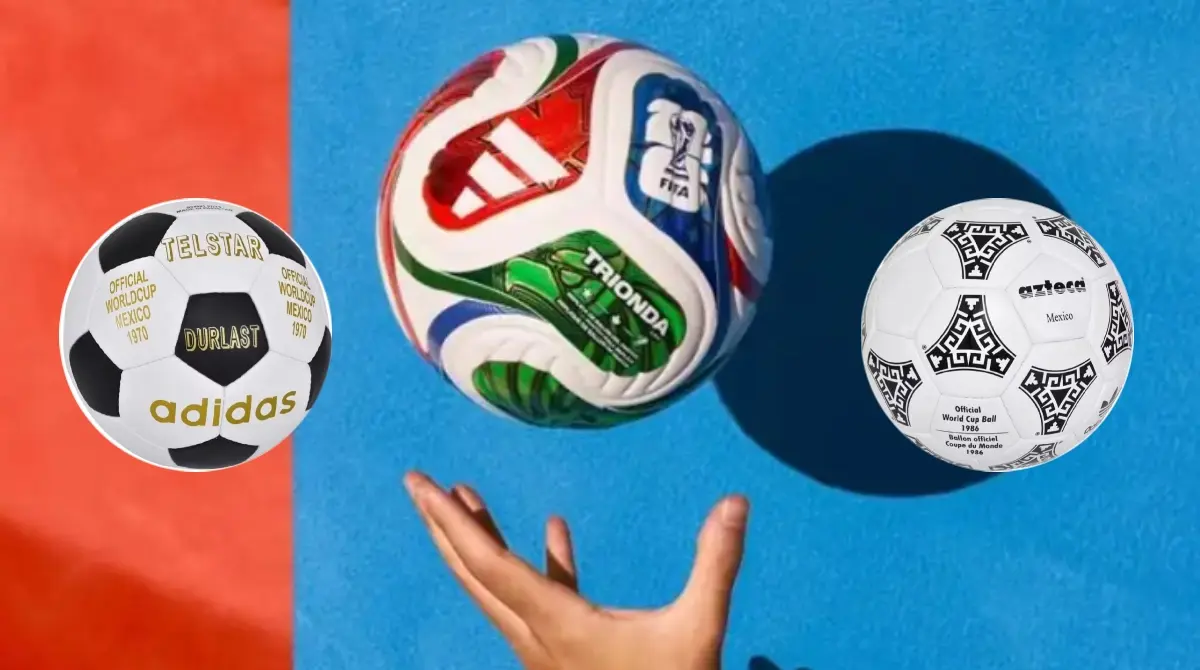
Before every opening whistle, there is a protagonist that almost never receives applause: the ball itself. While the spotlight always falls on the players and managers, the sphere rolling across the pitch has changed almost as much as football itself. We have transitioned from hand-stitched leather that became waterlogged in the rain, to spheres equipped with chips, motion sensors, and materials specifically designed to reduce the environmental impact of their manufacturing.
Reviewing this history, ball by ball, is essentially reviewing the history of the World Cup: every edition introduced its own symbol, its own controversy, and, almost always, its own nickname that ended up permanently etched in the memories of the fans. In this article, we journey through the 23 editions of the World Cup, from Uruguay 1930 up to the Trionda that will take the pitch at the 2026 tournament in North America.
📋 Table of Contents
- 🏆 2026 World Cup – Trionda (Mexico, USA, and Canada)
- 🏆 2022 World Cup – Al Rihla (Qatar)
- 🏆 2018 World Cup – Telstar 18 (Russia)
- 🏆 2014 World Cup – Brazuca (Brazil)
- 🏆 2010 World Cup – Jabulani (South Africa)
- 🏆 2006 World Cup – +Teamgeist (Germany)
- 🏆 2002 World Cup – Fevernova (South Korea-Japan)
- 🏆 1998 World Cup – Tricolore (France)
- 🏆 1994 World Cup – Questra (USA)
- 🏆 1990 World Cup – Etrusco Único (Italy)
- 🏆 1986 World Cup – Azteca (Mexico)
- 🏆 1982 World Cup – Tango España
- 🏆 1978 World Cup – Tango (Argentina)
- 🏆 1974 World Cup – Telstar Durlast (Germany)
- 🏆 1970 World Cup – Telstar (Mexico)
- 🏆 1966 World Cup – Challenge 4-Star (England)
- 🏆 1962 World Cup – Crack (Chile)
- 🏆 1958 World Cup – Top Star (Sweden)
- 🏆 1954 World Cup – Swiss World Champion (Switzerland)
- 🏆 1950 World Cup – Superball Duplo T (Brazil)
- 🏆 1938 World Cup – Allen (France)
- 🏆 1934 World Cup – Federale 102 (Italy)
- 🏆 1930 World Cup – Tiento and T-Model (Uruguay)
- 🧠 Conclusion
🏆 2026 World Cup – Trionda (Mexico, USA, and Canada)
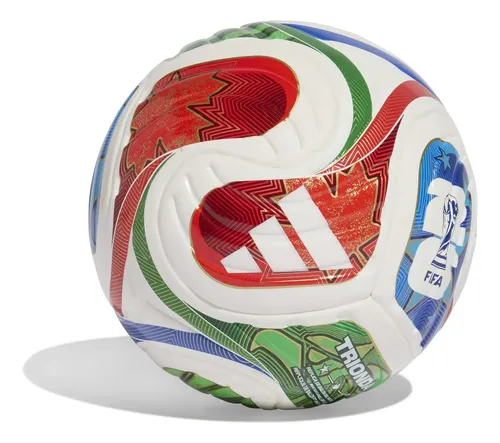
- Manufacturer: Adidas (the brand’s 15th consecutive match ball for a World Cup)
- Material: Just four thermally bonded panels with no visible seams, the lowest number in the history of World Cup balls
- Design: Red, green, and blue patterns converging into a central triangle, paying homage to the three host nations
- Symbols: An embossed star for the United States, a maple leaf for Canada, and a golden eagle for Mexico
- Trivia: Its name blends “Tri,” for the three host countries, and “onda” (wave), represented in the fluid geometry of its panels
Description: Unveiled on October 2, 2025, the Trionda will serve as the official match ball of the 2026 FIFA World Cup, which will be hosted simultaneously by three nations for the first time in history. Its design incorporates a red maple leaf, a green golden eagle, and a blue star as direct nods to Canada, Mexico, and the United States. The unprecedented four-panel construction uses fluid geometry to replicate the “waves” that give the ball its name. Beyond its visual design, the Trionda arrives as the direct heir to the line of smart balls pioneered by the Al Rihla in 2022, cementing a trend where the World Cup ball is no longer viewed merely as sporting equipment, but as a piece of technology in its own right.
🏆 2022 World Cup – Al Rihla (Qatar)
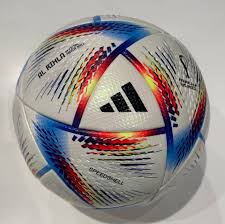
- Manufacturer: Adidas (the brand’s 14th consecutive World Cup ball)
- Material: Textured polyurethane leather featuring 20 panels
- Sustainability: The first World Cup match ball manufactured exclusively using water-based inks and glues
- Design: Inspired by Qatari architecture, traditional boats, and the national flag
- Trivia: Its name translates to “the journey” in Arabic
Description: The Al Rihla, meaning “the journey” in Arabic, became one of the most environmentally friendly World Cup balls in the tournament’s history thanks to its construction using water-based inks and glues. Its CRT-CORE heart and SPEEDSHELL surface were engineered to make the ball travel faster through the air than any of its predecessors, simultaneously presenting an added challenge for goalkeepers. It was also the first World Cup ball to transmit real-time motion data, acting as a crucial component of the semi-automated offside system that FIFA debuted during the tournament.
🏆 2018 World Cup – Telstar 18 (Russia)
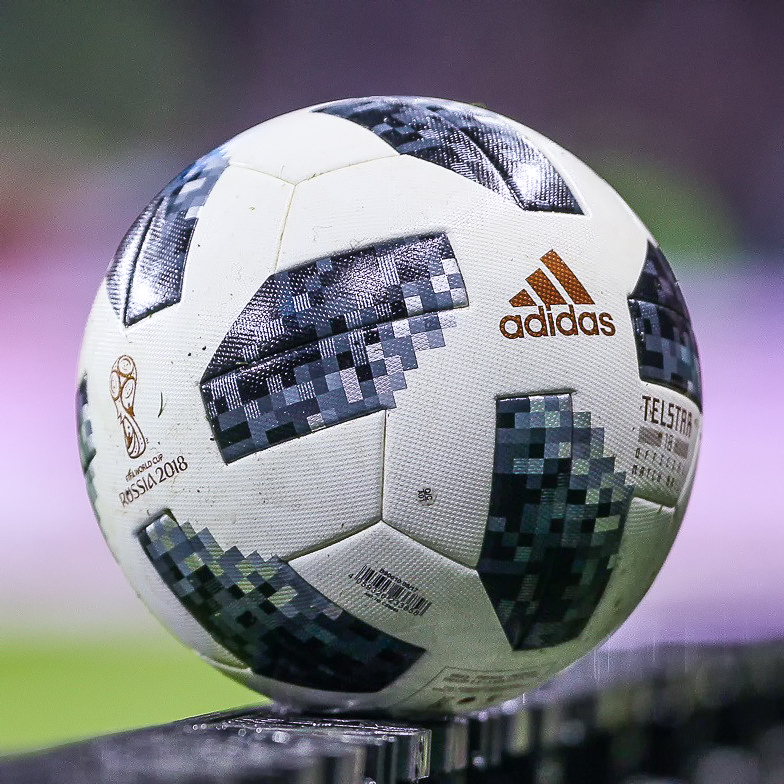
- Manufacturer: Adidas
- Material: Six thermally bonded panels
- Design: A direct tribute to the iconic 1970 Telstar from Mexico
- Trivia: Embedded with an NFC chip that allowed fans to interact with the ball via smartphone
Description: The Telstar 18 resurrected the black-and-white pattern that made the 1970 ball famous, but reinterpreted it with modern technology. The integrated NFC chip allowed fans to access exclusive content, match statistics, and challenges simply by tapping their phones against the ball—a novel way of blending the visual nostalgia of the 1970s with the connectivity inherent to 21st-century football.
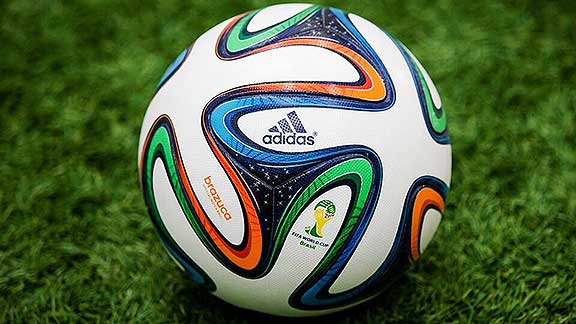
🏆 2014 World Cup – Brazuca (Brazil)
- Manufacturer: Adidas
- Material: Six symmetrical, thermally bonded panels
- Design: Vibrant colors inspired by traditional Brazilian wish bands and the country’s joyful spirit
- Trivia: The name was chosen by over a million Brazilian fans in a public vote
Description: The Brazuca passed aerodynamic stability tests at Loughborough University with better results than any previous World Cup ball, translating to a much more predictable behavior in the air. Its six-panel construction—down from the Jabulani’s eight—drastically reduced complaints from goalkeepers and made it one of the most highly praised balls by players in the recent history of the tournament.
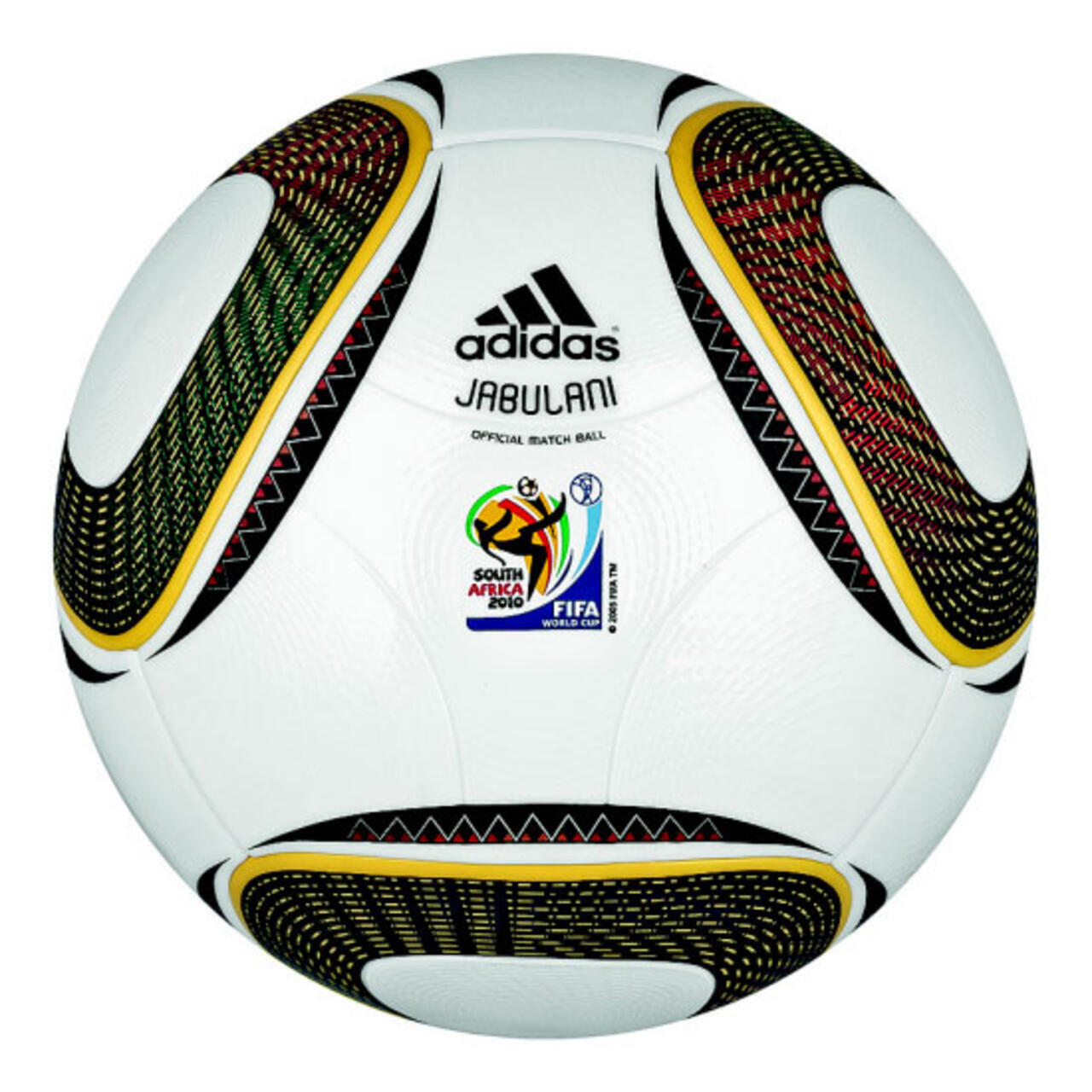
🏆 2010 World Cup – Jabulani (South Africa)
- Manufacturer: Adidas
- Material: Eight thermally bonded panels featuring a textured surface
- Design: Eleven colors representing a team’s eleven players, the eleven official languages of South Africa, and the country’s eleven communities
- Trivia: It drew fierce criticism from both goalkeepers and strikers for its allegedly unpredictable trajectory at high altitudes
Description: The Jabulani—which translates to “to celebrate” in Zulu—was marred by controversy. Its nearly perfect spherical shape, achieved using just eight panels, caused a much more erratic flight path than anticipated, particularly in high-altitude stadiums. Despite the intense criticism, its technological legacy was significant: it forced Adidas to completely rethink the balance between perfect sphericity and predictable aerodynamics in the match balls that followed.
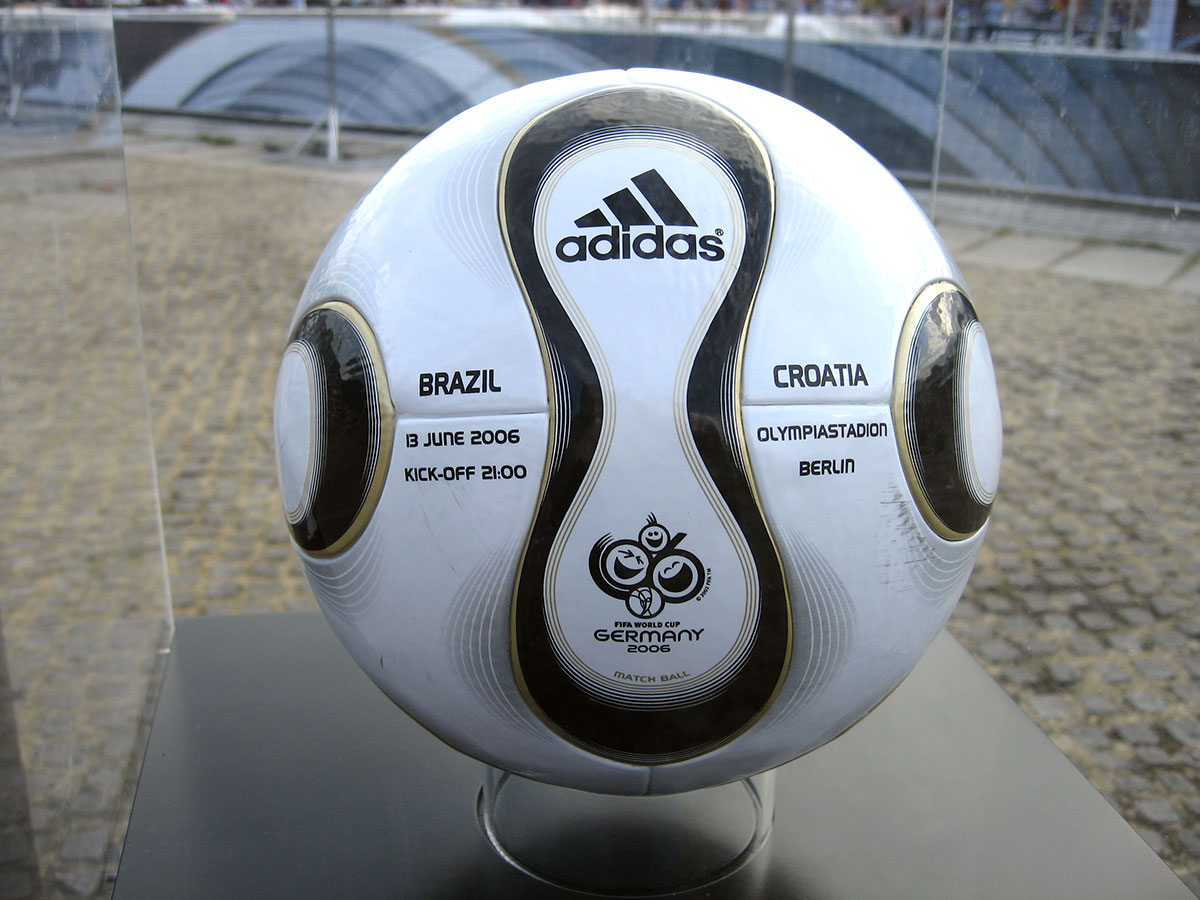
🏆 2006 World Cup – +Teamgeist (Germany)
- Manufacturer: Adidas
- Material: 14 curved panels joined via thermal bonding, replacing the traditional 32
- Design: Black and white with a thin golden line, paying homage to the classic colors of the German national team and the World Cup trophy
- Trivia: It was the first World Cup ball without physical stitches; the ”+” sign was added to the name purely for trademark registration purposes
Description: The +Teamgeist broke the 32-panel standard that had been in use since 1970, reducing the count to just 14 curved faces joined thermally rather than stitched. This eliminated 60% of the points where three panels intersected, theoretically producing a rounder ball with more consistent performance. For the final in Berlin, Adidas introduced a special edition dubbed the Teamgeist Berlin, marking the first time a unique ball was manufactured specifically for a World Cup final.
🏆 2002 World Cup – Fevernova (South Korea-Japan)
- Manufacturer: Adidas
- Design: Gold and red patterns inspired by Asian energy and dynamism
- Trivia: It featured a synthetic foam layer beneath the surface to improve control and shock absorption
Description: The Fevernova marked a radical departure from the black-and-white aesthetic that had dominated World Cup balls since 1970. Its striking gold design aimed to represent the fusion of tradition and modernity of the two Asian host nations, while its internal construction made it noticeably lighter than its predecessors. While strikers certainly took advantage of this, it also raised doubts among goalkeepers regarding its erratic behavior on long-distance shots.
🏆 1998 World Cup – Tricolore (France)
- Manufacturer: Adidas
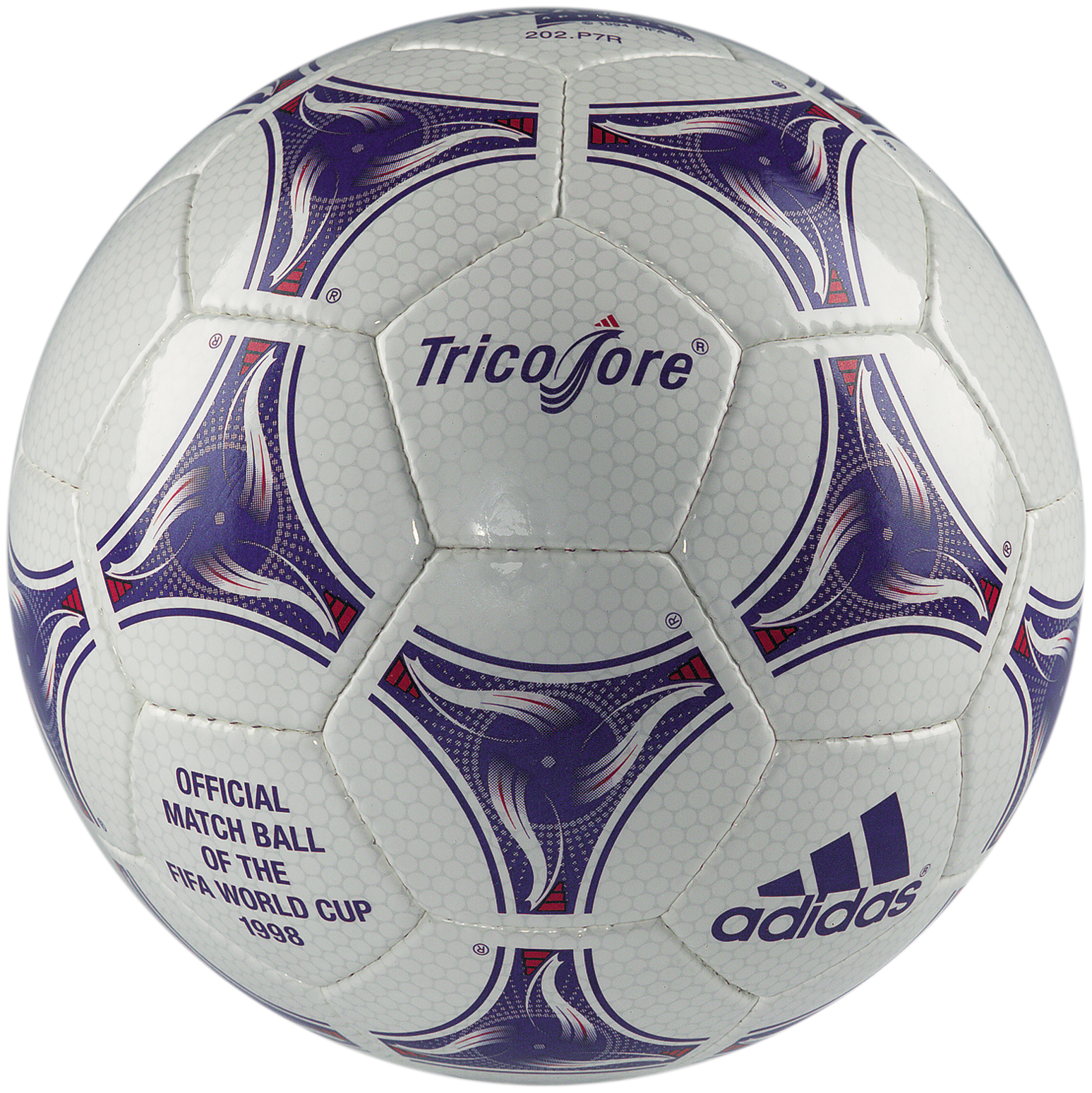
- Design: Blue, white, and red—the colors of the French flag—alongside a stylized Gallic rooster
- Trivia: It was the first multi-colored ball in World Cup history
Description: Up until 1998, all World Cup balls had maintained a classic white base with minimal, specific detailing. The Tricolore changed that standard by introducing a fully colored design, perfectly aligned with the identity of the host nation, France. The ball ultimately became permanently linked to the triumph of Les Bleus, who lifted their very first World Cup that same year at the Stade de France.
🏆 1994 World Cup – Questra (USA)
- Manufacturer: Adidas
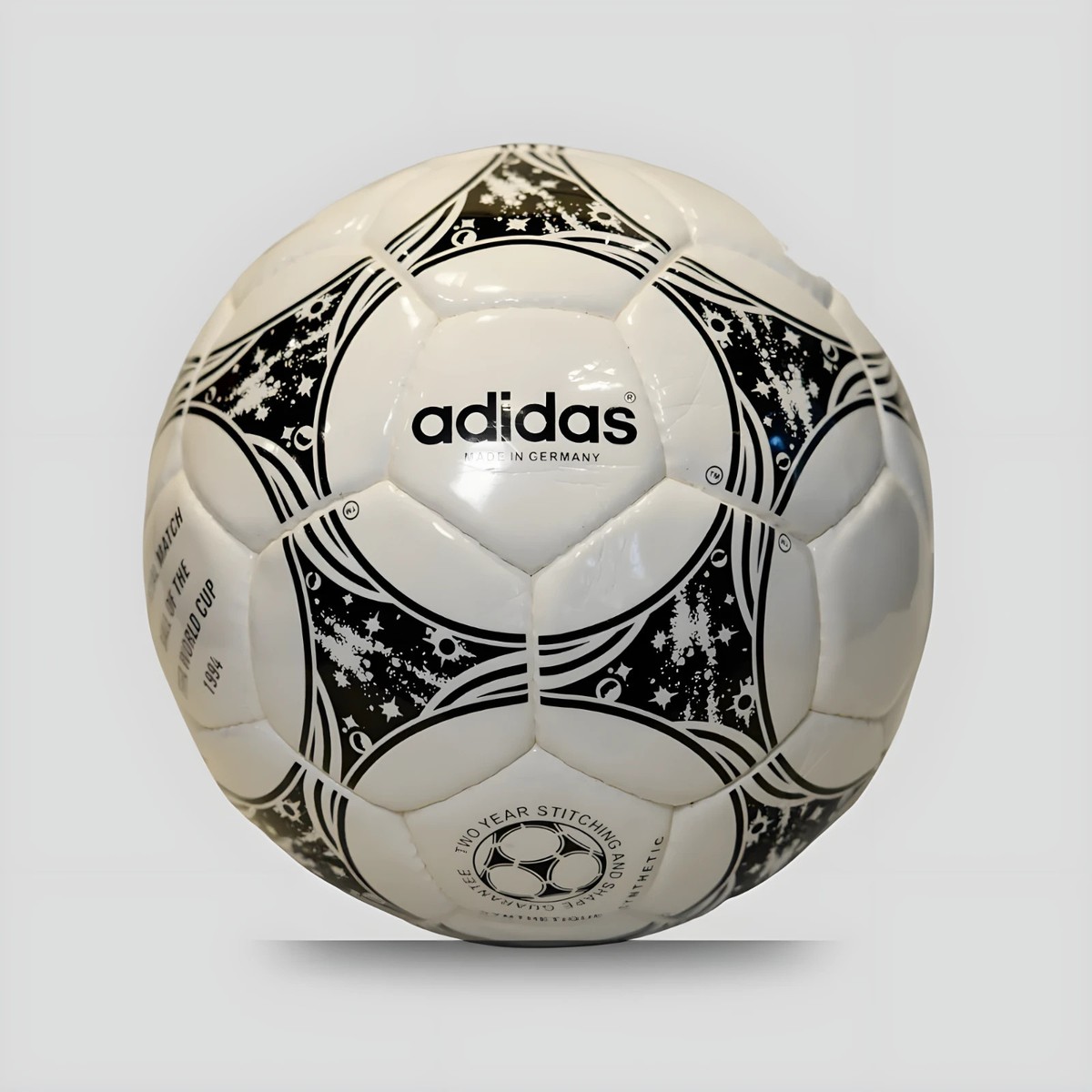
- Design: Stars and patterns evoking American space exploration
- Trivia: It incorporated a layer of polyurethane foam that improved the ball’s responsiveness in warm climates
Description: The Questra arrived at a highly atypical World Cup, played in the middle of the American summer under sweltering temperatures that truly tested the material’s consistency. Its internal foam layer helped maintain stable bounce and touch even under those harsh conditions, cementing a trend of material innovation that Adidas would continue to develop over the ensuing decades.
🏆 1990 World Cup – Etrusco Único (Italy)
- Manufacturer: Adidas
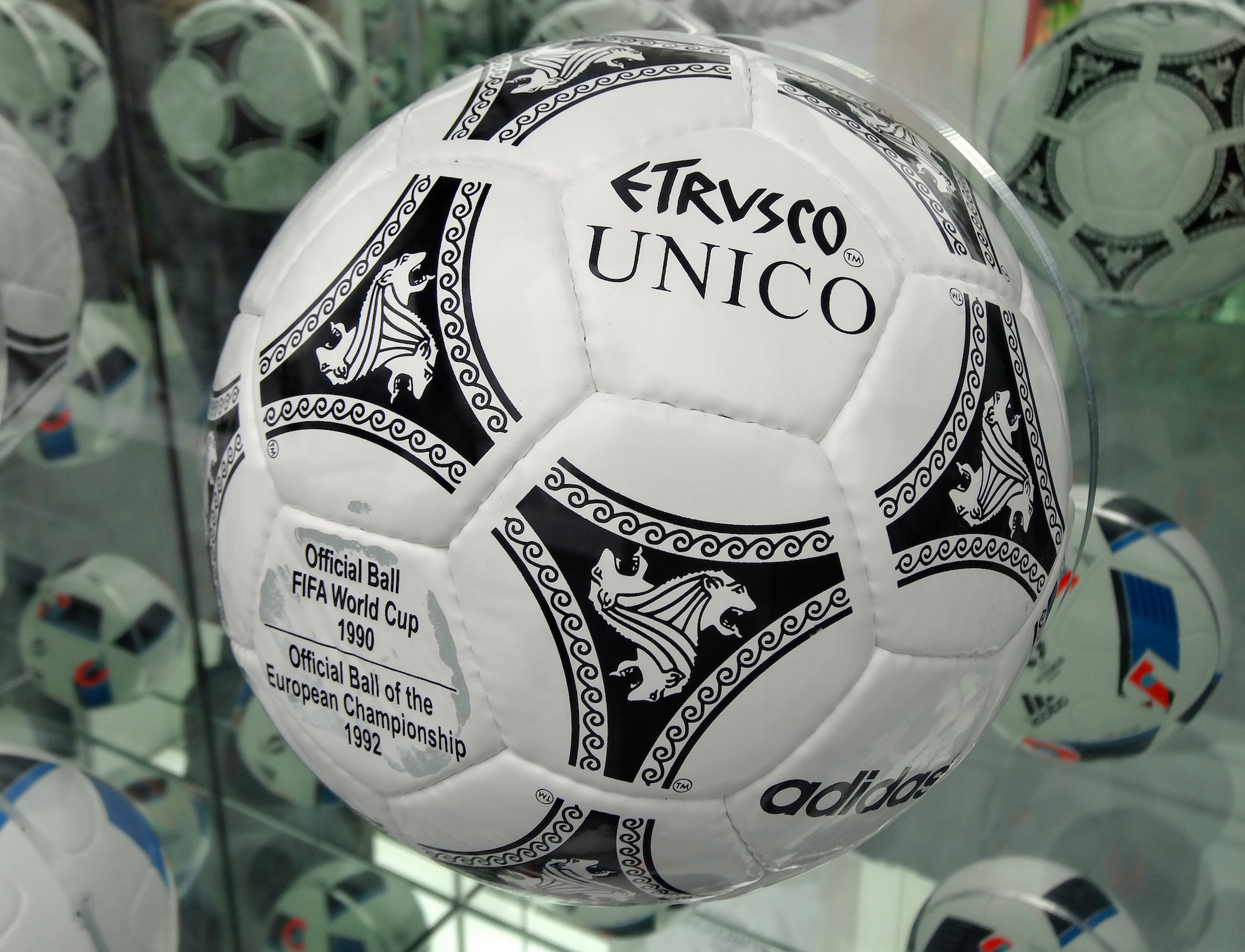
- Design: Stylized lion heads inspired by the Etruscan art of ancient Italy
- Trivia: The first World Cup ball to feature an internal layer of synthetic foam to improve water resistance
Description: The Etrusco Único elevated artistic design to a whole new level, integrating Etruscan cultural motifs as a tribute to the history of the host nation, Italy. On a technical level, its black foam layer beneath the outer leather significantly reduced water absorption—a historical problem for previous balls during rainy matches.
🏆 1986 World Cup – Azteca (Mexico)
- Manufacturer: Adidas
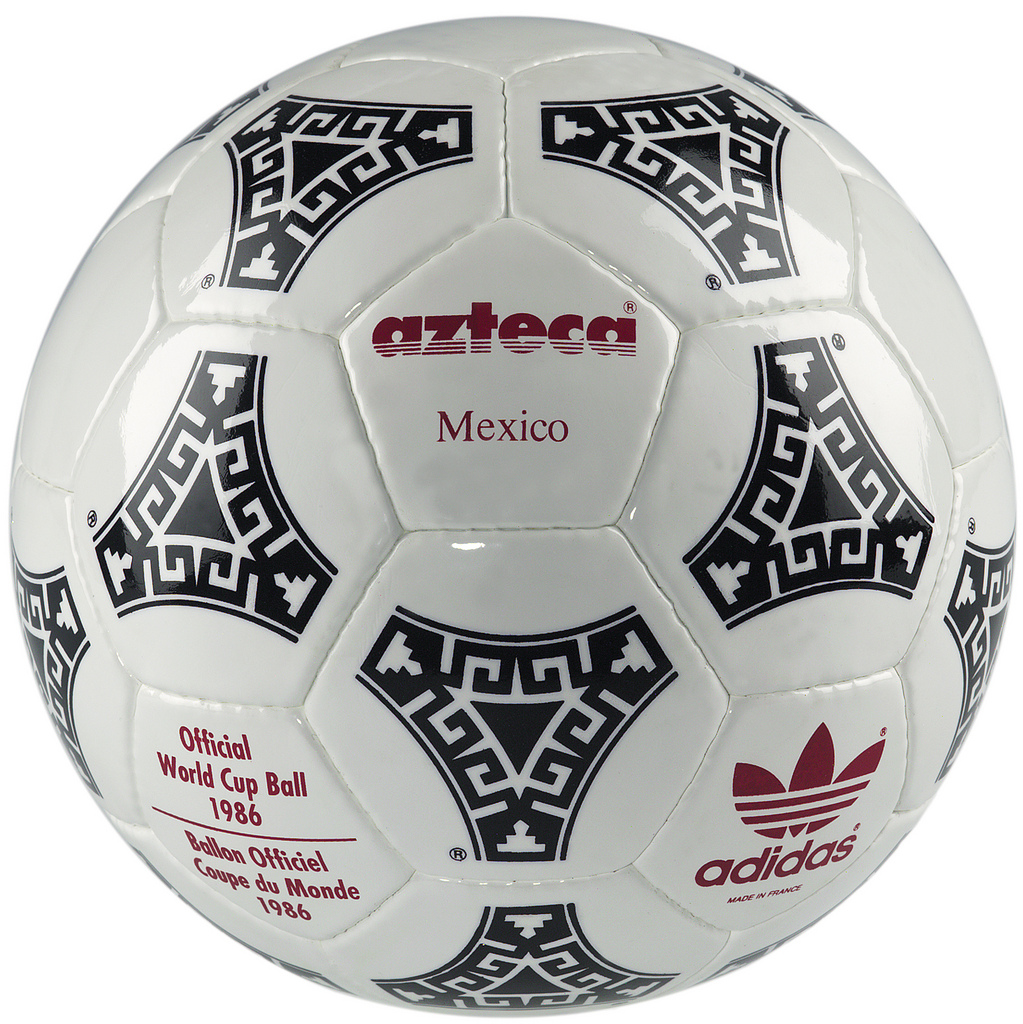
- Design: Pre-Hispanic motifs in black against a white background, inspired by Aztec architecture
- Trivia: The first fully synthetic match ball ever used in a World Cup
Description: The Azteca marked the definitive end of the natural leather era in the World Cup. Being entirely synthetic, it resisted moisture far better and maintained a consistent weight throughout the match—something traditional leather simply couldn’t guarantee. It has also remained forever linked to one of football’s most memorable plays: Diego Maradona’s ‘Goal of the Century’ against England in the quarterfinals of that tournament.
🏆 1982 World Cup – Tango España
- Manufacturer: Adidas
- Design: A direct evolution of the 1978 Tango, featuring the same triangular pattern
- Trivia: The first World Cup ball to feature waterproofed seams, serving as the precursor to fully synthetic balls
Description: The Tango España perfected the formula that Adidas had introduced four years earlier in Argentina. The treatment applied to its seams noticeably improved water resistance, an upgrade that was particularly evident in matches played in the rain, laying the technical groundwork for the leap to the fully synthetic balls that would debut in Mexico 1986.
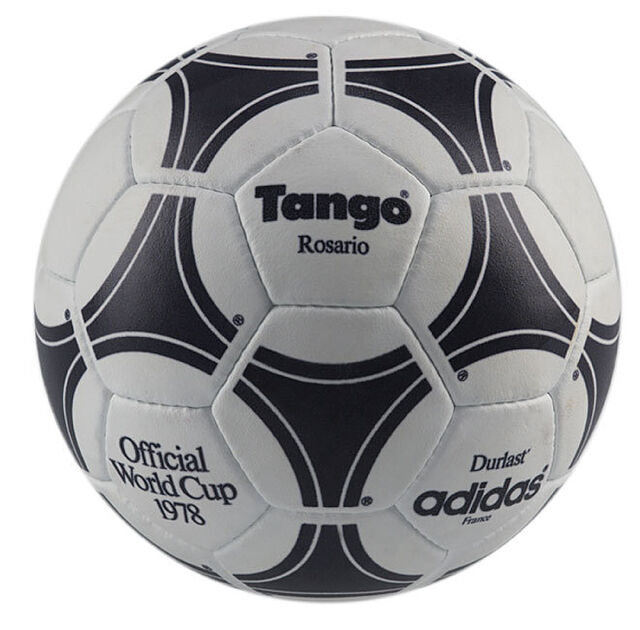
🏆 1978 World Cup – Tango (Argentina)
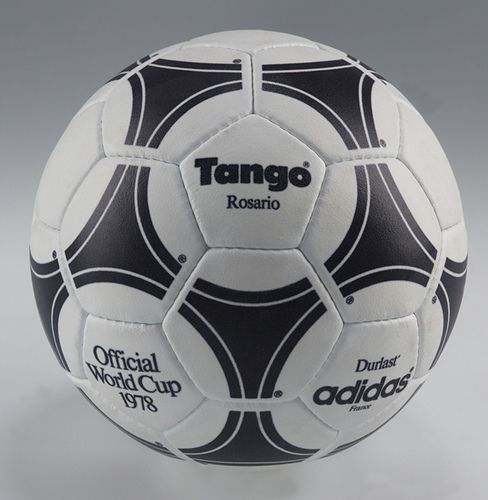
- Manufacturer: Adidas
- Design: Twenty black triangles distributed across twenty white panels
- Trivia: Its triangular pattern created an optical illusion of continuous intersecting circles as the ball rolled
Description: The Tango became the most influential ball of its era. Its triangular design, specifically engineered to generate a visual effect of circles as it rolled, was so immensely successful that Adidas reused it as the aesthetic foundation for the next four World Cups. This established a visual identity that fans instantly recognize to this day.
🏆 1974 World Cup – Telstar Durlast (Germany)
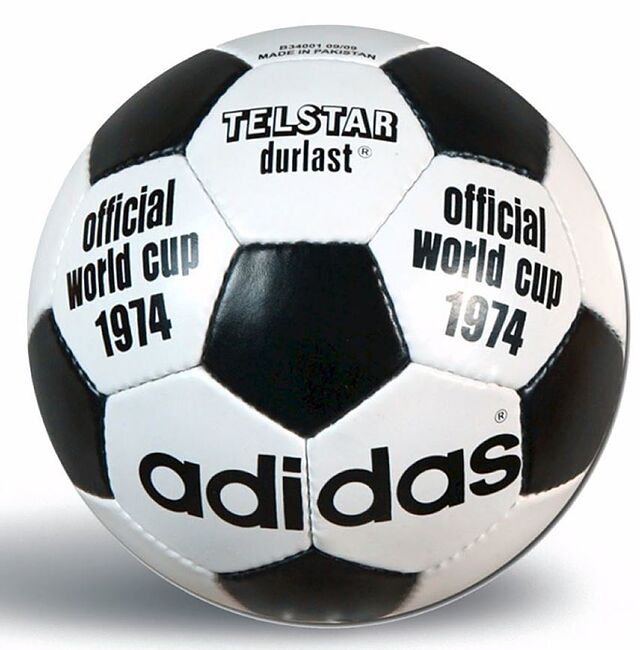
- Manufacturer: Adidas
- Material: Leather coated with a layer of polyurethane known as Durlast
- Trivia: Retained the iconic black-and-white pattern of the original 1970 Telstar
Description: The Telstar Durlast took a design that was already a footballing icon and made it far more resistant to water and wear thanks to the Durlast coating. This improvement answered a very specific need: traditional leather balls absorbed moisture and grew increasingly heavier as a match went on, an issue the new synthetic coating successfully addressed.
🏆 1970 World Cup – Telstar (Mexico)
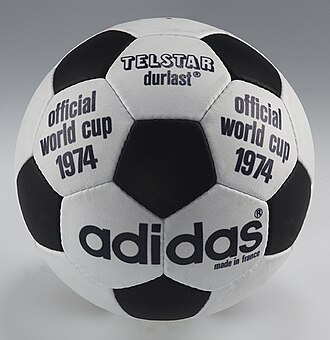
- Manufacturer: Adidas (the brand’s first World Cup as the official ball supplier)
- Design: 32 panels, featuring 12 black pentagons and 20 white hexagons
- Trivia: Designed in black and white specifically to stand out on television broadcasts, as black-and-white TVs were rapidly surging in popularity at the time
Description: The Telstar is, without question, the most iconic ball in World Cup history. Its name pays tribute to the Telstar communications satellite, and its geometric pattern of pentagons and hexagons became the universal symbol for a football, reproduced for decades in emojis, logos, and graphics worldwide. It also marked the first World Cup where Adidas stepped into the role of official supplier—a relationship with FIFA that remains unbroken to this day.
🏆 1966 World Cup – Challenge 4-Star (England)
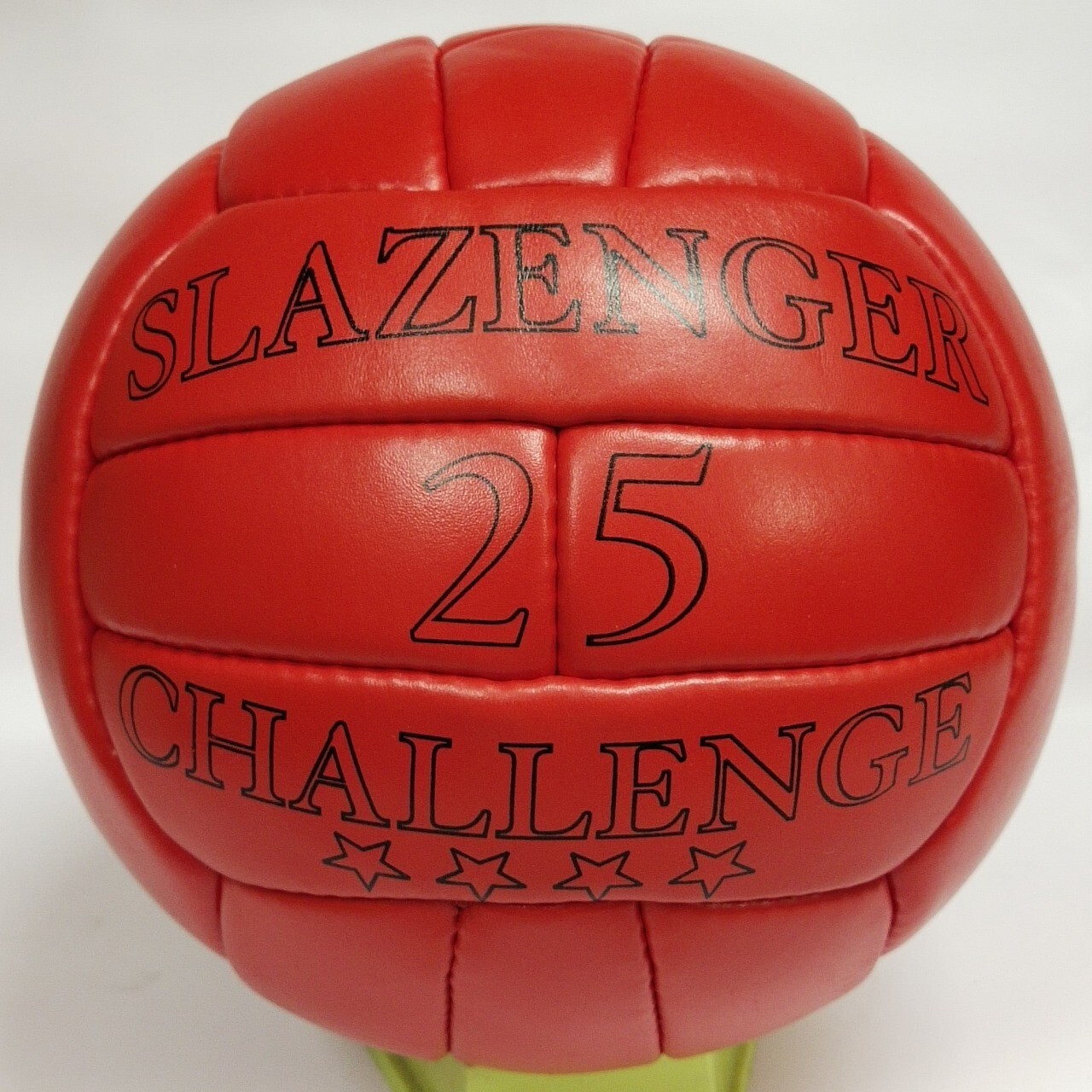
- Manufacturer: Slazenger
- Material: 25 hand-stitched brown leather panels
Description: The Challenge 4-Star represented the final great purely artisanal ball before Adidas took the reins in the following edition. Its brown leather, stitched panel by panel, easily absorbed water and became significantly heavier during matches played in the rain—a common characteristic of balls from that era that seems almost unimaginable in modern professional football.
🏆 1962 World Cup – Crack (Chile)
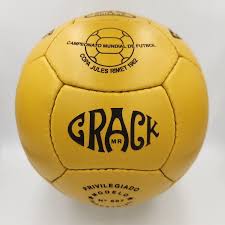
- Manufacturer: Custodio Zamora (Zamora)
Description: The Crack was an entirely artisanal ball, crafted from leather by the Chilean manufacturer Zamora. As was customary during that era, its shape was far from perfectly spherical, and its behavior varied from one ball to the next, depending heavily on the specific cut of leather and the hands of the artisan stitching it together.
🏆 1958 World Cup – Top Star (Sweden)
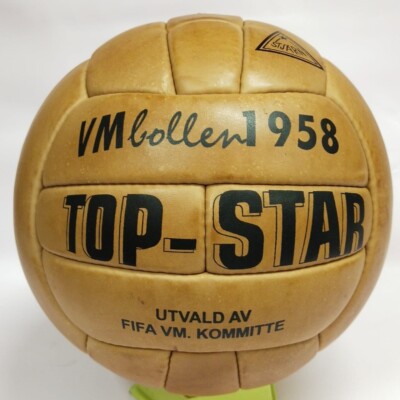
- Manufacturer: Sydsvenska Läder
Description: The Top Star marked a noticeable improvement in consistency compared to balls from previous editions. The Swedish firm responsible for its manufacturing managed to produce a much more uniform leather that minimized erratic bounces and uneven flight—a subtle but crucial advancement in the quest for a more predictable ball.
🏆 1954 World Cup – Swiss World Champion (Switzerland)
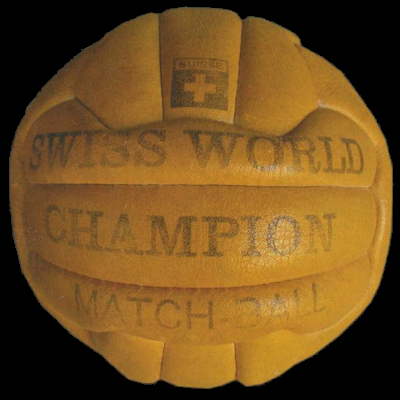
Description: The Swiss World Champion featured a modern inflation valve that completely replaced the traditional lace-up system, which had still been prevalent on many balls of the era. This change vastly improved the ease of maintaining the ball between matches and eliminated the bulky laces, which up until then could drastically alter the trajectory of a shot upon impact.
🏆 1950 World Cup – Superball Duplo T (Brazil)
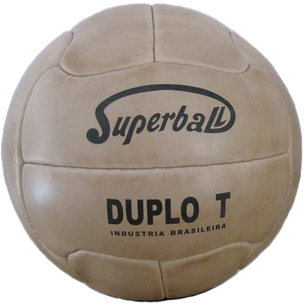
Description: The Duplo T was the very first World Cup ball with no visible laces on its playing surface, a detail that was considered genuinely revolutionary at the time. This World Cup was also defined by the “Maracanazo”—Uruguay’s shocking victory over host nation Brazil in the decisive match, played in front of nearly 200,000 spectators at the Maracanã.
🏆 1938 World Cup – Allen (France)
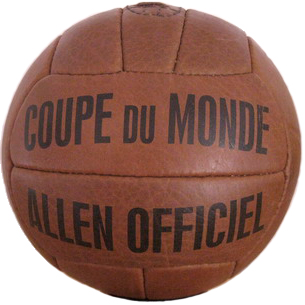
Description: The Allen, crafted from leather and featuring traditional laces, closed the era of purely artisanal balls prior to the outbreak of World War II. The global conflict would interrupt the World Cup for twelve years, delaying the tournament’s resumption until Brazil 1950.
🏆 1934 World Cup – Federale 102 (Italy)
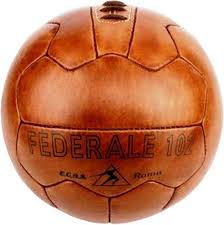
Description: The Federale 102, constructed using 13 panels of tanned leather, offered significantly better water resistance than the ball used four years prior in Uruguay. Nevertheless, it remained a completely artisanal product, inherently subject to the natural variations found in each individual batch of leather.
🏆 1930 World Cup – Tiento and T-Model (Uruguay)
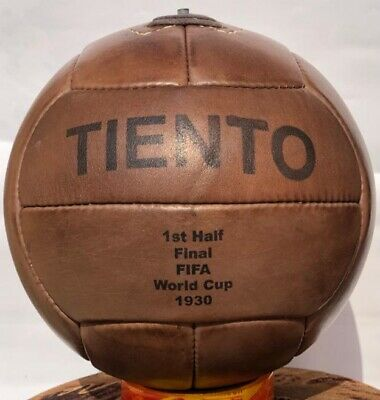
Description: The very first World Cup final, contested between Argentina and Uruguay, was famously played using two entirely different balls: one provided by each finalist. In the first half, the teams used the Argentine-made Tiento, while the second half was played using the Uruguayan-made T-Model, which featured a more uniform stitching pattern that would lay the visual groundwork for the modern football. This anecdote is incredibly revealing: in 1930, the concept of a single, unified official match ball didn’t even exist—something absolutely unthinkable in today’s professional game.
🧠 Conclusion
Ninety-six years separate the artisanal leather Tiento that rolled across Montevideo from the chip-integrated Trionda set to debut in 2026. Along that journey, the ball evolved from a fragile, irregular object entirely at the mercy of the weather, into a sophisticated piece of engineering capable of transmitting real-time data to aid in refereeing decisions. Every shift in material, panel design, or technology answered a very specific problem: water absorption, unpredictable flight, or the demand for greater precision under pressure.
What hasn’t changed is what that ball represents to millions of fans worldwide: the absolute starting point of every brilliant play, every historic goal, and every final that will be remembered for generations. Looking back at the history of World Cup match balls isn’t just an exercise in technological nostalgia; it’s an entirely different way of telling the story of the World Cup itself.