





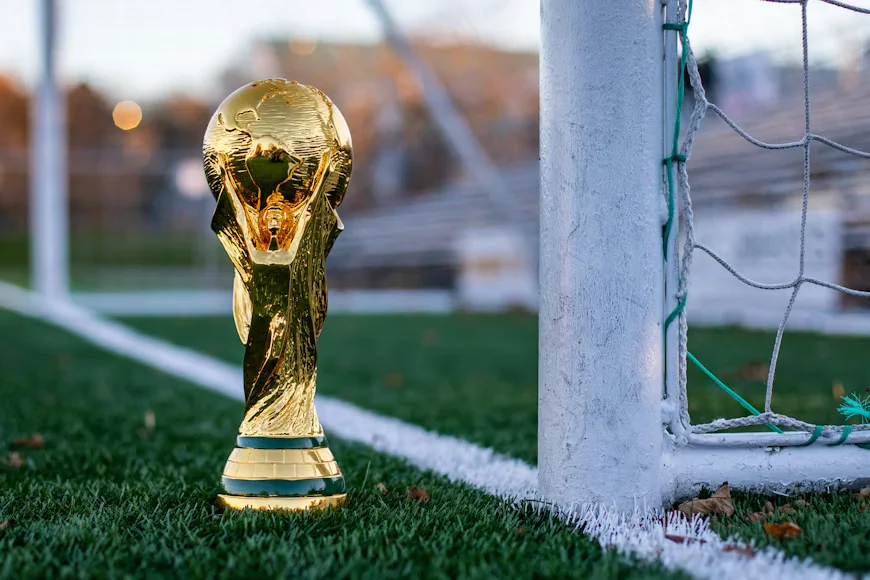
Football is about to experience the biggest sporting event in its history. The 2026 FIFA World Cup is not just another tournament every four years: it is the edition redefining the very concept of what a World Cup can be. For the first time, 48 national teams will compete in 104 matches spread across three host countries—Mexico, the United States, and Canada—in a competition lasting over a month and promising to be the most-watched sporting spectacle of all time.
The leap from 32 to 48 teams is the largest structural change the tournament has undergone since expanding from 24 to 32 nations in 1998. It implies a new format with 12 groups, an additional round of 32, and a path to the title requiring the champion to win 8 consecutive matches—one more than in all previous editions. More teams, more matches, more possible surprises, and more representation for confederations that have historically had few spots.
In this guide, we analyze everything you need to know before the opening whistle: the 12 complete groups with sporting analysis, the new qualification system, the most iconic host stadiums, the real title candidates, and the tactical keys that will define the tournament.
📋 Table of Contents
- 🌍 A New Era: The 48-Team World Cup
- ⚽ The 12 Official Groups
- ⚙️ Competition and Qualification Format
- 🏟️ Outstanding Host Cities and Stadiums
- 🏆 Title Favorites: Who Can Win It?
- Conclusion
🌍 A New Era: The 48-Team World Cup
When FIFA announced in 2017 that the 2026 World Cup would feature 48 teams, the reaction was mixed. Global football enthusiasts celebrated the inclusion of more countries from Africa, Asia, and CONCACAF. European football purists threw their hands up in horror, arguing the overall quality of the matches would drop. Almost a decade later, hours away from the start of the tournament, the debate remains open—but the spectacle is guaranteed.
What nobody can dispute is the historical dimension of this tournament. Mexico becomes the first country to host three World Cups (1970, 1986, and 2026). The United States organizes for the second time, but with sports infrastructure having no comparison to that of 1994. Canada debuts as a World Cup host. And the final will be played at MetLife Stadium in New Jersey—the largest NFL stadium—before what could be the largest live audience in the tournament’s history.
The 48-team format is not just a change in numbers: it is a redefinition of world football’s balance of power. UEFA gets 16 spots, CONMEBOL 6, CAF (Africa) 9, AFC (Asia) 8, CONCACAF 6, and OFC (Oceania) 1. The big winner is Africa, going from 5 to 9 direct berths, recognizing the continent’s real growth in high-level football.
⚽ The 12 Official Groups
📋 Sectors A, B, C, and D
| GROUP A | GROUP B | GROUP C | GROUP D |
|---|---|---|---|
| 🇲🇽 Mexico | 🇮🇹/🏴 Playoff A | 🇧🇷 Brazil | 🇺🇸 United States |
| 🇿🇦 South Africa | 🇨🇭 Switzerland | 🇲🇦 Morocco | 🇵🇾 Paraguay |
| 🇰🇷 South Korea | 🇨🇦 Canada | 🏴 Scotland | 🇦🇺 Australia |
| 🇨🇿/🇩🇰 Playoff D | 🇶🇦 Qatar | 🇭🇹 Haiti | 🇹🇷/🇷🇴 Playoff C |
🅰️ Group A — The Host’s Group: Mexico starts with the greatest possible advantage: playing at home before fans turning every match into a national event. The Aztecazo that the Aztec team seeks before its own people makes this group the most emotionally followed of the tournament. South Korea arrives with a tactically disciplined generation that can challenge for second place, while the team emerging from the European Playoff (possibly Denmark or the Czech Republic) adds the element of uncertainty complicating predictions.
🅱️ Group B — The European Co-host’s Group: Switzerland arrives as the clear favorite thanks to a defensive solidity that in recent World Cups has made them one of the toughest teams to beat. Canada has the co-hosting advantage and a generation led by Alphonso Davies aspiring to make history. Playoff A—where Italy could appear if they pass the repechage—would be the factor completely transforming the group’s dynamics.
🅲 Group C — Brazil’s Group: Brazil arrives with the historical pressure of seeking their sixth World Cup. The Canarinha will be at the forefront of every analysis, but Morocco—semifinalist in Qatar 2022—arrives as the most complete African team with the most real options of pulling off a surprise against any tournament giant. Scotland features in its first World Cup since 1998, and Haiti will represent the Caribbean in its first final phase appearance.
🅳 Group D — The Most Powerful Host’s Group: The United States arrives with the most talented squad in its history, led by a generation that has grown up in the best European leagues. The host factor, public support, and a favorable schedule make the American team one of the most serious contenders to go far in their own tournament. Paraguay brings the experience and tactical toughness of South American football.
📋 Sectors E, F, G, and H
| GROUP E | GROUP F | GROUP G | GROUP H |
|---|---|---|---|
| 🇩🇪 Germany | 🇳🇱 Netherlands | 🇧🇪 Belgium | 🇪🇸 Spain |
| 🇪🇨 Ecuador | 🇯🇵 Japan | 🇪🇬 Egypt | 🇺🇾 Uruguay |
| 🇨🇮 Ivory Coast | 🇺🇦/🇵🇱 Playoff B | 🇮🇷 Iran | 🇸🇦 Saudi Arabia |
| 🇨🇼 Curaçao | 🇹🇳 Tunisia | 🇳🇿 New Zealand | 🇨🇻 Cape Verde |
🅴 Group E — German Redemption: Germany arrives with the scar of group stage elimination in Qatar 2022 and with the mission of proving Julian Nagelsmann’s project is real. Ecuador always surprises in World Cups and arrives with Kendry Páez as the great emerging figure of his generation. Ivory Coast brings a physical power and offensive quality making them the sector’s most dangerous African threat.
🅵 Group F — The Netherlands’ Bet: The Oranje arrive with a generation combining international experience and youthful freshness, with Virgil van Dijk as absolute leader. Japan is the great Asian candidate for the tournament surprise: their tactical discipline and ability to neutralize superior teams exposed Germany and Spain in the last two World Cups. Playoff B—with Ukraine or Poland as possible qualifiers—and Tunisia complete a group where any result is possible.
🅶 Group G — The Belgium of the New Era: Belgium’s so-called “golden generation” has ended, and the team begins a cycle of rebuilding. However, Egypt with Mohamed Salah as their standard-bearer can be a more complicated rival than their ranking suggests, and Salah is at the perfect age for one last Major Tournament of this level. Iran will bet on its usual defensive block, and New Zealand will make aerial play their only viable weapon.
🅷 Group H — Spain Favorite, Uruguay the Danger: Spain arrives as one of the two or three teams with the most real chances of winning the tournament, with a positional game that under De la Fuente has found the balance between possession dominance and the verticality it lacked in Luis Enrique’s cycle. Uruguay, with Darwin Núñez and Facundo Pellistri as references of their new generation, has the football and temperament to snatch group leadership from the Spaniards.
📋 Sectors I, J, K, and L
| GROUP I | GROUP J | GROUP K | GROUP L |
|---|---|---|---|
| 🇫🇷 France | 🇦🇷 Argentina | 🇵🇹 Portugal | 🏴 England |
| 🇳🇴 Norway | 🇦🇹 Austria | 🇨🇴 Colombia | 🇭🇷 Croatia |
| 🇸🇳 Senegal | 🇩🇿 Algeria | 🇺🇿 Uzbekistan | 🇵🇦 Panama |
| 🇧🇴/🇮🇶 Int. Playoff | 🇯🇴 Jordan | 🇨🇩/🇯🇲 Int. Playoff | 🇬🇭 Ghana |
🅸 Group I — France and the Norwegian Trap: France is the natural group favorite, but their path won’t be easy. Norway, with Erling Haaland as spearhead, is the most dangerous team of the middle European tier and has the potential to hurt any team in a direct elimination match. Senegal, with a generation including players competing in the best European leagues, will be the third team fighting for second place.
🅹 Group J — The Group of Death: If there is a group concentrating the tournament’s maximum level, it’s J. Argentina, world champions, arrive with Messi possibly in his last World Cup and with the goal of becoming the first team to win two consecutive World Cups since Brazil in 1958-1962. Austria arrives in their best generational moment, and Algeria—with a base of players formed in French football—has the talent to steal points from anyone in the group.
🅺 Group K — Portugal vs. Colombia: The clash between Portugal—seeking their first World Cup with Cristiano Ronaldo already in the final stretch of his career—and Colombia—arriving with one of the best generations in their history, headed by Jhon Durán and Luis Díaz—promises to be the sector’s most attractive match. Uzbekistan is the tournament’s most technical Asian representative and could surprise with a significant points steal.
🅻 Group L — England and the Dream That Never Arrives: Sixty years of waiting. England arrives at the 2026 World Cup as one of the tournament’s teams with the most individual talent, but carrying the historical weight of not having won a World Cup since 1966. Croatia, finalist in 2018 and semifinalist in 2022, is the most dangerous rival in a group that on paper looks favorable for the English.
⚙️ Competition and Qualification Format
The switch to 48 teams introduces an additional phase making the path to the title more demanding than in any previous edition:
| Phase | Teams | Format |
|---|---|---|
| Group Stage | 48 (12 groups of 4) | Round-robin league |
| Round of 32 | 32 teams | Single elimination |
| Round of 16 | 16 teams | Single elimination |
| Quarterfinals | 8 teams | Single elimination |
| Semifinals | 4 teams | Single elimination |
| Final | 2 teams | Single match |
Who advances from the groups? The top 2 from each group (24 teams) plus the 8 best third-placed teams among the 12 groups (selected by points, goal difference, and goals scored) advance to the round of 32.
This means the champion must play and win 8 consecutive matches—one more than in the 1998 to 2022 editions. For lower-tier teams, the expansion creates real opportunities: the best third-placed teams in difficult groups can qualify with 4 points, making every match an open opportunity.
🏟️ Outstanding Host Cities and Stadiums
The 2026 World Cup will be played in 16 stadiums spread across the three host countries, with venues ranging from historic stadiums to ultramodern arenas.
| Country | Stadium | City | Approx. Capacity |
|---|---|---|---|
| 🇲🇽 Mexico | Estadio Azteca | Mexico City | 87,000 |
| 🇲🇽 Mexico | Estadio BBVA | Monterrey | 53,500 |
| 🇲🇽 Mexico | Estadio Akron | Guadalajara | 49,850 |
| 🇺🇸 USA | MetLife Stadium (Final) | New York/NJ | 82,500 |
| 🇺🇸 USA | AT&T Stadium | Dallas | 80,000 |
| 🇺🇸 USA | SoFi Stadium | Los Angeles | 70,000 |
| 🇺🇸 USA | Levi’s Stadium | San Francisco | 68,500 |
| 🇺🇸 USA | Hard Rock Stadium | Miami | 65,326 |
| 🇺🇸 USA | Mercedes-Benz Stadium | Atlanta | 71,000 |
| 🇺🇸 USA | Arrowhead Stadium | Kansas City | 76,416 |
| 🇺🇸 USA | Lincoln Financial Field | Philadelphia | 69,176 |
| 🇺🇸 USA | Lumen Field | Seattle | 69,000 |
| 🇺🇸 USA | Gillette Stadium | Boston | 65,878 |
| 🇨🇦 Canada | BMO Field | Toronto | 30,000 |
| 🇨🇦 Canada | BC Place | Vancouver | 54,500 |
Mexico City’s Estadio Azteca deserves special mention. It is the only stadium in the world to have hosted two World Cup finals (1970 and 1986) and will see group stage matches of the third. The pitch that saw Pelé lift the trophy in 1970 and kept Maradona’s “Goal of the Century” in 1986 will once again be the stage for World Cup history.
🏆 Title Favorites: Who Can Win It?
With 48 national teams, the number of real title candidates expands, but the big favorites remain the usual ones—with some important novelties:
Argentina 🇦🇷 — The Big Favorite: The world champions arrive with Messi possibly in his last World Cup and with the goal of becoming the first consecutive back-to-back champion since Brazil (1958-62). The generation that won Qatar is still young and the block managed by Scaloni is the most solid in the world.
France 🇫🇷 — The Eternal Candidate: Les Bleus have the highest density of individual talent in the tournament. With Mbappé at the peak of his career and a cast of stars in all positions, they are the rival any team will prefer not to meet in the knockout rounds.
Spain 🇪🇸 — The Most Effective System: De la Fuente’s Spain combines the usual positional DNA with a generation including Lamine Yamal, Pedri, and Nico Williams. It is the most tactically coherent team among the big candidates.
Brazil 🇧🇷 — The Historical Debt: Brazil has gone 24 years without winning a World Cup and the most successful country in tournament history feels the weight of that drought. A team in reconstruction with plenty of talent to win, but needing the perfect tournament.
England 🏴 — Now or Never: With the best generation in their recent history and a World Cup in favorable territory (USA-Canada), 2026 is the clearest opportunity the English have had since 1966.
Conclusion
The 2026 Football World Cup will arrive as the biggest tournament in the history of this sport. 48 national teams, three countries, more than 100 matches, and the promise that every group stage will produce at least one surprise rewriting predictions. That is how it has always been in World Cups, and the new format only amplifies that possibility.
Argentina arrives as the favorite, but France, Spain, and Brazil have the quality to snatch the title. And in an 8-match tournament for the champion, in a new format nobody has played before, and with the variable of 16 additional teams capable of creating unexpected situations in the group stage, the only certainty is there will be surprises.
Let the best World Cup in history begin. The planet is ready.