





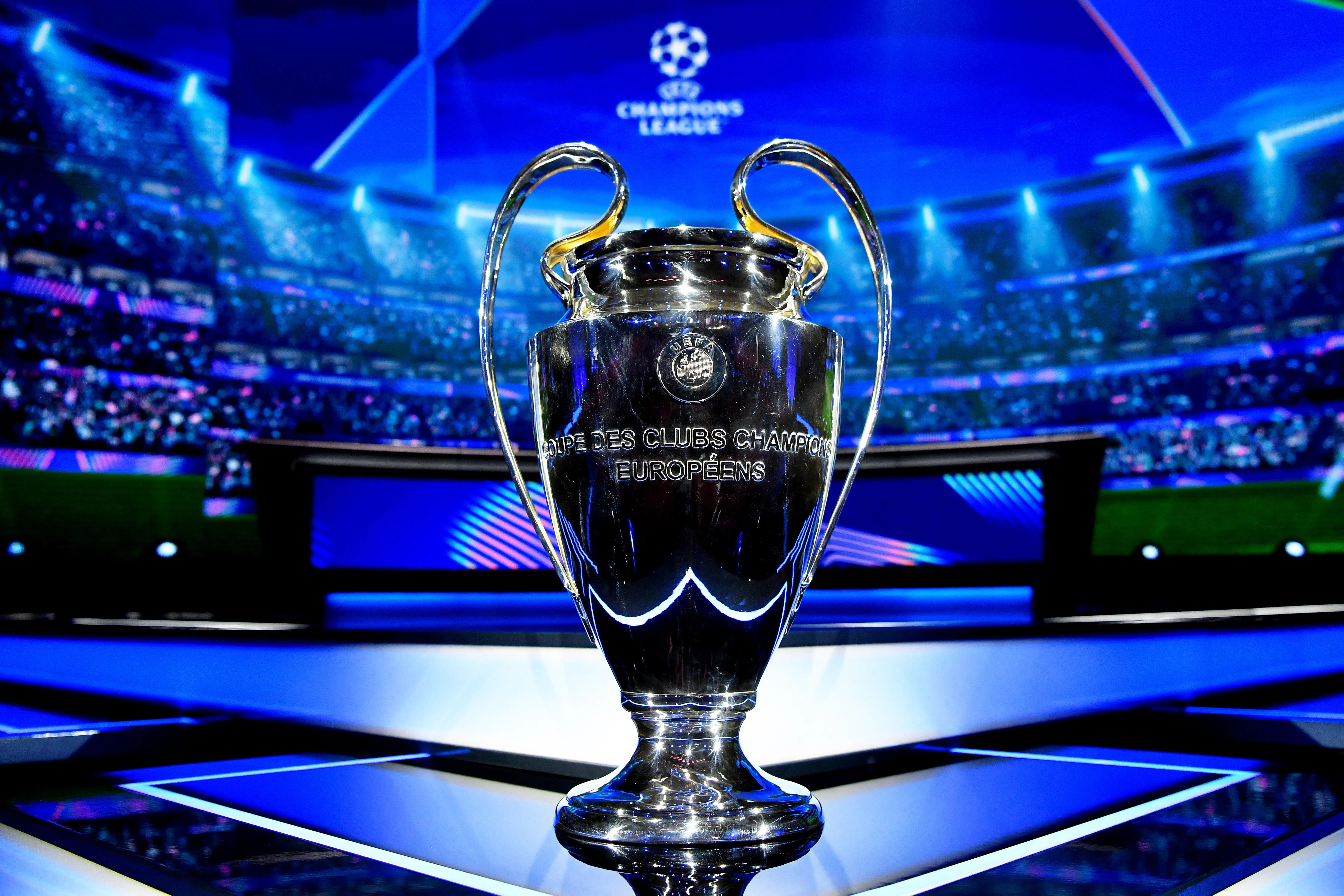
There is a moment that football fans recognize even before the match begins: the four chords of the Champions League anthem, composed in 1992 based on a melody by Handel, echoing in stadiums around the world, announcing that something important is about to start. In that instant, the temperature rises, the players feel a different weight on their shoulders, and millions of people in over 200 countries sit in front of their screens to watch the highest level of football in existence.
The UEFA Champions League is today the most watched, most discussed, and most desired club tournament on the planet. But its story didn’t begin that way. It started in 1955 with a simple, almost modest idea: to bring together the best clubs in Europe and find out which was the greatest on the continent. What followed is one of the most fascinating stories in modern sports.
📋 Table of Contents
- Introduction
- The Origins: The European Cup (1955-1991)
- Birth of the Modern Champions League (1992-present)
- Evolution of the Format
- Moments That Marked History
- Historical Records
- Trivia Few Know
- The Champions League in the Modern Era
- Conclusion
Introduction
The UEFA Champions League isn’t simply the most important club football tournament: it is an institution that has shaped European football for seventy years. No other tournament generates the same level of anticipation, the same level of economic investment, or the same density of historical moments per edition. When the continent’s major clubs face off under the banner of the European stars, the rest of the world watches.
Its history is, in many ways, the history of modern professional football. From a straight-knockout competition among national champions to a tournament with 32—and now 36—teams, group stages, multi-billion euro revenues, and finals played as premier global events. In this article, we review that journey from the very beginning.
The Origins: The European Cup (1955-1991)
The idea that gave birth to the most important tournament in the world originated in a newspaper newsroom. Gabriel Hanot, a French journalist for L’Équipe, published a proposal in 1954 to create a competition that would pit the best clubs on the continent against each other to determine the true champion of Europe. UEFA adopted the idea, and in the 1955-56 season, held the first edition of the European Champion Clubs’ Cup.
The inaugural tournament featured 16 participants, all national champions, and was played in two-legged knockout ties leading up to a single-match final. Real Madrid won that first edition against Stade de Reims 4-3 in a final played in Paris, thus beginning one of the most impressive dynasties in sports history.
Los Blancos won the first five consecutive editions (1956-1960) with a team boasting Alfredo Di Stéfano and Ferenc Puskás as its two biggest stars. The 1960 final against Eintracht Frankfurt, played at Hampden Park in Glasgow and won 7-3, is still considered by many to be the greatest final in the tournament’s history. Di Stéfano scored a hat-trick and Puskás netted four in a match broadcast live by the BBC that captivated a television audience unaccustomed to seeing football of that caliber.
Following Madrid’s dominance, the tournament opened up to other nations and other styles. Eusébio’s Benfica won two titles in the sixties. Celtic became the first British club to win the European Cup in 1967, fielding a team comprised entirely of players born within a 30-mile radius of the stadium—something literally impossible today. Helenio Herrera’s Inter Milan dominated in 1964 and 1965 with their defensive Catenaccio. Johan Cruyff’s Ajax won three consecutive editions (1971-1973) playing Rinus Michels’ Total Football, and Bayern Munich repeated the three-peat immediately after (1974-1976).
The eighties were a time of diversity among champions: Brian Clough’s Nottingham Forest won two consecutive titles (1979-1980) with a squad lacking global stars but boasting impeccable tactical organization, and Liverpool dominated the first half of the decade with four titles between 1977 and 1984. Arrigo Sacchi’s AC Milan closed out the European Cup era with the 1989 and 1990 titles, playing a high-pressing, zonal-defense style of football that anticipated many tactical concepts of the modern game.
Birth of the Modern Champions League (1992-present)
In 1992, UEFA made a decision that would change the competition forever: the European Cup transformed into the UEFA Champions League. The change wasn’t just in name. The group stage was introduced, allowing teams to play several guaranteed matches before the knockout rounds, and participation was expanded so the most prominent nations could send more than one representative.
The underlying motive was economic as much as sporting. The major European clubs needed more top-level matches to justify their growing budgets and the demands of their fans. The group stage guaranteed at least six Champions League matches per season, multiplying television broadcasting revenues and profits for all participants.
The tournament also adopted its definitive audiovisual identity: the anthem composed by Tony Britten, based on Handel’s Zadok the Priest, which has played before every match since and become one of the most recognizable jingles in world sports. Simply hearing those first notes is enough for any football fan to know exactly what is happening.
Throughout the nineties and 2000s, the Champions League consolidated its position as the most followed tournament on the planet. Manchester United won the title in 1999 with one of the most dramatic comebacks in history. Real Madrid secured their first victory in the revamped tournament in 1998, kicking off a cycle that would make them the great dominators of the modern era. Barcelona built two historic teams—Ronaldinho’s in 2006 and Messi and Guardiola’s in 2009 and 2011—that defined entire eras in the competition.
Evolution of the Format
The Champions League format has changed several times since its inception, adapting to the needs of football in each era:
1955-1991: The classic European Cup. Only national champions from each country could participate. The tournament featured two-legged knockout ties from the first round, meaning any team could be eliminated right at the start with no margin for error.
1992-1997: The first group stage. The transformation into the Champions League introduced a group stage guaranteeing more matches and greater predictability in revenue. The requirement that participants must have won their league or, in some cases, finished as runners-up, was maintained.
1999-2003: Two group stages. In an attempt to maximize the number of matches between top teams, UEFA introduced a second group stage before the knockouts. The format proved excessively long and was abandoned in 2003.
2003-2023: The classic modern format. Eight groups of four teams, with the top two from each group advancing to the round of 16, followed by two-legged knockout ties up to the final. This format was maintained for two decades and is the one most current fans remember as standard.
From 2024-25: The new league format. UEFA adopted a system inspired by league competitions, featuring 36 teams that play eight matches each against different opponents in a single phase. The top eight automatically advance to the round of 16; teams ranked 9th to 24th play a knockout play-off. The remaining 12 teams are eliminated.
Moments That Marked History
The Glasgow Final (1960) — Real Madrid 7-3 Eintracht Frankfurt
The most perfect final in the competition’s history. Real Madrid and Eintracht Frankfurt put on a footballing spectacle so extraordinary that the BBC broadcast it live, convincing millions of Britons that continental football was entirely different from anything they knew. Puskás scored four goals and Di Stéfano three in a match that, seventy years later, remains the benchmark for what football can be when both teams are at their absolute best.
The Celtic Night (1967) — The People’s Cup
Celtic became the first British club to win the European Cup, but the story behind the title is what makes it special. The “Lisbon Lions,” the nickname they received due to the city where they won the final, were eleven players all born within a 30-mile radius of Celtic’s stadium. In an era when major clubs were already beginning to sign international stars, that team proved that unity, local identity, and a great manager could overcome any budget.
The Night in Munich (1999) — Manchester United and the Miracle at Camp Nou
On May 26, 1999, at Barcelona’s Camp Nou, Sir Alex Ferguson’s Manchester United found themselves losing 1-0 to Bayern Munich with the match in stoppage time. What happened in the next two minutes changed the history of the English club forever: Teddy Sheringham equalized, and Ole Gunnar Solskjær scored the decisive 2-1 before the referee could blow the final whistle. That comeback, known simply as “the night in Munich” (referencing the tragic 1958 air disaster that marked the club’s history), became one of the most talked-about moments in the tournament’s history.
The Miracle of Istanbul (2005) — Liverpool and the Impossible Comeback
If United’s night at Camp Nou was dramatic, the 2005 Istanbul final between Liverpool and AC Milan was simply unbelievable. Half an hour into the match, Liverpool was down 3-0 and the title seemed decided. In the dressing room at halftime, captain Steven Gerrard delivered a speech that no one has transcribed exactly, but which every player remembers as the turning point. In six second-half minutes, Liverpool leveled the score at 3-3 with goals from Gerrard, Vladimír Šmicer, and Xabi Alonso. The penalty shootout was won by goalkeeper Jerzy Dudek, who saved Shevchenko’s shot with a save that went down in history. The Miracle of Istanbul remains the greatest comeback in the history of Champions League finals.
La Décima and Zidane’s Reign (2014-2018)
No one in the history of the Champions League had won the title consecutively. No one, until Zinedine Zidane’s Real Madrid. Los Blancos won the Champions League in 2016, 2017, and 2018, a trilogy of titles that no manager or club had achieved before in the revamped tournament era. Add to that the title of “La Décima” in 2014—Madrid’s first Champions League in 12 years—won in extra time against Atlético Madrid in Lisbon with a 93rd-minute goal from Sergio Ramos, which stands as one of the most decisive goals in the competition’s history.
Undefeated Bayern in the Pandemic (2020)
The 2020 tournament was played in a “Final 8” format in Lisbon, condensed into a few days due to the COVID-19 pandemic. Bayern Munich won all their matches, including the aforementioned 8-2 against Barcelona in the quarterfinals, and were crowned undefeated champions. It was a performance of defensive efficiency and offensive power rarely seen in the competition.
Historical Records
Clubs with the Most Titles
| Club | Country | Titles |
|---|---|---|
| Real Madrid | 🇪🇸 Spain | 15 |
| AC Milan | 🇮🇹 Italy | 7 |
| Bayern Munich | 🇩🇪 Germany | 6 |
| Liverpool | 🏴 England | 6 |
| FC Barcelona | 🇪🇸 Spain | 5 |
| Ajax | 🇳🇱 Netherlands | 4 |
| Inter Milan | 🇮🇹 Italy | 3 |
Real Madrid not only leads in the number of titles: they do so by such a wide margin over the second-place team (8 more titles than Milan) that it reflects a special relationship with this tournament unmatched by any other club.
Most Successful Nations
| Country | Titles |
|---|---|
| 🇪🇸 Spain | 20 |
| 🏴 England | 15 |
| 🇮🇹 Italy | 12 |
| 🇩🇪 Germany | 8 |
| 🇳🇱 Netherlands | 6 |
| 🇵🇹 Portugal | 4 |
| 🇫🇷 France | 1 |
Spain leads the historical honors list mainly thanks to Real Madrid’s dominance, though Barcelona has also contributed five titles. Spanish supremacy in European football over the last decade is, in terms of Champions League titles, broader than that of any other nation.
Trivia Few Know
-
The first goal of the modern Champions League era was scored by Daniel Amokachi for Club Brugge in September 1992, during the early stages of the revamped tournament.
-
Paco Gento is the player with the most European Cup/Champions League titles in history: he won six with Real Madrid between 1956 and 1966. It is a record that has stood for decades and remains virtually impossible for any modern-era player to equal.
-
Cristiano Ronaldo is the all-time top scorer in the competition with 140 goals, a figure achieved during his spells at Manchester United and Real Madrid. It’s a record reflecting not just longevity but a consistency in performance unprecedented in the competition.
-
The Champions League anthem was composed in 1992 by British musician Tony Britten, based on Georg Friedrich Handel’s Zadok the Priest. It is sung simultaneously in three languages—English, French, and German—the official languages of UEFA.
-
The most-watched final in the history of the competition was Barcelona 3-1 Manchester United (2011) at Wembley, drawing over 180 million viewers worldwide. It was the rematch of the 2009 Rome final and the confirmation of Pep Guardiola’s Barça’s dominance.
The Champions League in the Modern Era
Today’s Champions League is a phenomenon going far beyond football. Each season, it draws over 400 million viewers globally, and the broadcasting rights for the competition are negotiated for figures that seemed impossible two decades ago. In the 2023-24 season, UEFA distributed over €2 billion among participating clubs, with the champion taking a proportional share of that figure.
The new format adopted from the 2024-25 season, featuring 36 teams playing a league phase before the knockouts, aims to increase the number of matches between top teams and offer more opportunities to clubs from smaller leagues to access the competition. The change was met with divided opinions: some celebrate having more elite football, while others lament the loss of the group format many considered perfect.
What doesn’t change is the essence of the competition: nights under the European stars, the anthem announcing something important is about to happen, the pressure of the round of 16, the thrill of the semifinals, and the tension of a final where decades of history are summed up in 90 minutes—or more.
Conclusion
The UEFA Champions League has been the stage where the world’s best clubs measure their greatness for seventy years. From the first final in 1956 to the new format in 2024, the tournament has evolved without losing what makes it unique: its ability to produce moments no one ever forgets.
Real Madrid and their record 15 titles, Liverpool’s Miracle of Istanbul, Manchester United’s night at Camp Nou, the finals of Guardiola’s Barcelona, Zidane’s three-peat: each of these stories forms part of a collective narrative shared by football fans from every nation. That is the true merit of the Champions League: it is not only the most technically significant tournament, but the one most capable of creating shared memories.
Every anthem before every match is a reminder that football, when played at the highest level and with everything on the line, can still surprise us. And that, seventy years after the first European Cup, remains reason enough to keep watching.