





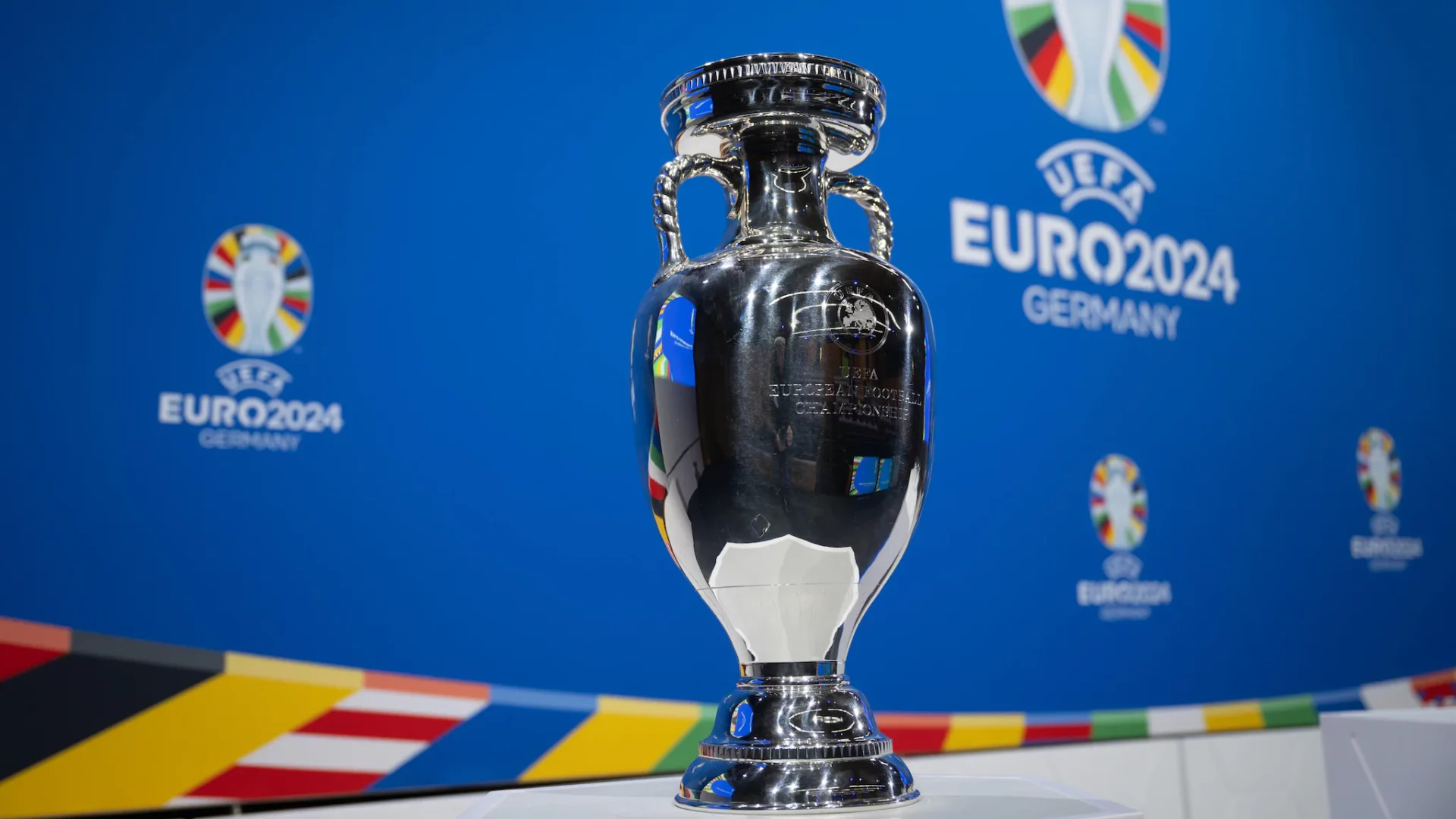
In the international football calendar, there are two tournaments that command the attention of the European continent in a way no club championship can match: the Champions League and the European Championship (Euro). The former is the pinnacle of club football; the latter is where countries measure themselves against each other with their best players and where the colors of a shirt can unite or divide entire nations for a month.
The European Championship was born in 1960, when Europe was still healing the wounds of the Second World War and football was consolidating itself as the continent’s most popular team sport. From that first edition—which featured only four national teams and a final played in Paris—to the 24-team tournament that today tours stadiums across several countries, the competition has undergone an evolution reflecting the changes in European football itself.
In this article, we review the entire history of the European Championship: from its origins to the most recent records, passing through the moments nobody has forgotten and the players who have defined it.
📋 Table of Contents
- Introduction: The Tournament that Unites All of Europe
- Evolution of the Format
- The Historic Milestones that Defined the Tournament
- National Teams with the Most Titles
- Top 5 All-Time Goalscorers
- Top 5 Players with the Most Matches
- Top 5 Top Assist Providers
- European Championship Trivia
- Present and Future of the Tournament
- Conclusion
Introduction: The Tournament that Unites All of Europe
The European Championship—the abbreviated name of the UEFA European Championship—is the most important national team tournament in Europe and the second most followed in the world, behind only the FIFA World Cup. Its origin is linked to the vision of Henri Delaunay, UEFA’s general secretary, who during the 1950s promoted the idea of a competition pitting the continent’s best national teams against each other in their own tournament, independent of World Cup qualifiers.
Delaunay died in 1955 without seeing his dream come true, but UEFA adopted his proposal and held the first edition five years later. In homage to its promoter, the trophy awarded to the champion bears his name: the Henri Delaunay Trophy.
What began as a tournament with four participants and little media repercussion has become one of the most-watched sporting events on the planet. Euro 2020, played in 2021 due to the pandemic, generated over 5 billion views on television and digital platforms. Euro 2024 in Germany was followed live by tens of millions of people worldwide. In Europe, each edition paralyzes entire countries for a month.
Evolution of the Format
The format of the European Championship has changed radically since its first edition, adapting to the growth of European football and the increase in the number of national associations affiliated with UEFA:
1960-1976: The four-team final phase. The early editions of the tournament were played with only four national teams in the final phase, which was held in a single country over a week. The preliminary qualifiers were played in a home-and-away format over the preceding two years. It was a compact tournament that favored intensity but limited participation.
1980-1992: Expansion to eight national teams. UEFA decided to expand the final phase to eight teams, introducing a group stage that guaranteed more matches and greater excitement. This format was maintained for four editions and saw the triumphs of France in 1984 and the Netherlands in 1988, two of the most brilliant teams in tournament history.
1996-2012: The 16 national teams of the classic format. Euro 1996 in England introduced 16 national teams divided into four groups, with the top two from each group advancing to the quarterfinals. It was the format most current fans remember as the “classic” Euro, and the one producing some of the most competitive tournaments in history.
2016 onwards: The 24 national teams. The expansion to 24 teams introduced the novelty that the four best third-placed teams from the groups also advance to the round of 16, adding an extra knockout phase. The reform was criticized for lowering the average level of the participating national teams, but it has also allowed countries with less footballing tradition to compete at the highest level, generating notable surprises.
The Historic Milestones that Defined the Tournament
1960 — The First Champion: The USSR
The first European Championship was played in France and won by the Soviet Union, who defeated Yugoslavia in the final 2-1 in extra time. It was a tournament of just four matches, held across two venues, but it laid the foundation for what was to come. The USSR featured goalkeeper Lev Yashin, considered the greatest goalkeeper in history, giving them exceptional defensive solidity for the time.
1976 — The Panenka Penalty
The Euro 1976 final between Czechoslovakia and West Germany went down in history for the most remembered moment in the history of football penalty shootouts. With the score tied and on the final kick of the shootout, Czechoslovak midfielder Antonín Panenka gently chipped the ball down the middle of the goal—trusting that German goalkeeper Sepp Maier would dive to one side—and scored the goal that gave his national team the title. That type of penalty kick has borne his name ever since: the “Panenka.” Four decades later, Messi, Zidane, and Pirlo, among others, have reproduced it in crucial moments.
1984 — Michel Platini and Irresistible France
No player has ever dominated a European Championship like Michel Platini did in 1984. The French captain scored 9 goals in 5 matches, including hat-tricks and stunning free-kicks, leading France to their first European title. It is a record that has stood for four decades and that no player in tournament history has equaled. Platini wasn’t just the top scorer: he was the playmaker, the lungs of the team, and the player who showed up in decisive moments with a regularity bordering on the supernatural.
1992 — Denmark’s Surprise
Euro 1992 produced one of the most extraordinary stories in the history of football tournaments. Denmark had not qualified for the tournament—Yugoslavia had eliminated them in the qualifying phase—but Yugoslavia’s exclusion due to the Balkan War forced UEFA to find a replacement, and the Danes received the call-up with barely ten days’ notice before the tournament. With players who had interrupted their vacations and theoretically without any real chance, Denmark won the European Championship by defeating Germany 2-0 in the final. More than thirty years later, it remains the most unlikely story in tournament history.
2004 — Greece and the Triumph of Pragmatism
The 2004 European Championship in Portugal was the edition of the great surprise in the tournament’s modern history. Greece, with a team built on a deep defensive block and rapid transitions by German manager Otto Rehhagel, eliminated France—then World and European champions—in the quarterfinals and won the final against host Portugal, featuring Cristiano Ronaldo, 1-0. Charisteas scored the goal with a header from a corner. It was a triumph proving that in football, perfect tactical organization and collective determination can overcome individual quality in a knockout tournament.
2008-2012 — Spain’s Golden Generation
Spain won three consecutive titles between 2008 and 2012—Euro 2008, World Cup 2010, and Euro 2012—in what is the greatest cycle by a national team in modern football history. The team managed by Luis Aragonés in 2008 and by Vicente del Bosque in 2010 and 2012 played a possession-based football known as tiki-taka that completely dominated their rivals. The Euro 2012 final against Italy, which ended 4-0, was perhaps the most complete demonstration of that style in a major tournament final.
2020 (Played in 2021) — Italy at Wembley
Euro 2020, postponed for a year by the COVID-19 pandemic, was the first to be played across multiple European countries. The final, played at Wembley in London, pitted Italy against England amid the euphoria of the hosts. The English took the lead with the fastest goal in European Championship final history, but Italy equalized, taking the match to extra time and penalties. Gianluigi Donnarumma was the hero with two decisive saves in the shootout, and the Italians claimed the second European title in their history in the Englishmen’s stadium.
2024 — Spain, Four-Time Champions
Euro 2024, played in Germany, was Spain’s tournament. The Spanish national team, led by an extraordinary generation of youngsters headed by Lamine Yamal—who turned 17 during the tournament—won all seven matches of the tournament, scored 15 goals, and became the only national team in European Championship history with four titles. The final against England ended 2-1 with an agonizing goal from Mikel Oyarzabal in stoppage time.
National Teams with the Most Titles
| National Team | Titles | Last Title |
|---|---|---|
| 🇪🇸 Spain | 4 | 2024 |
| 🇩🇪 Germany | 3 | 1996 |
| 🇫🇷 France | 2 | 2000 |
| 🇮🇹 Italy | 2 | 2021 |
| 🇷🇺 USSR/Russia | 1 | 1960 |
| 🇳🇱 Netherlands | 1 | 1988 |
| 🇨🇿 Czechoslovakia | 1 | 1976 |
| 🇩🇰 Denmark | 1 | 1992 |
| 🇬🇷 Greece | 1 | 2004 |
| 🇵🇹 Portugal | 1 | 2016 |
Spain clearly leads the all-time honors list since their fourth title in 2024, with a one-title difference over Germany and two over the national teams with two titles. The most notable aspect of Spanish dominance is that their four titles are distributed across four different eras: 1964, 2008, 2012, and 2024, reflecting an ability to return to the top across different generations that no other nation has equaled.
Top 5 All-Time Goalscorers
| Player | Country | Goals |
|---|---|---|
| Cristiano Ronaldo | 🇵🇹 Portugal | 14 |
| Michel Platini | 🇫🇷 France | 9 |
| Antoine Griezmann | 🇫🇷 France | 7 |
| Alan Shearer | 🏴 England | 7 |
| Ruud van Nistelrooy | 🇳🇱 Netherlands | 6 |
Cristiano Ronaldo leads the all-time table with 14 goals accumulated across six different editions (2004-2024), a record combining longevity and goalscoring consistency in a way no other player has achieved in the tournament. But the most impressive record remains that of Michel Platini: 9 goals in a single edition, in 1984, which remains the maximum in an individual European Championship more than four decades later.
Top 5 Players with the Most Matches
| Player | Country | Matches |
|---|---|---|
| Cristiano Ronaldo | 🇵🇹 Portugal | 30 |
| Pepe | 🇵🇹 Portugal | 19 |
| João Moutinho | 🇵🇹 Portugal | 19 |
| Leonardo Bonucci | 🇮🇹 Italy | 18 |
| Gianluigi Buffon | 🇮🇹 Italy | 17 |
With 30 matches played in the European Championship, Cristiano Ronaldo has more appearances in the tournament than many entire national teams. His longevity—which allowed him to play in Euro 2024 at 39 years old—is one of the most extraordinary records in the history of national team football.
Top 5 Top Assist Providers
| Player | Country | Assists |
|---|---|---|
| Cristiano Ronaldo | 🇵🇹 Portugal | 6 |
| Karel Poborský | 🇨🇿 Czechoslovakia | 6 |
| Cesc Fàbregas | 🇪🇸 Spain | 5 |
| Eden Hazard | 🇧🇪 Belgium | 5 |
| Zinedine Zidane | 🇫🇷 France | 4 |
European Championship Trivia
-
The trophy is officially named the Henri Delaunay Trophy, in honor of the UEFA general secretary who proposed the creation of the tournament in the 1950s but died before seeing it born.
-
Cristiano Ronaldo is the only player in the history of European football to have played in six European Championships (2004, 2008, 2012, 2016, 2020, and 2024). In the 2024 edition, he played his final Euro at 39 years old, turning every match into a farewell event that moved fans worldwide.
-
The edition with the most goals was Euro 2020 (played in 2021), with 142 goals in 51 matches, an average of 2.78 per match surpassing any previous edition.
-
Spain is the only national team in tournament history to have won two consecutive European Championships: in 2008 and 2012. The four years between those two victories represent the most sustained dominance any national team has had over the tournament in the modern era.
-
Michel Platini, with 9 goals in 5 matches in the 1984 edition, remains the only player to have scored in every match of a European Championship in which his national team was the champion. His average of 1.8 goals per match in that tournament is a record that seems unattainable.
-
In Euro 2024, Spain won all 7 matches of the tournament, scored 15 goals—a record for a champion national team—and established the record for being the nation with the most European titles, surpassing Germany’s 3.
-
Denmark 1992 remains the most unlikely story in tournament history: a national team called up with 10 days’ notice to replace Yugoslavia, who had failed to qualify regularly, won the championship.
Present and Future of the Tournament
Euro 2024 in Germany was an organizational and sporting success that reaffirmed the European Championship’s position as the second most important national team tournament in the world. German stadiums—Munich, Berlin, Hamburg, Dortmund, among others—were full for practically every match, and the overall level of the tournament was very high, with national teams like Spain, England, the Netherlands, and Germany playing highly intense matches in the knockout rounds.
The 24-team format, which since 2016 has included countries that historically had not competed in the final rounds, has generated ongoing debate about whether to further expand the number of participants or maintain it to preserve the level of competitiveness. UEFA has confirmed that the current format will continue at least until the 2028 edition, which will be played in the United Kingdom and Ireland.
The immediate future of the tournament also involves the growing internationalization of European football. Increasingly, top clubs have players of different nationalities competing against each other in the European Championship, adding a dimension of personal rivalry to the matches going beyond a simple clash between countries. The Euro is not just a national team tournament: it is the stage where club teammates become rivals, where dressing room friendships are put to the test, and where the national shirt weighs more than any other.
Conclusion
The European Championship has traveled an extraordinary path from that first edition in 1960 with four national teams in a single host country to becoming one of the most followed sporting events on the planet. Along that journey, it has produced moments going beyond football: Czechoslovakia’s Panenka, Denmark’s surprise, Platini’s dominance, Spain’s golden generation, Greece’s miracle, the Wembley night of Donnarumma’s Italy, Lamine Yamal’s debut at Euro 2024.
What unites all those moments is the competition’s ability to surprise, to contradict predictions, and to produce unexpected heroes. The European Championship, precisely because it gathers the continent’s best national teams in a tournament combining a group stage with knockout rounds, concentrates pressure in a way making matches carry a specific weight different from any other competition.
Spain leads the roll of honor with four titles, but the next chapter is not yet written. And that uncertainty, that permanent possibility that something unexpected could happen, is the reason why the European Championship will remain one of international football’s most anticipated events for decades to come.