





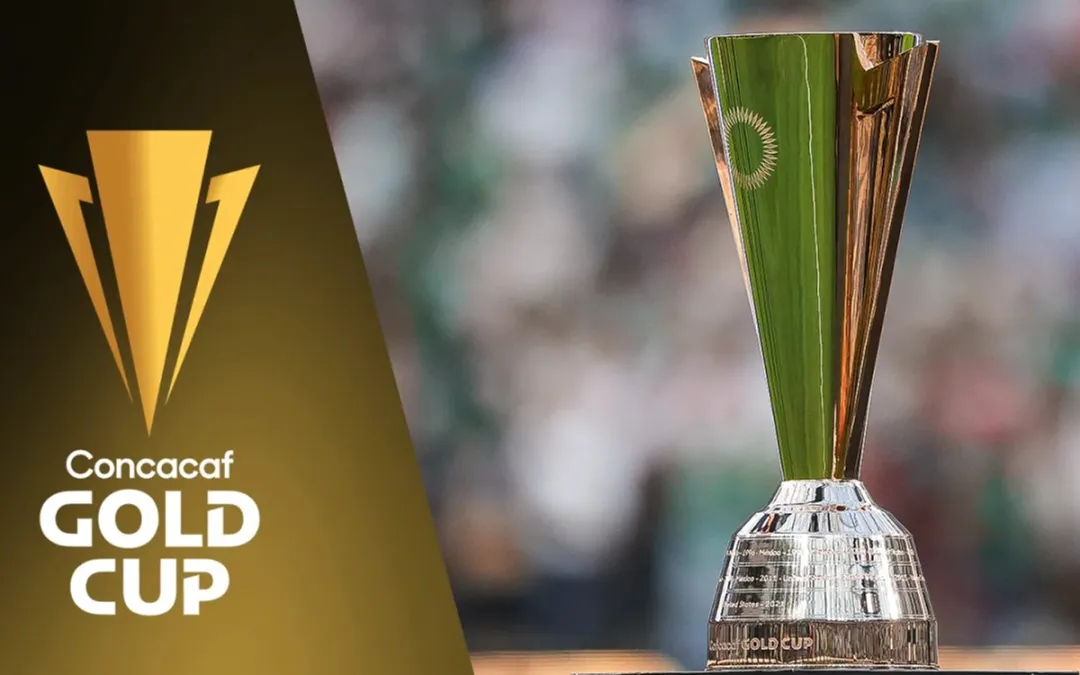
On the map of world football, CONCACAF occupies a strip stretching from northern Mexico to the Caribbean, passing through Central America and the United States. It’s a diverse, culturally rich region that is far more competitive in football than is often recognized. And the tournament that has determined who rules this territory since 1991 is the CONCACAF Gold Cup.
Held every two years, the tournament brings together the best national teams from North America, Central America, and the Caribbean, with occasional participation from guest teams from other confederations. Since its inaugural edition, the Gold Cup has been the stage for alternating dominance between Mexico and the United States, along with a notable surprise—Canada in 2000—serving as a reminder that football is never written in advance.
Its history is more interesting than its position on the international calendar might suggest: spectacular goals, dramatic finals, millionaire audiences in West Coast stadiums, and a competition that has grown in step with football on a continent still falling in love with the planet’s most popular sport.
📋 Table of Contents
- Origins of the Gold Cup
- Historic Champions
- Key Data and Statistics
- Memorable Gold Cup Milestones
- Trivia You Might Not Know
- Evolution of the Format
- Current Relevance of the Tournament
- Conclusion
Origins of the Gold Cup
To understand the Gold Cup, you have to look back at its predecessor: the CONCACAF Championship, played between 1963 and 1989. In its early editions, this tournament also served as a qualifying phase for the World Cup. That tournament was irregular in both its format and frequency, and the quality of its editions varied considerably depending on who participated and how the competition was organized at the time.
In the late eighties, with professional football growing rapidly in the United States—the country gearing up to host the 1994 World Cup—and with CONCACAF seeking greater commercial visibility for its regional tournament, the decision was made to create a modern competition with more participants, broader television coverage, and larger stadiums. Thus, the CONCACAF Gold Cup was born in 1991.
The first edition took place in Los Angeles in July 1991, featuring eight participating national teams. The host, the United States, won the tournament by defeating Honduras in the final via a penalty shootout. It was a symbolically significant debut: the country set to organize the World Cup three years later proved its national team could compete at the highest regional level. From that moment on, the Gold Cup hasn’t stopped growing in size, budget, and relevance.
From the very beginning, the tournament found its ideal setting in American stadiums: massive venues, huge communities of Mexican and Central American fans in cities across California, Texas, and Florida, and sports infrastructure no other country in the region could match. This is the reason why the United States has been the primary host of the tournament in virtually all its editions.
Historic Champions
The Gold Cup roll of honor is one of the most concentrated in any regional tournament in the world. Only three nations have won the title since 1991:
| National Team | Titles |
|---|---|
| 🇲🇽 Mexico | 12 |
| 🇺🇸 United States | 7 |
| 🇨🇦 Canada | 1 |
Mexico is the dominant force in the tournament’s history, with 12 titles reflecting decades of technical and tactical superiority over the rest of the region. El Tri has won the tournament in different eras and with different generations of players, speaking to a consistency that goes beyond individual cycles and reflects the depth of Mexican football.
The United States has been Mexico’s most constant rival, winning 7 titles as hosts with teams evolving from the defensive organization of the nineties to the more elaborate football of recent times. The duel between these two national teams forms the central rivalry of the Gold Cup and is one of the region’s most exciting classics.
Canada holds a single title from 2000, which was a massive surprise at the time. The Canadians triumphed in a tournament featuring guest national teams from South America and Africa, and their victory remains the only Gold Cup title won by a team other than Mexico or the United States to this day.
Key Data and Statistics
| Statistic | Detail |
|---|---|
| 🥇 Most Titles | Mexico (12) |
| 🏁 Most Finals Played | Mexico (15) |
| 🔁 Most Repeated Final | Mexico vs. United States (over 7 times) |
| 💥 Biggest Win in a Final | Mexico 5-0 United States (2009) |
| ⚽ Most Goals in an Edition | Javier “Chicharito” Hernández — 7 goals (2011) |
| 🏅 All-Time Top Scorer | Landon Donovan — 18 goals |
| 🌍 Country with Most Matches as Host | United States |
Landon Donovan’s record as the tournament’s all-time top scorer with 18 goals is one of the most significant metrics for understanding the evolution of American football. For over a decade, Donovan was the best player the United States had produced, and his performances in the Gold Cup—where he was virtually unstoppable on home soil—helped raise the tournament’s profile in the North American market.
Mexico’s 5-0 thrashing of the United States in the 2009 final deserves a special mention because it wasn’t just a lopsided scoreline: it was a display of absolute superiority by El Tri over their biggest tournament rival, in the Americans’ own stadium. To this day, it remains the largest margin of victory in Gold Cup final history.
Memorable Gold Cup Milestones
1991 — The Beginning and the US Victory
The first Gold Cup was held in Los Angeles and set the tone for what was to come: a tournament played primarily in the United States, before massive communities of Latin American fans, with Mexico and the host nation as the main protagonists. The United States won that first edition by defeating Honduras on penalties in the final, establishing from the get-go the image of a tournament where the two great regional powers would be Mexico and the host.
2000 — Canada and the Biggest Surprise in History
The 2000 Gold Cup was the only edition where a team other than Mexico or the United States was crowned champion. Canada overcame all the tournament’s national teams, including guest team Colombia, to claim the title in a way no one saw coming. That title remains Canada’s sole triumph in the competition, and although the Canadians have improved significantly in recent years, the 2000 Cup stands as the pinnacle of their tournament history.
2007 — Benny Feilhaber’s Wonder Goal
In the final played in Chicago, Benny Feilhaber scored one of the most memorable wonder goals in tournament history for the United States: a volley from outside the box that sailed into the top corner, securing the title for the Americans against Mexico. It was a moment proving that even in the most important matches, sometimes the result can hinge on a moment of individual brilliance impossible to foresee.
2011 — The Most Epic Final: Comeback and Attendance Record
The match at the Rose Bowl in Pasadena between Mexico and the United States in 2011 was arguably the best in Gold Cup history. The United States went up 2-0 in the first half; Mexico mounted a comeback to win 4-2, fueled by a performance from Javier “Chicharito” Hernández that included several goals and established the striker as the tournament’s standout star. The crowd surpassed 93,000 spectators in the stadium, a record that still stands, reflecting the popularity of football among Southern California’s Latin American communities. It was a final possessing everything that makes a tournament great: drama, a comeback, individual quality, and a passionate crowd.
2019-2023 — The Return of Mexican Dominance
After a period of greater competitiveness where the United States won the titles in 2013 and 2017, Mexico regained control of the tournament with victories in 2019 and 2023. The 2023 edition, where Mexico defeated Panama in the final, proved that El Tri remains the team to beat in the region despite the strides made by national teams like Panama, Jamaica, and Canada itself, which has completed its transformation into a regional powerhouse.
Trivia You Might Not Know
-
Colombia was the only non-CONCACAF national team to play in a Gold Cup final, doing so in the 2000 edition. The Colombians arrived as a guest team and overcame several rivals before falling to Canada in the final. Their presence in that tournament was part of a CONCACAF policy to internationalize the competition and attract more media attention.
-
South Africa and Colombia participated as guests in the 2005 edition, in another attempt to raise the tournament’s profile with teams from other confederations. This practice of inviting outside national teams was later abandoned to make more room for the region’s own teams.
-
The tournament’s attendance record was set at the 2011 final in the Rose Bowl in Pasadena, with over 93,000 spectators. It’s a figure reflecting football’s extraordinary drawing power among Southern California’s Latin American communities.
-
For several years, the Gold Cup awarded qualification spots for the FIFA Confederations Cup, adding an extra incentive beyond the regional title. The demise of that tournament eliminated that lure, but the Gold Cup has found other stimuli to maintain its relevance.
-
Landon Donovan, with 18 goals, is the tournament’s all-time top scorer, ahead of several Mexicans who might have surpassed that record if it weren’t for the high number of editions where Mexico fielded alternate squads. Donovan built that legacy over multiple editions with a goalscoring consistency that made him the most decisive player in tournament history on the American side.
Evolution of the Format
The Gold Cup has grown in terms of participants as football has developed across the region:
1991-1995: The early editions of the tournament featured 8 national teams in a compact format aimed at establishing the competition before expanding it. The priority was creating an attractive television product and finals between the strongest teams.
1996-2017: Over these two decades, the tournament progressively expanded its participation until reaching 12 national teams, incorporating more teams from Central America and the Caribbean that previously struggled to access the main stages of the competition.
2019 onwards: The Gold Cup expanded its format to 16 teams, allowing for greater inclusion of Caribbean and Central American national teams. This generated more matches in the group stage, increasing the volume of football and television rights revenue.
The Future: The increasingly close connection between CONCACAF and CONMEBOL, visible in the shared 2024 Copa América played on American soil, opens up the possibility of the Gold Cup continuing to evolve in its relationship with South American football—something that already happens informally with editions including guests from that confederation.
Current Relevance of the Tournament
In the 2020s, the Gold Cup is experiencing a moment of transformation. For decades, the tournament was practically a duopoly between Mexico and the United States, with the rest of the national teams fighting for a third place that rarely amounted to anything more. But the landscape has changed.
In 2024, Canada completed its transformation into a regional powerhouse by winning the Copa América shared with South America—an achievement that would have been unthinkable ten years earlier. Panama has played in several Gold Cup finals in recent years, proving it can compete on equal footing with Mexico and the United States under certain circumstances. Jamaica and Costa Rica have also consistently raised their level, making the knockout stages more competitive than in any previous era.
From an economic standpoint, the tournament continues to generate significant figures thanks to the American television market and the massive community of Latin American fans filling stadiums in California, Texas, and Florida. The Gold Cup is one of the most highly attended national team tournaments in the world, making it a highly attractive commercial product for CONCACAF and its sponsors.
The tournament also serves a football development function: for many small Caribbean and Central American national teams, the Gold Cup is the highest-level competition they can participate in, and matches against Mexico or the United States provide experiences that accelerate their players’ growth in ways domestic leagues cannot offer.
Conclusion
The CONCACAF Gold Cup has served as the barometer for football in a growing region for over three decades. It is not the oldest or the most highly publicized tournament in the world, but it has a characteristic making it special: it is played in the largest stadiums in the United States before communities of fans with football in their blood, giving it an atmosphere few regional tournaments can match.
The history of the tournament is defined by the rivalry between Mexico and the United States, two national teams that have built their footballing identities through finals and semifinals where every match carries the weight of shared history. When Chicharito spearheaded the comeback in Pasadena in 2011, or when Benny Feilhaber rocketed the ball into the top corner in Chicago in 2007, the tournament proved it can produce moments of the same intensity as any other continental competition in the world.
The immediate future promises more balance, greater competitiveness, and more national teams capable of challenging the historic dominance of the “Big Two.” And that evolution, more than anything else, is the best news the Gold Cup could receive heading into the coming decades.