





The 2025 FIFA Club World Cup was not just another tournament. It was the most ambitious experiment in the history of club football, FIFA’s riskiest bet in decades, and—to the surprise of its own organizers—a spectacle exceeding the sporting expectations of most analysts who had questioned it before it kicked off.
For the first time in history, the tournament was played with 32 teams representing the planet’s six confederations, in a format replicating the structure of the national team World Cup: a group stage followed by knockout rounds until the grand final. The venues were 12 stadiums spread across 11 cities in the United States, turning the North American country into the perfect laboratory for what will be the 2026 national team World Cup in the same territory.
The champion was Chelsea FC, defeating PSG 3-0 in an impressive final at MetLife Stadium in New Jersey. A team built on a foundation of young talents—with an average age of just 24—proving that sustained investment in emerging generations can build the best team on the planet. This is the complete chronicle of everything the tournament left behind.
📋 Table of Contents
- The New Format: From 7 to 32 Teams
- 🏆 Chelsea, the New World Champion: The Final and the Path
- ⚽ Tournament Top Scorers
- 🎯 Assist Leaders
- 🌟 Individual Awards
- 🏟️ Host Cities and Stadiums
- 📊 Historical Tournament Statistics
- 🧠 Trivia and Facts That Marked the Edition
- Conclusion
The New Format: From 7 to 32 Teams
The decision to expand the Club World Cup to 32 teams was not received unanimously. From the European leagues came strong criticism regarding the saturation of the football calendar, and several elite players—through their unions—publicly expressed their concern about the physical impact of a tournament of this size added to an already overloaded season. Even in the weeks leading up to the start, attendance at group stage matches was a real unknown.
What nobody expected was the level of play that appeared from the very first match. The format of 32 clubs from six different confederations brought teams to the tournament that the European public had not seen compete at the highest level in years: South American clubs with sophisticated tactical foundations, African representatives with an intensity and athleticism unusual in European tournaments, and Asian and Oceanian teams that, although eliminated early, brought a truly global dimension to the tournament that the previous 7-team format had never been able to offer.
The average attendance of 45,000 spectators per match was considered a success by FIFA, especially in a group stage that in recent editions had generated criticism for matches lacking real competitiveness. The US market responded: stadiums like MetLife Stadium, Hard Rock Stadium in Miami, and Mercedes-Benz Stadium in Atlanta recorded full houses in the knockout rounds.
🏆 Chelsea, the New World Champion
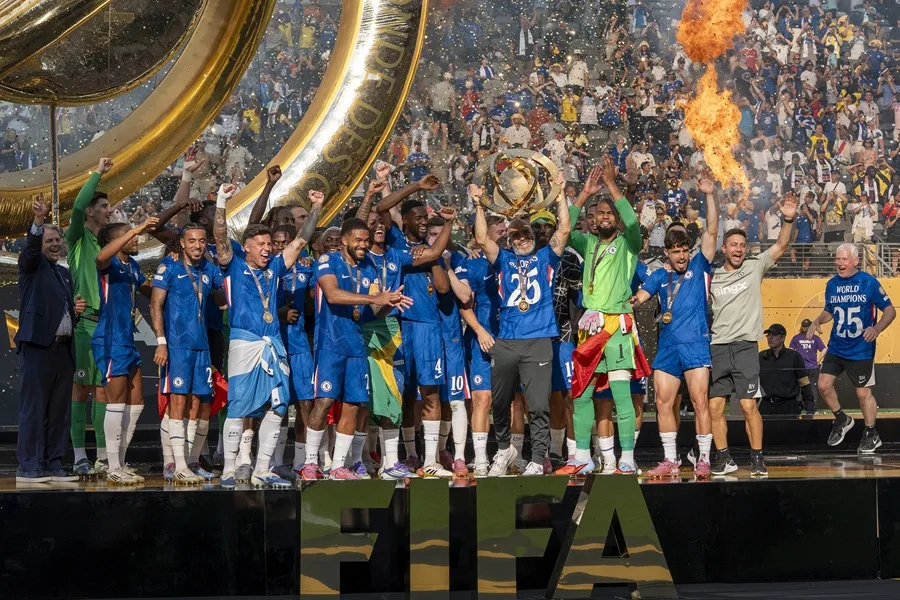
The Final: Chelsea 3-0 PSG — MetLife Stadium, July 13, 2025
The match nobody expected with that scoreline ended up being the most dominant Chelsea has played in an international final. The English side—managed by Enzo Maresca—took to the MetLife Stadium in New Jersey with a clear tactical plan from the first minute: high pressing from PSG’s build-up play and quick vertical transitions exploiting the space behind the Parisian full-backs.
Cole Palmer opened the scoring with a shot from outside the box in the 23rd minute, after receiving a through ball from Enzo Fernández that disorganized the PSG defense. The 1-0 at halftime was a faithful mirror of what had happened on the pitch: clear dominance by Chelsea, with PSG lacking ideas in the final third.
In the second half, Moisés Caicedo extended the lead in the 61st minute with a header from a corner. The 3-0 arrived in the 84th minute, again the work of Palmer, who finished off a perfect counterattack with an unstoppable cross-shot past Gianluigi Donnarumma. The match ended with PSG never being able to generate a clear chance and with Chelsea celebrating their second world title, their first under the new expanded format.
Chelsea’s Path to the Final
Chelsea did not have an easy path to the final. In the group stage, their group included Real Madrid, whom they defeated 2-1 in the most anticipated match of that phase, with Palmer and Enzo Fernández as protagonists. In the round of 16, they eliminated Fluminense (3-1) and in the quarterfinals Bayern Munich in a match ending in penalties after a 1-1 draw in regulation time. In the semifinals, they overcame Palmeiras (2-0) in a match where the English team’s defensive solidity was key.
In total, Chelsea played 7 matches, won 6 and drew 1 (the one resolved on penalties), scored 17 goals and conceded 4. A performance reflecting a defensive and offensive consistency rarely seen in a tournament of this magnitude.
⚽ Tournament Top Scorers
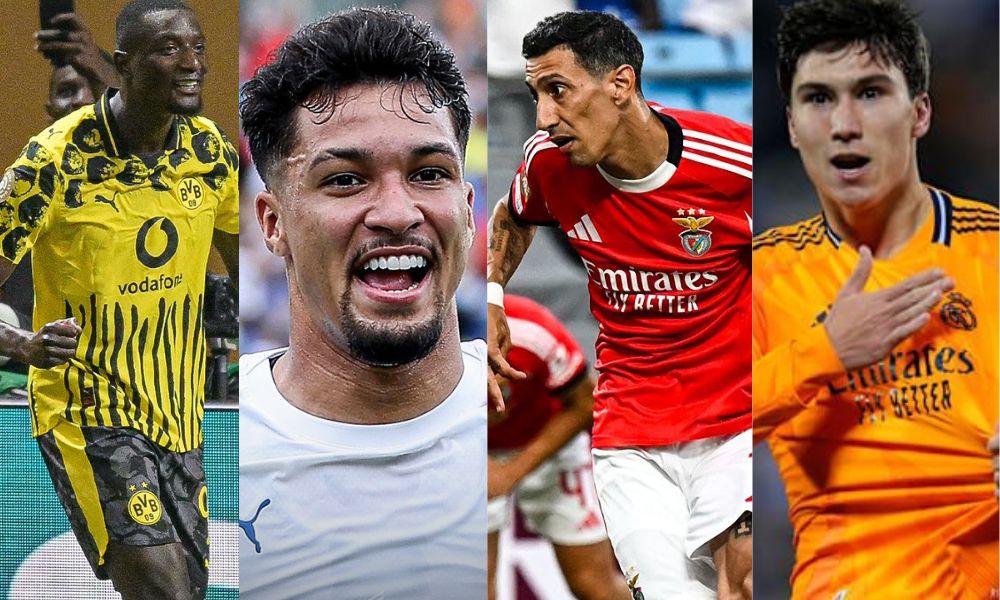
The tournament produced 175 goals in 63 matches, with an average of 2.78 goals per match—a figure surpassing the historical average of national team World Cups and reflecting the competitiveness and offensive level of the new format.
| Player | Team | Goals |
|---|---|---|
| Gonzalo García | Real Madrid | 4 |
| Marcos Leonardo | Al Hilal | 4 |
| Serhou Guirassy | Borussia Dortmund | 4 |
| Ángel Di María | Benfica | 4 |
| Wessam Abou Ali | Al Ahly | 3 |
The most striking thing about the goalscorers list is that none of the four top scorers belonged to the champion. Chelsea won the tournament with a balanced offensive distribution—without a dominant individual goalscorer—reflecting the collectivism of Maresca’s project. Ángel Di María’s stat with Benfica is also noteworthy: at 37 years old, the Argentine scored 4 goals in the tournament and starred in an individual campaign nobody expected from a player in the twilight of his career.
🎯 Assist Leaders
| Player | Team | Assists |
|---|---|---|
| Enzo Fernández | Chelsea | 3 |
| Cole Palmer | Chelsea | 2 |
| Achraf Hakimi | PSG | 2 |
| Vitinha | PSG | 2 |
| Bradley Barcola | Lyon | 2 |
The assists table confirms the tournament was creatively dominated by the midfielders of Chelsea and PSG—the two finalists. Enzo Fernández, with 3 assists, was the best distributor of the tournament, consolidating his position as one of the best midfielders of his generation. The fact that Hakimi and Vitinha appear with 2 assists each despite the defeat in the final reflects that PSG generated quality play, but could not convert it into goals when they needed it most.
🌟 Individual Awards
- Player of the Tournament (Golden Ball): Cole Palmer (Chelsea) — Directly involved in 5 tournament goals (2 goals and 2 assists plus the penalty he won for the third), he was the most decisive player in the crucial moments.
- Goalkeeper of the Tournament (Golden Glove): Robert Sánchez (Chelsea) — The Spanish goalkeeper was key in the penalty shootout against Bayern Munich and kept a clean sheet during the last three matches of the tournament.
- Breakthrough Team: Al Hilal (Saudi Arabia) — The Saudi club was the great surprise of the tournament, reaching the quarterfinals with a mix of experienced international stars and high-level local players.
- Fair Play Award: Botafogo (Brazil) — Representing the Copa Libertadores, the Rio de Janeiro team left a very good impression on and off the pitch.
🏟️ Host Cities and Stadiums
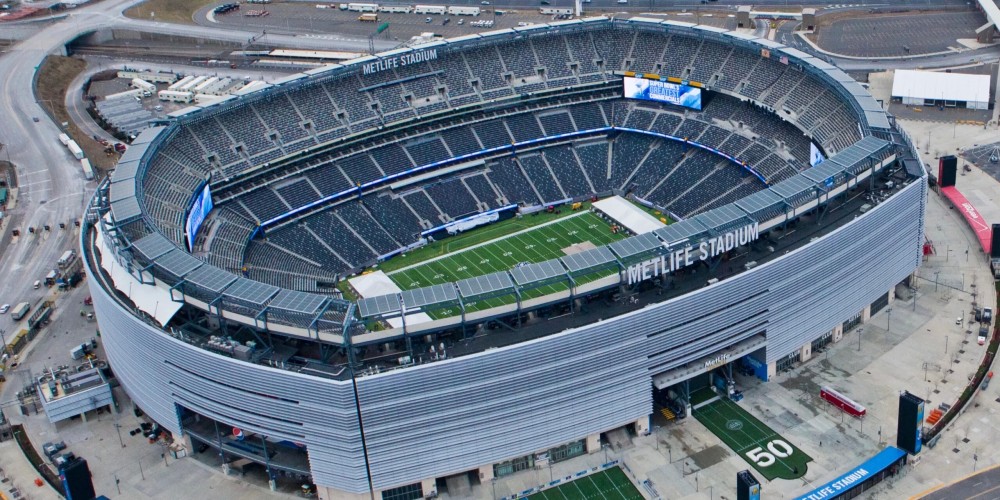
The tournament was played in 12 stadiums distributed across 11 cities in the United States, consolidating the North American country as the great host of world football heading into 2026.
| City | Stadium | Capacity |
|---|---|---|
| New York/New Jersey | MetLife Stadium | 82,500 |
| Miami | Hard Rock Stadium | 65,326 |
| Los Angeles | BMO Stadium | 22,000 |
| Dallas | Toyota Stadium | 19,096 |
| Atlanta | Mercedes-Benz Stadium | 71,000 |
| Houston | NRG Stadium | 72,220 |
| Chicago | Soldier Field | 61,500 |
| Seattle | Lumen Field | 69,000 |
| Boston | Gillette Stadium | 65,878 |
| Orlando | Camping World Stadium | 60,219 |
| San Francisco | Levi’s Stadium | 68,500 |
| Nashville | GEODIS Park | 30,000 |
The choice of MetLife Stadium for the final was spot on in every sense: the stadium in the New York metropolitan area offers the largest capacity of the tournament and the largest media market in North America. With over 80,000 spectators at the final, it was one of the largest attendances in the history of club tournament finals.
📊 Historical Tournament Statistics
The 2025 Club World Cup established several records that will remain in football history books:
| Statistic | Result |
|---|---|
| Matches played | 63 |
| Participating teams | 32 (from 6 confederations) |
| Total goals | 175 |
| Average goals/match | 2.78 |
| Total attendance | ~2,835,000 spectators |
| Average attendance/match | ~45,000 spectators |
| Nations represented | 22 different countries |
| Matches with extra time or penalties | 8 |
The average of 2.78 goals per match is significantly higher than the 2024-25 UEFA Champions League (2.54) and the 2022 Qatar national team World Cup (2.69), suggesting the new format generated more open and offensive matches than expected.
🧠 Trivia and Facts That Marked the Edition
The youngest squad to win a club world title. Chelsea lifted the trophy with an average age of 24 years in their starting eleven for the final—the lowest figure recorded for a champion in any high-competition club tournament from available FIFA data. Players like Palmer (23), Caicedo (23), and Reece James (25) are the backbone of a project that still has many years ahead.
The first tournament with representation from six confederations in the same knockout stage. Never before in club football history had an official tournament brought together teams from CONMEBOL, UEFA, AFC, CAF, CONCACAF, and OFC in the same direct competitive bracket. That truly global dimension of the tournament is its most important legacy beyond the champion.
Al Hilal, the best non-European or South American representative. The Saudi club reached the quarterfinals, eliminating African and Asian teams in a progression demonstrating that the Saudi Pro League’s investment in international talent is generating collective results, not just individual ones. They reached the quarterfinals before falling to Chelsea in a very evenly matched game until the 70th minute.
Bradley Barcola and Lyon as the European surprise. The French winger was the breakthrough player among second-tier European teams, with performances confirming Ligue 1 has real talent to compete globally when the format provides opportunities beyond the PSG-Monaco duopoly.
Conclusion
The 2025 FIFA Club World Cup will go down in history as the tournament proving club football has a global potential the previous 7-team format had never been able to exploit. The pre-tournament debates—about the calendar, about equity between confederations, about whether the North American public would respond—were overshadowed by the reality of 63 matches that generated memorable moments, real surprises, and a final with 80,000 spectators that will be remembered for decades.
Chelsea lifted a trophy validating years of investment in young talent and a coherent collective project. Cole Palmer was the player of the tournament, but the most important thing about Maresca’s Chelsea is not a single player: it’s that any of their starting eleven can decide a match in the decisive moment.
And what comes next is even more interesting. The 2026 National Team World Cup, also in the United States, will arrive in a country that has already proven it can organize the biggest sporting spectacle on the planet. Global football has a new home. And its next appointment already has a date.