





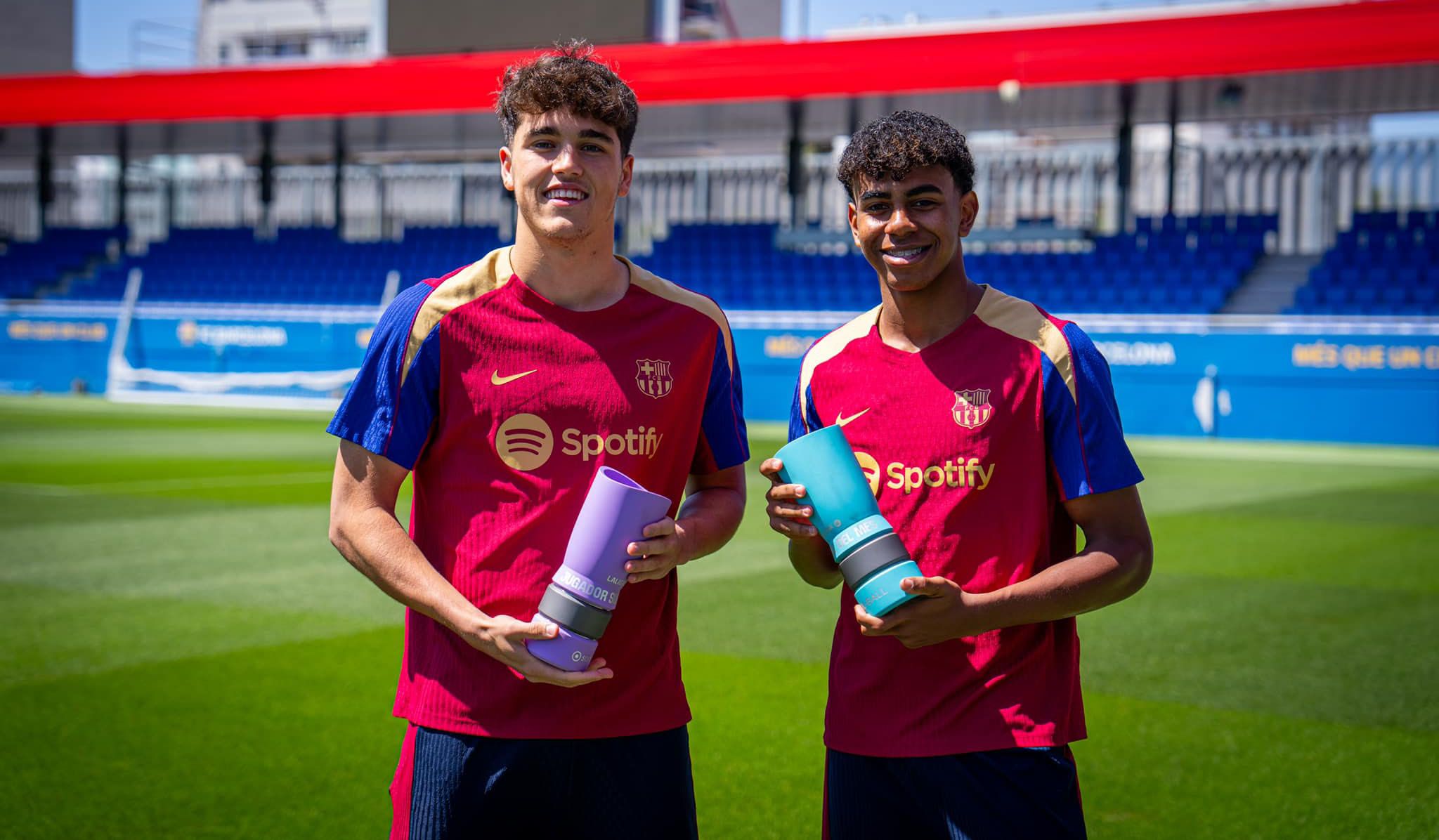
The global football ecosystem advances at a dizzying speed. In the middle of 2026, talent scouting has become so aggressive that the line between “promise” and “reality” is increasingly thin. Top-tier clubs sign contracts with 15- and 16-year-old footballers, transfer markets break records every summer, and scouting algorithms detect talents in leagues no one looked closely at a decade ago.
For this analysis, we have decided to exclude phenomena like Lamine Yamal: after consolidating his place on the podium of the world’s best players in 2025, categorizing him today as a “promise” would detract from his status as a confirmed superstar. We will focus strictly on Under-20 footballers who, while already showing their faces in the elite or having secured multi-million dollar transfers, are in the midst of maturation and tactical consolidation.
📋 Table of Contents
- How Did We Build This Ranking?
- 🌟 Top 10 Young Promises in World Football (2026)
- 👑 Detailed Player-by-Player Analysis
- 📊 Comparative Table: Performance and Market Data (2026)
- 🎉 Conclusion: The Generational Shift of the New Era
How Did We Build This Ranking?
Any ranking without methodology is just an opinion disguised as analysis. To construct this list rigorously, we evaluated each player under four weighted criteria:
- Current statistical performance (35%): Advanced metrics from the 2025-26 season: successful dribbles, key passes, effective pressing, goals, and assists per 90 minutes.
- Tactical impact on their team (30%): What changes for the team when this player is not there? Are they an undisputed starter or rotational?
- Projection and evolutionary ceiling (25%): Speed of learning, ability to adapt to more demanding contexts, and physical and mental growth factors.
- Competitive context (10%): Standing out in the Ecuadorian First Division is not the same as doing so in the Champions League. We applied an adjustment for the difficulty of the environment.
With those criteria, these are the 10 most promising Under-20 footballers on the planet in 2026.
🌟 Top 10 Young Promises in World Football (2026)
- Estêvão — Brazil | Palmeiras / Chelsea
- Endrick — Brazil | Real Madrid
- Pau Cubarsí — Spain | FC Barcelona
- Kendry Páez — Ecuador | Ind. del Valle / Chelsea
- Archie Gray — England | Tottenham
- Geovany Quenda — Portugal | Sporting CP
- Rodrigo Mora — Portugal | FC Porto
- Franco Mastantuono — Argentina | River Plate
- Álvaro Montoro — Argentina | Vélez Sarsfield
- Julien Duranville — Belgium | Borussia Dortmund
👑 Detailed Player-by-Player Analysis
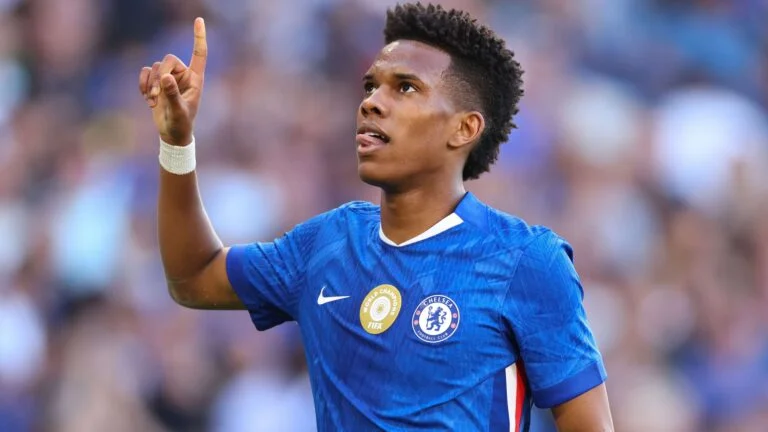
1. Estêvão (Palmeiras / Chelsea) — The Most Indecipherable Profile
With his signing for Chelsea already sealed for the time he comes of age, “Messinho”—a nickname earned the hard way in Brazil and not given away—has demonstrated an evolutionary ceiling in the Brasileirão comfortably surpassing the rest of the candidates for this number 1 spot. It’s not that he is the fastest, nor the one who scores the most goals. It’s that he does things other players his age simply cannot do.
His secret is an associative reading of the game completely inappropriate for a 19-year-old. In tight spaces, where most wingers of his generation look for the individual dribble outwards, Estêvão looks for the one-two, the third man, the movement freeing a teammate three meters ahead. Speed for him is a resource, not a refuge.
Season stat: Leads the statistics for successful dribbles in South American football with 5.8 per 90 minutes—well above the elite winger average in Europe’s top five leagues, which is around 3.2.
Projection: His future partnership with Cole Palmer at Stamford Bridge has everything to mark an era. If Chelsea manages his adaptation to English football well, we could be talking about the next South American Ballon d’Or winner before he turns 24.
2. Endrick (Real Madrid) — The Old-School “Nine” with a Modern Physique
Endrick arrived at Real Madrid preceded by expectations that would have crushed any 18-year-old boy. It didn’t crush him. What he did was adapt with a maturity his own teammates—some twice his age—privately acknowledge as extraordinary. The fact that Mbappé’s shadow has limited his minutes is not a criticism of the player: it is a description of the most competitive context in the world.
In the minutes he accumulates, Endrick shows what differentiates him from the rest of the strikers of his generation: an impact power in the area reminiscent of Ronaldo Nazário—not an easy comparison to make, but made by those who have seen him up close—combined with intelligent off-the-ball movement creating spaces for others. He doesn’t need to touch the ball constantly. He needs to touch it at the exact right moment.
Season statistics: Registers an average of 0.65 goals per 90 minutes played coming off the bench. If that performance is extrapolated to full starts, we are looking at Pichichi candidate numbers.
3. Pau Cubarsí (Barcelona) — A Veteran’s Mind in an Under-20 Center-Back
Finding a fast and technical winger in 2026 football is difficult. Finding a 19-year-old center-back capable of breaking pressing lines with the cleanliness of Pau Cubarsí is simply a tactical anomaly. There is no one else in the world with his age profile.
What makes Cubarsí different is not that he is fast (he is) nor that he anticipates well (he does). It is that he makes decisions under pressure with the coldness of someone who has been in the First Division for ten years. In the Barcelona system, where the center-back must initiate the attacking phase assuming risks that would be inconceivable in any other club, Cubarsí does not hesitate. He drives forward, progresses, threads the through pass, and returns to position in four seconds.
Advanced metric: Maintains a 94.2% success rate in long passes over 30 meters under opposition pressure—a figure surpassing most starting center-backs in the top five leagues, regardless of age.
4. Kendry Páez (Independiente del Valle / Chelsea) — The Brain of South America
When an 18-year-old player is already the leader of his senior national team in World Cup Qualifiers, we are no longer talking about a promise in the strict sense. Kendry Páez has skipped stages at an unprecedented speed in Ecuadorian football, and his imminent arrival at Chelsea in July places all the spotlights of English football on him.
His competitive advantage over other promises in his position is his accumulated experience in highly demanding real contexts: Copa América, CONMEBOL Qualifiers, and Copa Libertadores before coming of age in Europe. When Estêvão and others arrive in the Old Continent adapting to the pressure, Páez will already have been through matches of higher competitive tension than most Premier League starters.
Tactically, he combines tremendous mid-range striking with elite peripheral vision and defensive tracking back that has noticeably improved over the last six months.
Tactical impact: Averages 3.8 key passes per match in the Ecuadorian championship and wins 54% of his ground duels in midfield—an unusual figure for a creative midfielder of his profile.
5. Archie Gray (Tottenham) — British Versatility Made Reality
Modern football rewards footballers who can read the game in different positions without losing an ounce of performance in any of them. Archie Gray is, in that sense, exactly what Ange Postecoglou needed at Tottenham: a player who started out dazzling as a dynamic central midfielder at Leeds and who at Spurs has consolidated himself both as an inverted full-back and a playmaking pivot, as the match demands.
This hybrid ability is not improvisation: it reflects a positional intelligence genuinely rare in a 20-year-old player. Gray doesn’t just understand each position tactically; he interprets it with the pressure and speed of the Premier League game, the most physically demanding league in the world.
Key statistic: Has recorded an 88% effectiveness in successful tackles during the current season, consolidating himself as one of the most reliable ball-winners of his generation in Premier League one-on-ones. His defensive destruction capability combined with clean ball distribution make him a prototype many clubs will try to sign in the coming summers.
6. Geovany Quenda (Sporting CP) — Lisbon’s New Factory
Sporting Lisbon has been one of Europe’s most productive academies for years, and Geovany Quenda is its latest and brightest product. As a modern, long-running right wing-back/winger, Quenda has exploded this season in the Portuguese league with a performance that has already put his name in the scouting offices of half the Premier League and the Italian Serie A.
His most lethal resource is the change of pace in the first step of the dribble: he starts in pause, measures the defender, and in a tenth of a second accelerates with the ball glued to his foot into the space he has just opened. In the Portuguese league, nobody has found a way to anticipate that movement during this campaign.
Beyond beating his man, what elevates Quenda above other wingers of his generation is his quality in the finishing phase of actions. He doesn’t settle for reaching the byline and crossing to the first person appearing: he chooses the best-positioned teammate and executes the cross with pinpoint precision.
Key statistics: 7 assists in the season and an average of 4.1 accurate crosses into the box per match—figures surpassing established elite wingers in more competitive leagues.
7. Rodrigo Mora (FC Porto) — The Classic Playmaker Adapted to Modern Rhythm
Rodrigo Mora is Quenda’s aesthetic counterpart. While the Sporting winger destroys down the flank with speed and verticality, Mora operates in Porto’s inner channels as an old-school playmaker who has learned to survive in 21st-century pressing football. He moves between the lines with a naturalness reminiscent of the best Latin American creatives, which is no coincidence: his father is Uruguayan and he grew up with Rioplatense football as a reference.
His most valuable skill is turning on his own axis in a single touch when rival pressure already seems to have trapped him. That resource allows him to generate passing lanes where there were none, freeing Porto’s forwards in situations where other midfielders would have lost possession. The only warning from scouts following him is his need to gain muscle mass before making the jump to a more physical league—the Premier League or Serie A—where that technical ability will need to be accompanied by greater consistency in contact.
Key statistic: Maintains an outstanding 89% passing accuracy in the final third of the opponent’s half, reflecting technical precision under pressure that very few creative midfielders of his generation match.
8. Franco Mastantuono (River Plate) — The Elegance of the Millionaire Left Foot
In Argentina, Franco Mastantuono is spoken of with the same reverential tone with which a previous generation spoke of Riquelme’s early months at Boca. That, in Argentine football, says it all. With a release clause breaking all-time records for a player of his age in South American football, Mastantuono has the radar of all of Europe’s giants on him—and the maturity not to lose focus because of it.
What sets him apart from other creative midfielders of his generation is an unusual combination: exquisite ball striking on set pieces—free kicks and penalties he executes with a terrifying naturalness—and a leadership personality leading him to ask for the ball in the hottest moments of a Copa Libertadores match. That bravery in decision-making under maximum pressure is not taught in any academy.
The historical fact: He is the youngest player in River Plate’s history to score in the Copa Libertadores, a tournament historically making or breaking Argentine football promises.
Market value: Estimated between €35-45M according to Transfermarkt, with several Premier League and La Liga clubs confirming formal interest.
9. Álvaro Montoro (Vélez Sarsfield) — The Pure Dribbler from Liniers
If Mastantuono is tactical sophistication, Álvaro Montoro is the purity of street football converted into professional performance. The Vélez Sarsfield winger possesses an extremely low center of gravity allowing him to change direction in millimeter spaces, a quality that in the history of Argentine football has produced some of the continent’s most memorable dribblers.
Montoro does not need open spaces to beat a man: he is more dangerous when the defender has him cornered against the touchline. That context—where any other player would brake or concede the position—is precisely where the Liniers winger brings out his best version. Defenders in Argentine football already know it, and the direct consequence is that he is fouled more times per match than practically any other player in the championship.
His positioning at number 9, behind Mastantuono, responds to a single factor: impact in decisive matches. Montoro shines brightly in block play, but he still needs to consolidate his decisive presence when matches are decided in the last 20 minutes under maximum tension.
Key statistic: Receives an average of 4.2 fouls per match—one of the highest records in the Argentine league—a direct reflection of how unstoppable he is in full flight when at his best.
Market value: Estimated between €15-20M, with confirmed interest from clubs in the Spanish Second Division and the Portuguese league.
10. Julien Duranville (Borussia Dortmund) — Speed Frozen by Injuries
Julien Duranville is the most frustrating talent on this list—not through any fault of his own, but because of the medical bad luck that has interrupted his progression at the moments when he most needed to accumulate continuity. When he is healthy and in competitive rhythm, the Belgian’s acceleration in one-on-ones is the most vertical and destructive in the Bundesliga. His top speed with the ball exceeds 34 km/h, a figure placing him among the fastest wingers on the European continent.
Borussia Dortmund is aware of the potential they have on their hands, and their management of the player has been deliberately cautious: controlled minutes, monitored training loads, no premature exposure to high-intensity matches without sufficient preparation. The club’s bet is long-term, and it makes complete sense.
If Dortmund’s medical staff manages to give him competitive continuity for a full season—something he has not yet been able to achieve since his arrival in the first team—Duranville has everything to climb several places in this ranking over the next twelve months.
Key statistic: In matches where he has had continuity, he averages 9.1 progressive carries per 90 minutes—the highest record for his position in the Bundesliga during that period.
📊 Comparative Table: Performance and Market Data (2026)
To understand each talent’s reality at a glance, we organized their key data from the 2025-26 season:
| Player | Age | Position | Current Club | Destination / Status | Highlight Data | Approx. Market Value |
|---|---|---|---|---|---|---|
| Estêvão | 19 | Right Winger | Palmeiras | Chelsea (Signed) | 5.8 dribbles/90’ | +€80M |
| Endrick | 19 | Forward | Real Madrid | Real Madrid | 0.65 goals/90’ sub | +€80M |
| P. Cubarsí | 19 | Center-Back | FC Barcelona | Barcelona | 94.2% long pass acc. | +€60M |
| K. Páez | 18 | Midfielder | Ind. del Valle | Chelsea (Signed) | 3.8 key passes/match | +€40M |
| A. Gray | 20 | Full-Back/Pivot | Tottenham | Tottenham | 88% tackle effective. | +€35M |
| G. Quenda | 19 | Winger/Wing-Back | Sporting CP | Sporting CP | 4.1 acc. crosses/match | +€30M |
| R. Mora | 18 | Playmaker | FC Porto | FC Porto | 89% pass acc. final 3rd | +€25M |
| F. Mastantuono | 18 | Playmaker | River Plate | Europe (imminent) | Youngest scorer Libs. | +€40M |
| Á. Montoro | 19 | Left Winger | Vélez Sarsfield | Europe (interest) | 4.2 fouls rec./match | +€18M |
| J. Duranville | 20 | Right Winger | B. Dortmund | B. Dortmund | 9.1 progressions/90’ | +€25M |
🎉 Conclusion: The Generational Shift of the New Era
The footballing landscape of 2026 confirms something scouting data has been hinting at for years: the talent map is decentralizing at an unprecedented speed. Brazil remains the main exporter of immediate impact promises—Estêvão and Endrick are the most recent and compelling proof—but Ecuador, Argentina, and Portugal are producing players with a competitive maturity that just ten years ago would have been unthinkable for their leagues of origin.
The big difference defining them compared to previous generations is that they arrive in Europe not as raw talents needing adaptation time, but as players who have already competed under real pressure in World Cup qualifiers, Copa Libertadores finals, and Copa América. That emotional and tactical experience—incomprehensibly undervalued in market analyses—is what gives Kendry Páez or Franco Mastantuono a maturity advantage over European promises who have grown up in more protected environments.
The multi-million dollar investment clubs like Chelsea are making in the adolescence of these footballers is not a whim: it is an informed bet on who will define the Champions League in the next five to ten years.
The debate is open: Do you think Estêvão will hold the number 1 spot when he arrives in the Premier League, or will Endrick’s power under the Real Madrid crest end up prevailing? Is there any jewel from your local league that deserves to be in this Top 10 and hasn’t yet hit the European radar?