





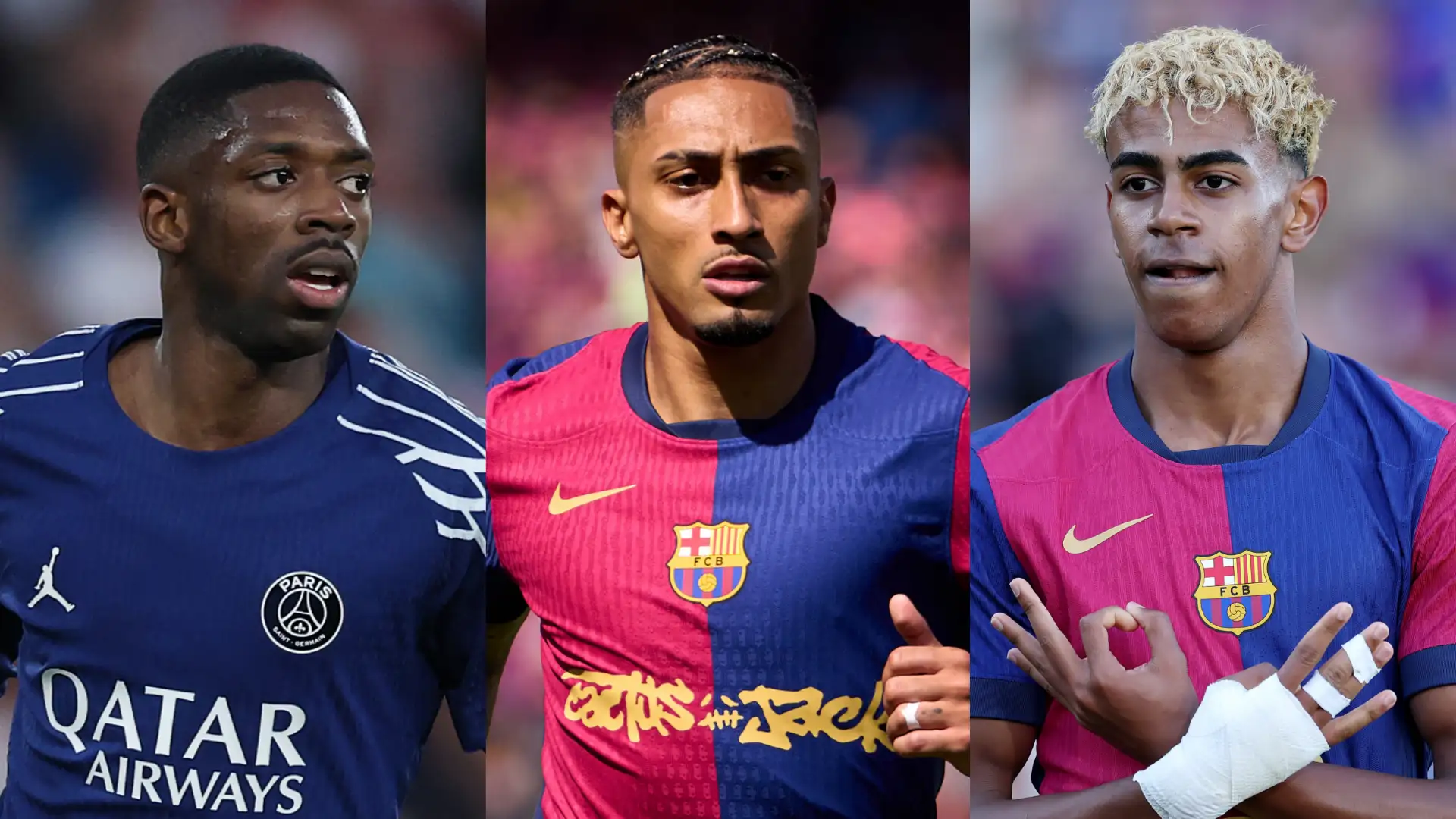
With the first quarter of 2026 already consolidated, at 11Inicial we look back to carry out the most complete and reasoned retrospective annual balance of what the 2025 calendar year left us. It was an extraordinary period for world football, and not just because of the results: it was the year the tactical model of organized pressing with versatile wingers definitively established itself as the dominant paradigm in Europe, displacing systems centered on the penalty-box nine as the core element of the attack.
Luis Enrique’s PSG proved a team without a classic ‘9’ can win the Champions League. Flick’s Barcelona certified that ultra-intensive full-pitch pressing can be sustained throughout an entire season without dropping the level. Post-Klopp Liverpool completed its generational transition without losing competitiveness in the Premier League. And Real Madrid absorbed the arrival of Mbappé—with all that implies in terms of attacking balance—without renouncing its title aspirations.
To compile this list, we evaluated consistency from January to December, the actual weight of each player in the titles won by their club, and the metric impact in moments of maximum competitive pressure. We didn’t just stay on the surface of goals scored.
📋 Table of Contents
- How Did We Compile This Ranking?
- 🌟 Top 10 Best Players of 2025
- 👑 Detailed Analysis and Justification of the Ranking
- 📊 Comparative Table: Performance and Advanced Metrics (per 90’)
- 🎉 Conclusion: Where Is Football Going in 2026?
How Did We Compile This Ranking?
Any ranking without methodology is an unsupported opinion. To build this list rigorously, we evaluated each player using four weighted criteria strictly applied to the 2025 calendar year (January to December):
- Impact on collective titles (35%): Not all goals carry the same weight. We prioritized players who were decisive in the defining moments of the competitions their teams won.
- Advanced performance metrics (30%): Expected Goals (xG), Expected Assists (xA), key passes per 90 minutes, progressive carries, and finishing effectiveness against the player’s historical average.
- Consistency over the 12 months (25%): We evaluated month-by-month consistency, penalizing players with long streaks of poor performance even if their individual peaks were very high.
- Tactical influence on the system (10%): What changes for the team when this player is absent? Is he the system’s catalyst or a replaceable component?
With these criteria, here is the definitive 2025 ranking.
🌟 Top 10 Best Players of 2025
- Ousmane Dembélé — France | PSG
- Raphinha — Brazil | FC Barcelona
- Lamine Yamal — Spain | FC Barcelona
- Kylian Mbappé — France | Real Madrid
- Mohamed Salah — Egypt | Liverpool
- Pedri — Spain | FC Barcelona
- Michael Olise — France | Bayern Munich
- Erling Haaland — Norway | Manchester City
- Vitinha — Portugal | PSG
- Harry Kane — England | Bayern Munich
👑 Detailed Analysis and Justification of the Ranking
1. Ousmane Dembélé (PSG) — The King of the Treble
No player combined so much individual unbalancing ability with collective success throughout the 2025 calendar year. Under Luis Enrique’s tactical board, Dembélé completed the transformation he had been promising for years, which had so often been cut short by injuries: he stopped being a predictable winger always seeking one-on-ones to the byline, to become the absolute catalyst of PSG’s attack, capable of appearing between the lines, attracting several rivals, and generating the space his teammates needed to open up Europe’s most organized defenses.
The result was a historic treble including the long-awaited Champions League — the first continental title in PSG’s history. In the final, Dembélé was the man of the match. That performance, on that stage, with that trophy at stake, is the definitive argument for number 1.
Key statistics: 37 goals, 15 assists, and the highest average of progressive carries into the opposition box in Europe (6.4 per match).
Advanced metric: Cumulative xG of 29.4 — meaning his finishing effectiveness significantly exceeded what the statistical model expected from his shots. He didn’t just generate chances: he converted them better than anticipated.
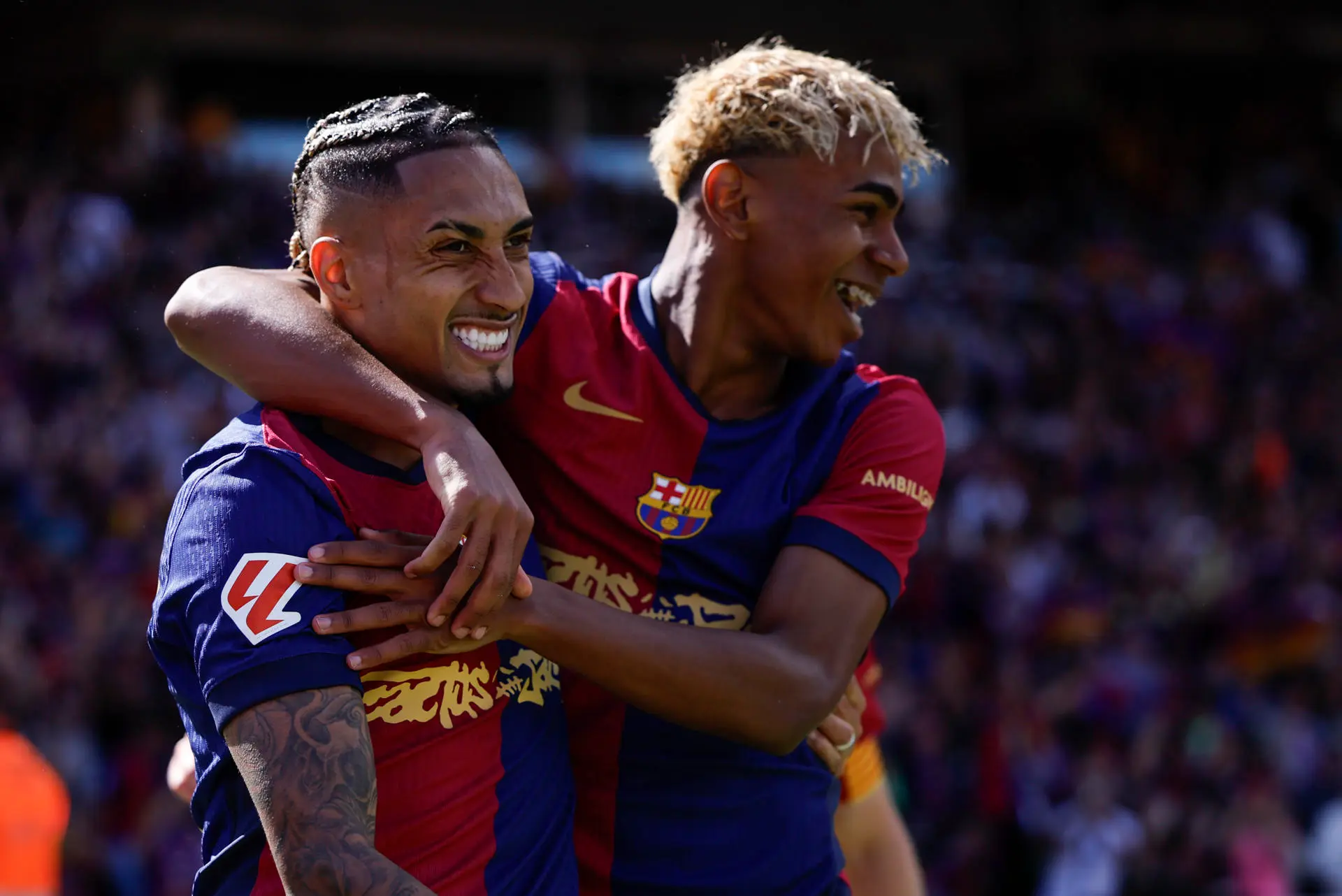
2. Raphinha (Barcelona) — The Engine of the High Press
The question of the year in Spanish football was: why doesn’t Raphinha win the Ballon d’Or if his numbers are better than many players who have won it in recent years? The answer, unfair but real, is that the Brazilian lacks Mbappé’s media visibility or Yamal’s generational factor. But on the pitch, throughout the 12 months of 2025, he was the most complete player on the planet in his position.
His reconversion to a role with more inner freedom under Flick enhanced his arrival at the far post, his ability to press like an additional midfielder after losing the ball, and his effectiveness in the matches Barcelona needed to win to stay at the top of LaLiga. When Barça won, in most cases Raphinha had something directly to do with it.
Key statistics: 28 goals and 19 assists in the calendar year — 47 direct goal contributions.
Advanced metric: Undisputed leader in Expected Assists (xA) in all of LaLiga with a cumulative value of 16.8 — reflecting the extreme quality of the goalscoring situations he generated for his teammates, regardless of whether those teammates capitalized on them or not.
3. Lamine Yamal (Barcelona) — Defying the Laws of Age
At 18 years old, Lamine Yamal is no longer a promise: he is a systematic unbalancing factor that opposing coaches include in their pre-match video sessions as the main threat to neutralize. The problem is nobody has yet found a way to do it consistently.
What places him in third, and not higher, is a single factor: the Champions League. In the continent’s most demanding competition, Yamal did not have the impact expected of him in the decisive knockout matches against PSG. The difference between second and third place, between Raphinha and Yamal, was built on those European nights where the Brazilian showed up and the Spaniard faded slightly. That nuance is what separates the two.
His ability to draw triple marking permanently freed Barça’s inner channels, making him a tactical asset going far beyond his direct goals and assists.
Key statistics: 14 goals, 21 assists, and a 62% success rate in attempted dribbles in the final third of the pitch.
4. Kylian Mbappé (Real Madrid) — Elite Numbers in the Midst of Adaptation
Kylian Mbappé’s adaptation to Real Madrid was the most debated football topic of the year. The final numbers are those of a top-tier global player: 41 goals in the calendar year, including decisive performances in LaLiga and the early stages of the Champions League. But the numbers don’t tell the whole story.
In stretches, Mbappé’s presence as the central reference of Los Blancos’ attack slowed down the team’s fluid play, especially in European knockout ties where Madrid needed circulation speed and the Frenchman demanded balls in behind. That tension between the system and the player is what places him in fourth position in a year where he performed individually at a very high level, but collectively the project remained a step behind PSG and Barcelona.
Key statistics: 41 goals (12 penalties) and 8 assists. Standout in xG per 90 minutes: the highest of the top ten (0.78), reflecting the quantity and quality of the chances he generated.
5. Mohamed Salah (Liverpool) — The Evolution of the Total Winger
At 32 years old, Mohamed Salah did in 2025 what very few footballers of his generation have achieved: reinventing himself tactically without losing an ounce of effectiveness. In a Liverpool in transition—the post-Klopp era implies profound systemic changes taking years to fully crystallize—Salah assumed more of a playmaker role from the flank, reducing deep runs to increase his participation in the build-up.
The result was a different but equally dangerous Salah, and in some respects even more valuable for his team: a presence rivals cannot ignore at any moment of the match, freeing spaces for the younger wingers Liverpool has been incorporating into its system.
Key statistics: 26 goals and 14 assists in the Premier League — the most physically demanding league on the European continent.
6. Pedri (Barcelona) — The Compass of Modern Play
A midfielder’s impact is never correctly measured in traditional statistics. Pedri is the clearest example of that problem: his goal and assist numbers do not reflect at all what he brings to Barcelona. What the Canary Islander does is harder to quantify and easier to see: when Pedri is on the pitch, Barcelona has the match under control. When he isn’t, Flick’s team loses its axis and becomes unpredictable in the worst sense.
2025 was the year Pedri definitively recovered his best physical level after two seasons conditioned by injuries. That continuity—being able to count on him week after week, month after month—allowed him to consolidate his position as the most complete midfielder in LaLiga and one of the three best in Europe.
Key statistics: 93.4% passing effectiveness in the opponent’s half. 11.2 kilometers covered on average per match — a figure of pure engine for a playmaking midfielder.
Advanced metric: 4.2 key passes per 90 minutes — the highest record for a central midfielder in Europe during the 2025 calendar year.
7. Michael Olise (Bayern Munich) — The Great European Breakthrough
If there is a 2025 story not receiving the attention it deserved, it is that of Michael Olise at Bayern Munich. The French player of Nigerian origin arrived from Crystal Palace with the label of “unconfirmed talent in elite football” and responded with a season exceeding all expectations: not only did he perform at a high level, but he was the player returning the verticality down the right flank to Bayern that the club had been seeking for seasons without finding.
His creativity—the ability to cut inside and generate shooting or passing situations in areas where defenders are not used to a winger arriving—reactivated a Bavarian attack that without him seemed excessively dependent on Kane’s efficiency as the only offensive plan. With Olise on the pitch, Bayern has two distinct threats defenders must manage simultaneously.
Key statistics: 19 goals and 16 assists in his first full Bundesliga campaign — 35 direct contributions in his first season at a top European club.
8. Erling Haaland (Manchester City) — The Crownless Specialist
Erling Haaland scored 44 goals in the 2025 calendar year. It is the highest figure of any player on this list. And yet, he occupies the eighth position. That paradox perfectly summarizes the Norwegian center-forward’s problem in a ranking rewarding global influence over the team and impact on collective titles.
Manchester City ended 2025 without lifting any major title. In the Champions League knockout stages, Haaland averaged 14 touches of the ball per match — the lowest figure among the great European forwards — reflecting the increasing difficulty rivals are finding in isolating him from the game when they need to. His dependence on his teammates’ service, which at City with Rodri was almost perfect, has become a limitation when the team goes through structural difficulties.
It’s not a crisis of talent: it’s a surrounding system no longer having the solidity of 2023. The 2025 Haaland is the same goalscorer as always, but the collective context enhancing him is no longer at the same level.
Key statistics: 44 goals and 4 assists. The highest xG per 90 minutes in the top 10 (0.85), but without trophies to back up that volume of goals.
9. Vitinha (PSG) — The Invisible Architect
While Dembélé took the applause and headlines after every PSG victory, Vitinha did the work nobody sees but everybody feels when he isn’t there. The Portuguese midfielder was tasked with maintaining the structural balance of a European champion PSG that theoretically lacked the classic defensive pivot great teams usually have in their midfield.
What Vitinha provided was something more sophisticated: an ability to resist opposing teams’ suffocating pressing in his own half and give cleanliness to the ball distribution PSG needed to transition quickly into attack. In moments when rivals pressed with the most intensity—exactly when the team needed it most—Vitinha didn’t lose the ball. That consistency in difficult moments is what defines an elite midfielder.
Key statistics: 95% successful passes under direct pressure — the highest record in the Champions League-winning squad. 4.2 interceptions per match, making him the best ball-winner on his team despite not being a classic profile defensive pivot.
10. Harry Kane (Bayern Munich) — The Intelligent Goal Ecosystem
There is a footballing discussion reappearing every season when talking about Harry Kane: is he a world elite center-forward playing in a team not at his level, or is he a forward needing the right collective support to truly shine? 2025 didn’t resolve that debate, but added more arguments to the file.
Kane completed another impeccable individual campaign: 38 goals and 11 assists, acting as a ‘9’ generating play like a ‘10’ and dropping into midfield to organize with a naturalness no other pure forward of his generation possesses. His intelligence to create and exploit spaces in the opponent’s area, without needing the type of through-ball service Haaland requires, makes him a tactically more versatile profile for any system.
However, the absence of major titles in the first half of the year is the factor placing him in the tenth spot. Kane has been in Munich for two seasons without winning the Bundesliga or the Champions League, and that lack of trophies on the resume of a player aspiring to the Ballon d’Or carries a cost in any serious ranking.
Key statistics: 38 goals and 11 assists. xG per 90 minutes: 0.61, with a positive differential against his actual conversion rate confirming his efficiency above expectations.
📊 Comparative Table: Performance and Advanced Metrics (per 90’)
To objectively visualize the differences between the ten profiles dominating football in 2025:
| Player | Goals + Assists | xG/90’ | xA/90’ | Key Passes/90’ | Major Titles (2025) |
|---|---|---|---|---|---|
| O. Dembélé | 52 | 0.68 | 0.42 | 3.4 | UCL, Ligue 1, Coupe de France |
| Raphinha | 47 | 0.52 | 0.55 | 4.1 | LaLiga, Spanish Super Cup |
| L. Yamal | 35 | 0.35 | 0.48 | 3.9 | LaLiga |
| K. Mbappé | 49 | 0.78 | 0.21 | 2.1 | UEFA Super Cup |
| M. Salah | 40 | 0.51 | 0.38 | 2.9 | FA Cup |
| Pedri | 18 | 0.18 | 0.31 | 4.2 | LaLiga |
| M. Olise | 35 | 0.44 | 0.39 | 3.1 | None |
| E. Haaland | 48 | 0.85 | 0.08 | 0.8 | None |
| Vitinha | 12 | 0.11 | 0.22 | 2.8 | UCL, Ligue 1, Coupe de France |
| H. Kane | 49 | 0.61 | 0.28 | 2.4 | Bundesliga (2nd half) |
Note: xG and xA data correspond to averages per 90 minutes calculated over the total minutes played in official competition during the 2025 calendar year.
🎉 Conclusion: Where Is Football Going in 2026?
The 2025 balance confirms a tactical trend seen coming for two or three seasons and becoming dominant doctrine this year: versatile attackers who press, link up, and finish have surpassed pure goalscoring specialists as the most valuable profile in elite European football.
Haaland’s drop to eighth place—despite being the list’s top scorer—is the clearest symptom of that shift. In 2025 football, scoring 44 goals is no longer enough to lead the debate for the best in the world if those goals come in a context of tactical isolation and absence of collective titles. Dembélé, with 37 goals and 15 assists in a European champion team, is a more complete argument.
What comes in 2026 is even more interesting. Lamine Yamal is approaching the point in his career where European consistency will replace precocity as his main argument. Endrick is accumulating minutes at Real Madrid with the patience of someone who knows he is building something. And Estêvão will arrive in the Premier League with the hunger of someone who has spent years waiting for the moment to prove the nickname “Messinho” was not an exaggeration.
The throne of 2025 belongs to Dembélé. That of 2026 is still to be decided.
Do you agree with the ranking order? Do you think we unfairly penalized Haaland’s goals for City’s blank year? Is any figure from the Italian Serie A or the Bundesliga missing? Leave us your analysis and debate with our community.